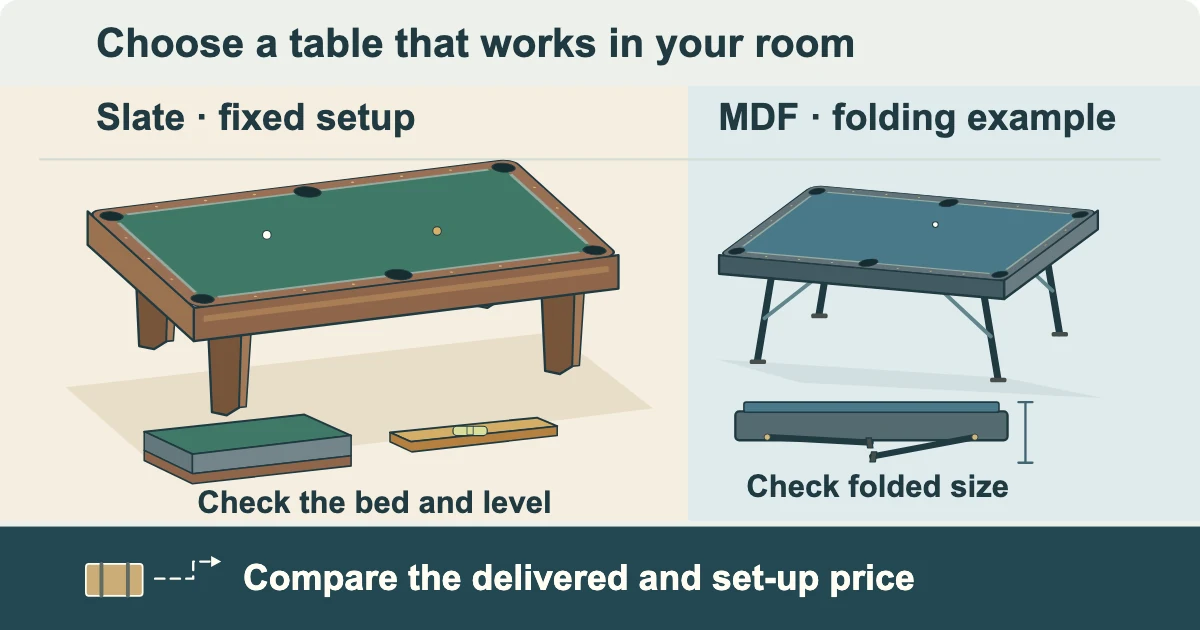
Should you buy slate or non-slate?
For regular practice in a room where the table can stay, I’d start with a sound slate table you can get serviced locally. An installer can level the slate and, on a multi-piece bed, bring the joints flush before the cloth goes on. If the room has to be cleared between games, start with a model designed to fold or store. Check where it will go and how you’ll handle it before ordering.
The bed is the hard playing surface directly under the cloth. Slate is natural stone. Non-slate tables use a different playing surface, often a wood-based panel. Compare the complete tables on your shortlist, including how they play, what holds up the bed and what it costs to get each one into the room.
| What to compare | Slate shortlist | Non-slate shortlist |
|---|---|---|
| Regular play | Test slow rolls and cushion rebounds. Confirm the playing dimensions and check for a hop at any known joint. | Test the same rolls and rebounds. Confirm the actual playing dimensions and look for a repeatable dip or drift. |
| Room use and access | Choose where the table will stay. Ask the installer how the individual pieces will reach the room. | Measure the room when the table is open. For a folding model, check its folded dimensions, locks and storage space. |
| Delivered cost | Get a total for the table, delivery to the room, assembly, setup, repairs and any missing gear. | Get the same total. Check where delivery ends, what needs assembly and what is included. |
| Future repairs | Ask who can recover the exact bed and rails and source matching cushions or pockets. | Ask how the cloth is attached and whether the maker supplies the bed, cushions and other parts separately. |
If you’re still choosing a size, the room-size chart for 48-, 52- and 58-inch cues helps you narrow the list before you ask sellers for exact dimensions.
If you want to practice on equipment like the tables at a particular event, check its rules before buying. The World Pool Association’s equipment specifications call for slate at its world championships, World Tour and other sanctioned or recognized events, subject to its approval of exceptions. For home practice, match the actual playing area, pockets and equipment to the shots you want to work on.
What is really under the cloth?
Look for the material of the bed itself. A wood liner can sit under slate as a place to fasten the cloth. The stone is still what the balls roll over, with cloth on top. The slate thickness guide shows how to read stone thickness, wood backing and piece count separately.
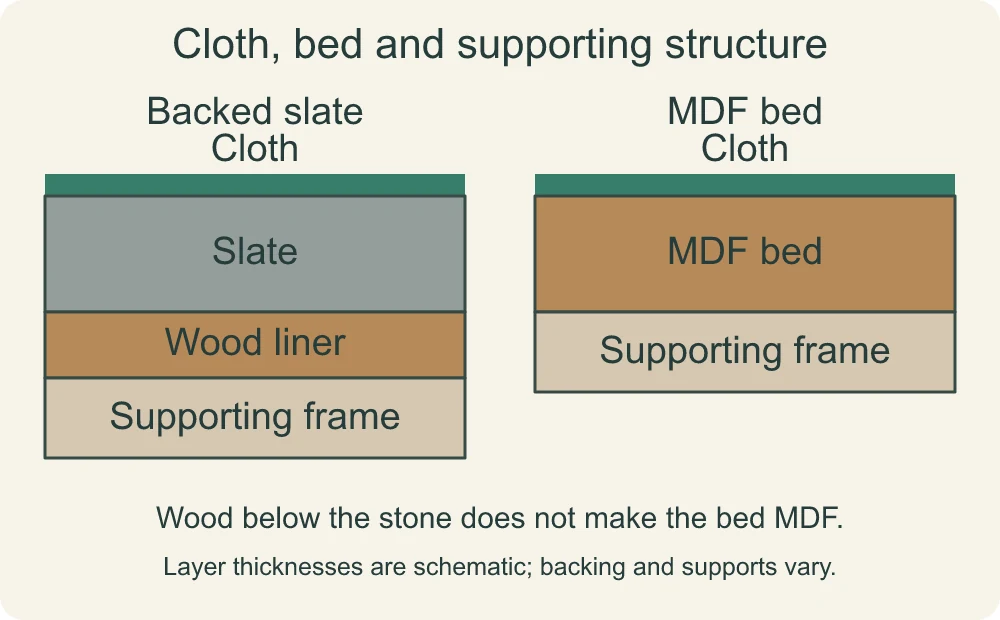
Medium-density fiberboard (MDF) is made by bonding wood fibers into a panel. Non-slate models may use MDF, particleboard, plywood or a different composite. A polished cabinet and solid wood rails tell you about the furniture, so look for a separate entry for the playfield. For example, the Hathaway Augusta BG2527 specification lists a 1-inch MDF playfield as well as solid maple top rails.
Read trade names with the same care. GLD lists Accuslate as very dense MDF. The Barrington Urban Slate-Tech specification describes a proprietary composite with a wood core. A buyer comparing those tables still needs the exact panel, support, repair options and warranty for each model.
How can you identify a used table?
Ask the seller for the maker, model number and any instructions or photos from assembly or recovering. A badge can identify the maker. A separate model label or serial number can help the maker match the table to the right specifications. If they already have a picture of the exposed bed, ask for one that shows the edge and what sits directly underneath.
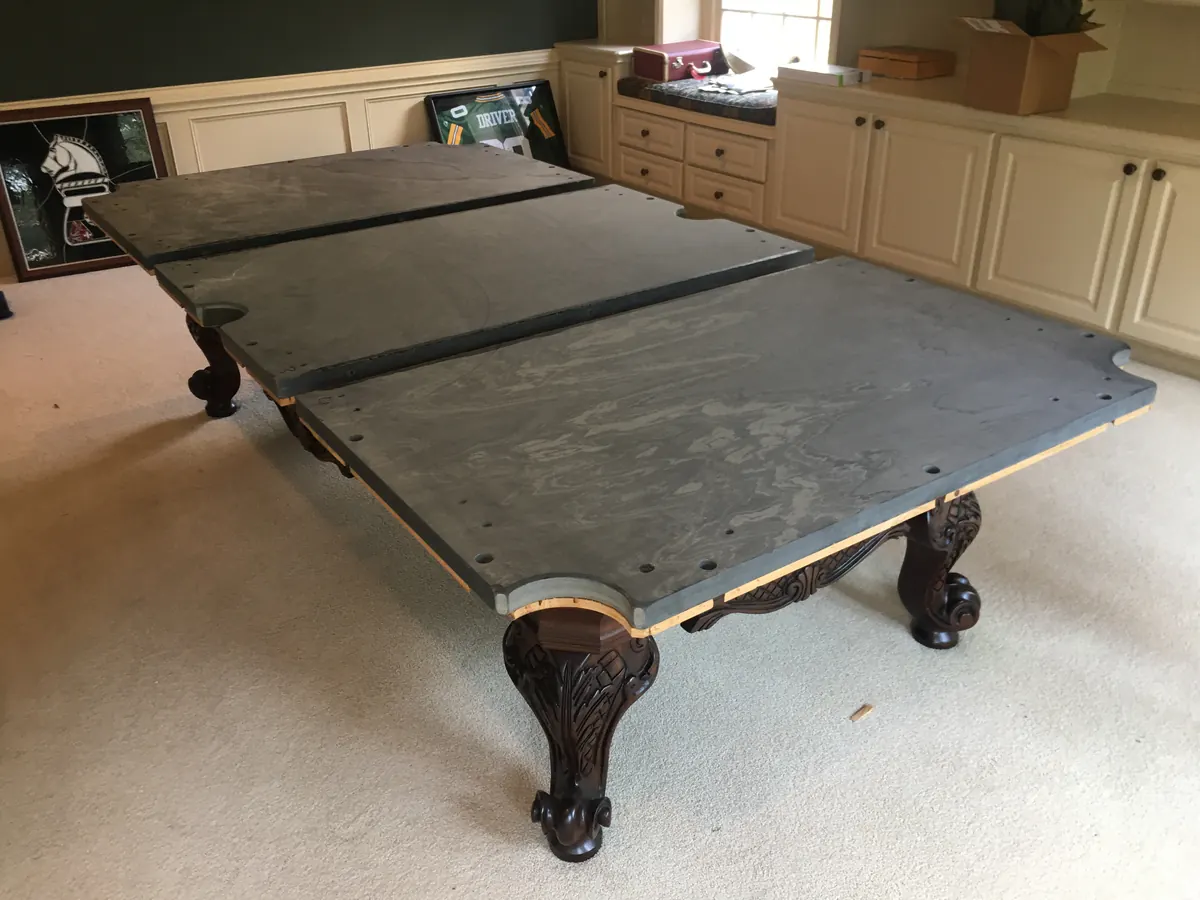
If there’s no label or manual, send the dimensions and existing cabinet, rail and hardware photos to the maker or a pool table repairer. A repairer can look at an edge that’s already safely exposed. Leave the rails, cloth and supports in place during a buying visit. If the seller wants a slate price and the photos leave you unsure, ask a repairer what it would cost to confirm the material. Hold off on buying until you know what you’re paying for.
Which differences will you notice in play?
Check whether the ball rolls predictably and whether comparable shots come off the cushions similarly. A well-supported slate bed can give you a stable surface for regular practice. The setup still matters. A raised joint, loose support, damaged cloth or worn cushion can spoil play. A sound non-slate table can play well for casual games or practice that fits its playing area.
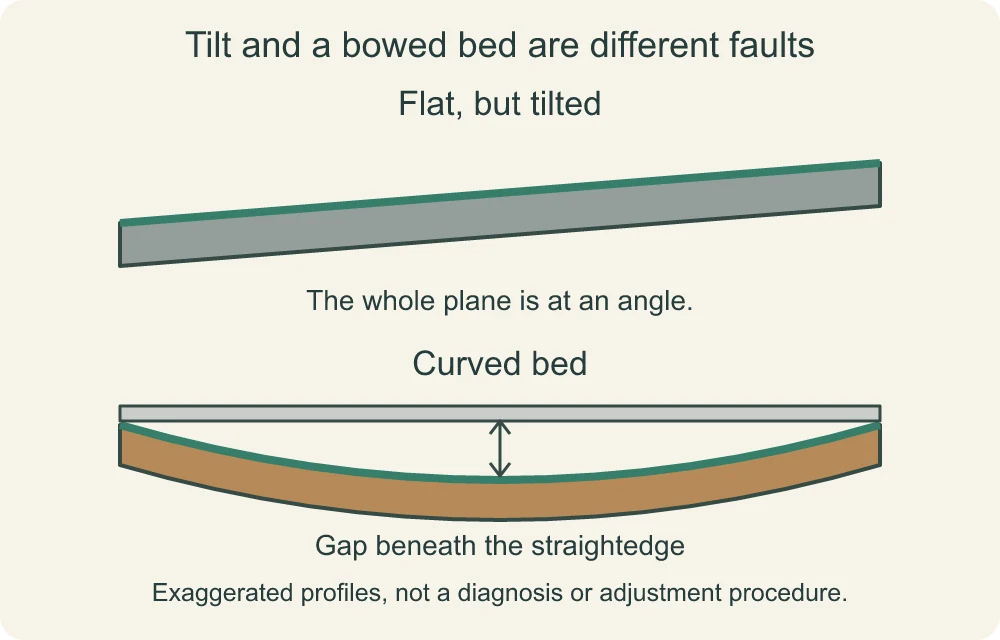
A flat bed can sit at an angle. Bringing its base level can correct that tilt. A bowed bed has a curve in the surface itself, so adjusting the feet leaves the curve in place. The Hathaway Fairmont BG2574 is an MDF model with adjustable feet. Use its own instructions to level it.
With the seller’s permission, roll a clean ball slowly along a few lanes in each direction. If you see a problem, repeat the same path with another clean ball. Try lanes on both sides and across any known joints. A drift toward the same rail on different paths is worth checking for level. A hop that repeats at one spot needs a closer look at the cloth, bed and support there.
For cushions, roll the same ball into the straight part of each cushion at about the same speed and angle. If one rebound is weak, repeat the shot at another straight spot on the same cushion. Ask the seller or installer what accounts for any repeatable problem. The leveling guide shows where the level goes and which adjustments depend on the design.
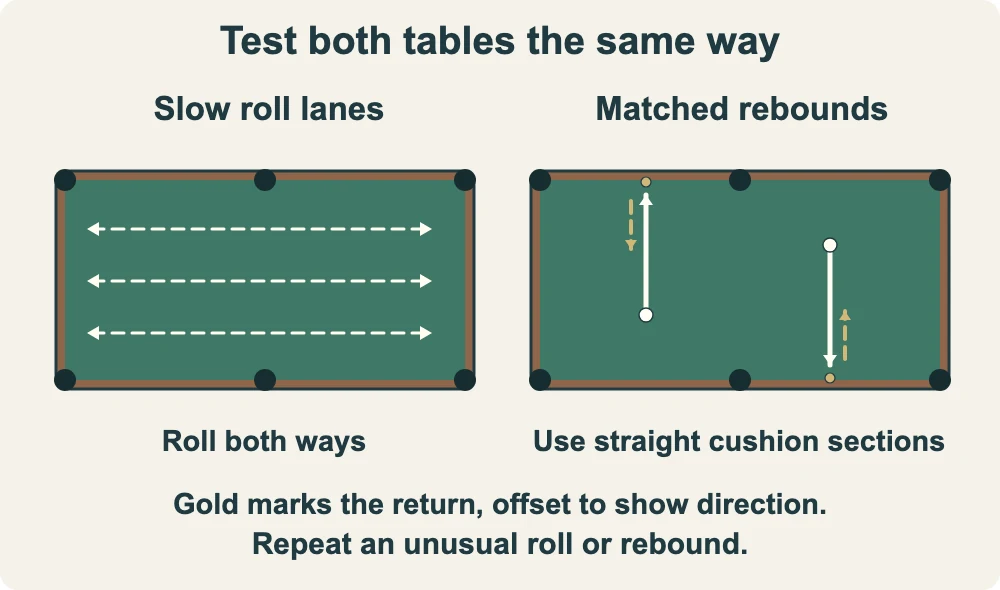
Before you buy for practice, compare the actual cushion-to-cushion dimensions, pockets, ball size and space for your normal cue. A short playing surface can be useful for games and aiming drills. Try the long shots you care about before choosing it for league practice.
What changes with moving and floor support?
For a table you’ll put away, ask the seller to show you how the legs lock open, how the table folds and where the maker says it can be stored. Measure that space and check who can handle the table as directed. The Fairmont manual, for example, specifies indoor use and warns that dragging can damage the legs.
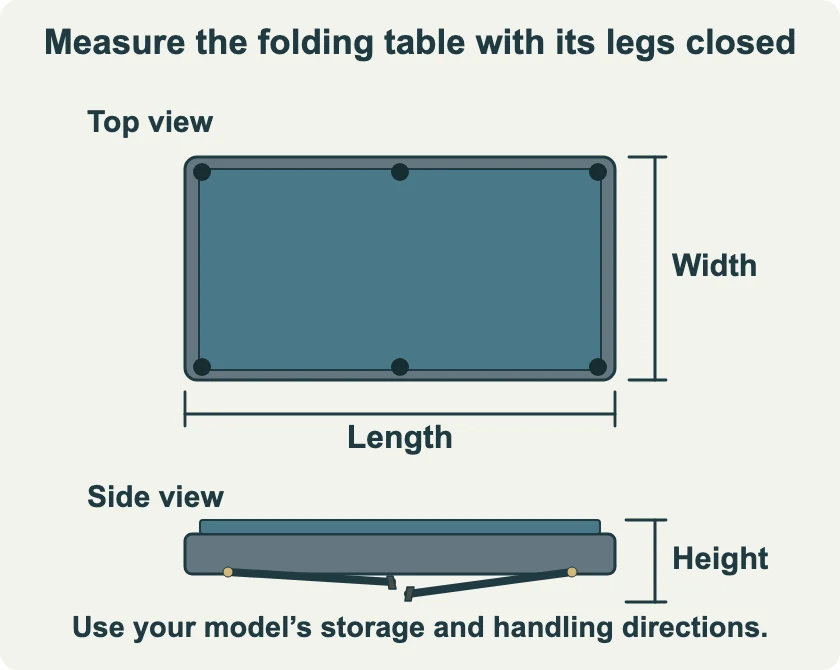
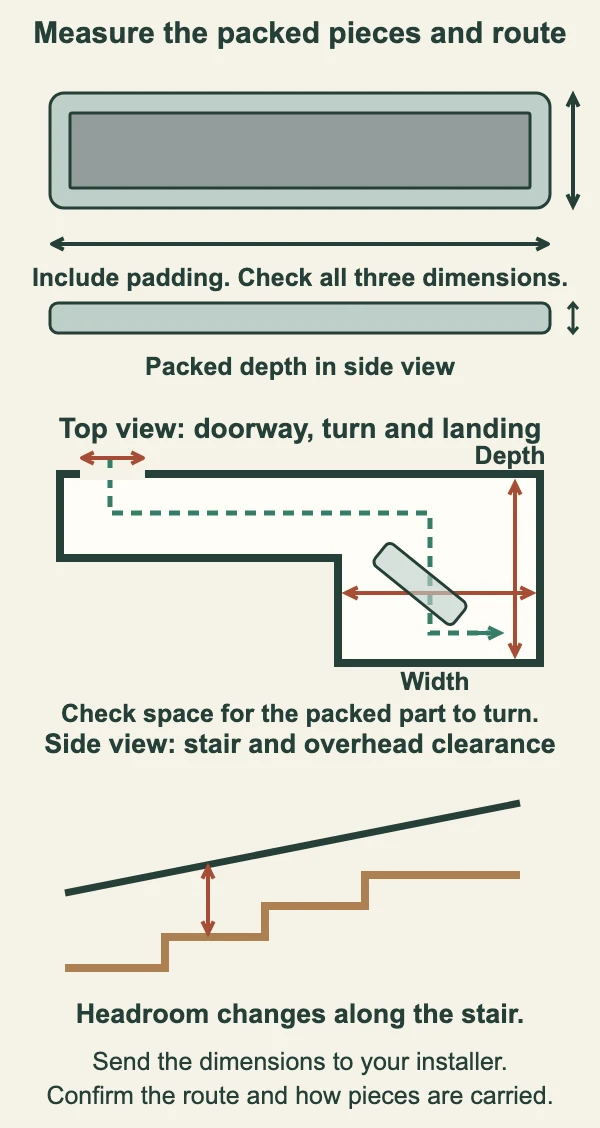
For a slate table, ask the mover what gets removed and what the largest packed piece will measure and weigh. Single-piece and multi-piece beds can require very different handling even when the assembled tables are the same size. Measure the usable width and height of doorways, the depth of each landing and the stair headroom. Send those measurements, photos of the tightest turn and the model details to the mover before paying. Use the pool table moving guide to prepare that information.
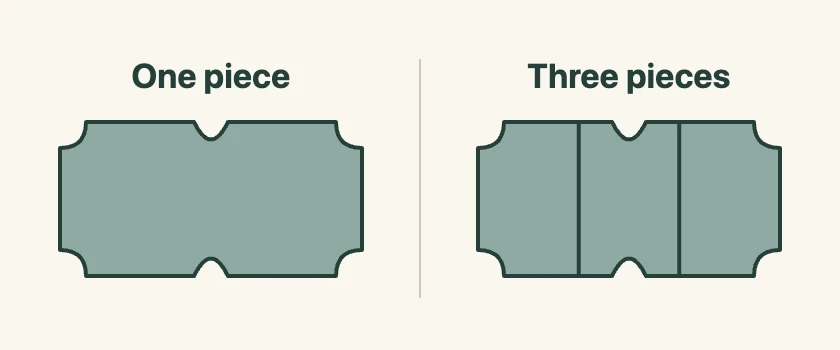
For early planning, allow roughly 360 to 420 lb for the complete stone set on a 7-foot table, 460 to 540 lb on an 8-foot table and 600 to 750 lb on a 9-foot table. Those ranges are for nominal 1-inch three-piece slate. As a separate guide to what a single piece can weigh, allow about 120 to 140 lb for 7 feet, 160 to 180 lb for 8 feet and 200 to 250 lb for 9 feet. Center and end pieces can differ. Ask for actual packed weights and the complete assembled weight for your model.
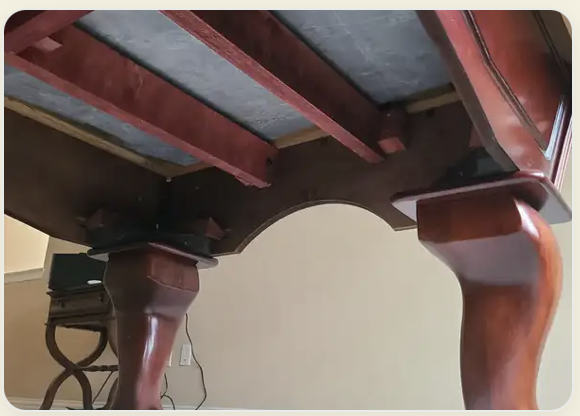
The bed rests on the frame and braces, and the weight reaches the floor through the legs, feet or pedestal. For a wood-legged slate table, look for substantial solid-wood legs and tight joints, with no cracks around the mounting points. On a folding steel base, check the feet, braces and leg locks. If a leg is loose or a brace is bent, ask what it will cost to restore safe support before trying the table.
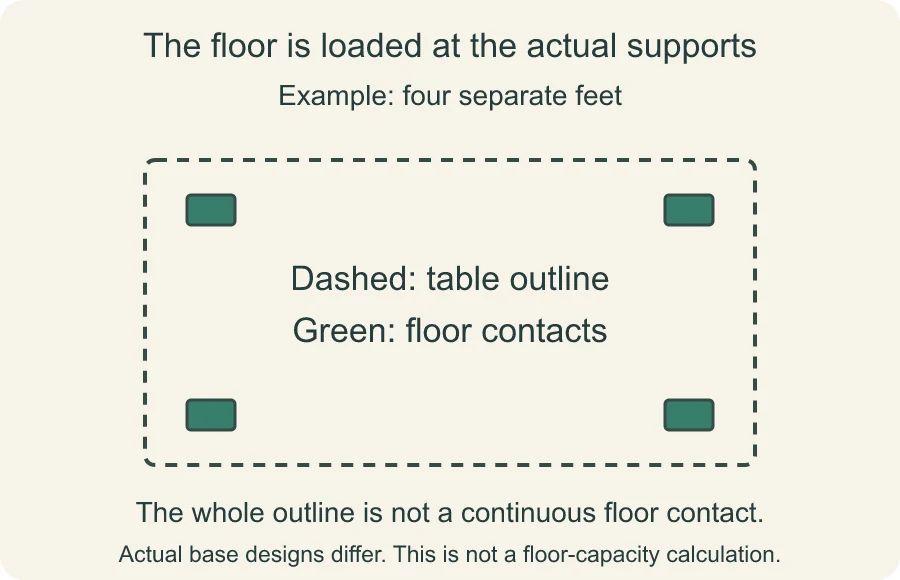
Tell the installer where you want the table and how it reaches that spot. If you’re unsure about the floor, give a qualified building professional the installed weight, location and the size and spacing of the actual floor contacts. The room area by itself tells you little about a particular floor’s ability to support the table.
Then check that you can play in that spot. Use the Pool Table Room Size Calculator when its preset matches the actual playing area. For a different playfield, add two cue lengths to the measured cushion-to-cushion length and to the width. That gives you room for the cue itself. Leave room to draw it back and try a slow stroke at the closest wall or post.
How long will either kind of table last?
The table’s usable life depends on its condition, room and replaceable parts. Sound slate can be recovered while the cushion rubber or pockets are replaced separately. If a wood-based bed has swollen at an exposed edge or the panel has bowed, ask whether replacement is available before paying for cloth. The European Panel Federation’s MDF guidance explains why room moisture matters to wood-based panels. Check how the manufacturer supports the bed and says to care for it.
Keep an indoor table in the conditions its maker specifies. Brunswick’s care guide recommends stable temperature and humidity and routine checks of the frame, pockets and cushions. For a porch or patio, look for a table whose whole construction is rated for the exposure it will get. A cover can protect from dust. Check the maker’s instructions for moisture, storage and weather exposure before putting any table outside.
Read the actual warranty before assuming a part is covered. GLD’s terms cover its Accuslate surface separately from the rest of the table and set conditions for the original buyer. Check whether wear, a used purchase or an installation error is covered and what proof the maker asks for. Warranty length tells you about that coverage, not how long the table will play well.
Can you recover or upgrade the bed?
Some slate and non-slate tables can be recovered when the bed is sound and the cloth is replaceable. A change of bed takes a compatible assembly. Before you buy a table that needs work, give the model number and photos to the maker or repairer and ask these four questions:
- How is the cloth attached to this bed and to the rails, and what has to come apart to replace it?
- Can you obtain the correct cushions, pockets and fasteners?
- If the playing bed is damaged, can you get the right replacement and fit it to the existing frame?
- What is the total to put this table back into play, including setup and any follow-up?
Fit new cloth once you know the surface under it is sound. If the ball hops or dips at the same spot, get the cause checked first. The refelting guide shows common ways cloth attaches on slate tables. Non-slate designs vary. For example, the Mizerak Dakota P5423W series manual lists separate bed cloth and shows a glued installation on its sectional Slatron bed. Ask the maker or repairer which method and parts your exact model takes.
For a slate conversion, ask whether the maker lists a compatible assembly. The stone has to sit on a frame and legs built for it, and the rail fasteners, pocket cutouts and playing height all need to line up. If there’s no approved conversion, price a complete slate table that fits instead.
Which choice costs less in your home?
Get a price to play in the room you’ve chosen. Ask each seller or installer to put the same items in writing so you can compare what you’ll actually get.
| Quote item | Confirm before comparing totals |
|---|---|
| Table and contents | Exact model, bed material, condition, cloth, balls, cues and any supplied top or benches. |
| Access and delivery | Where delivery ends, stairs or special access, room placement and packaging removal. |
| Assembly and setup | What gets assembled, how the bed is leveled, any slate-joint work and the checks before handover. |
| Repairs and follow-up | Needed cloth, cushion or frame work, availability of parts and who will return if the table has an installation problem. |
Say a new folding table is $900 set up in your room. A used slate table is $500 for the table, then $650 for moving and setup and $400 for cloth. That puts the used one at $1,550 before anything either quote leaves out, $650 more than the new folding one. These are example numbers. If you have a permanent room and can confirm the used table plays well after the work, decide whether you’d pay the extra $650 for it. If the room has to be clear every weekend, confirm the $900 model fits its storage spot before you order.
The Pool Table Moving Cost Calculator gives a planning estimate for a three-piece slate move. For a one-piece or folding table, ask for a quote on the exact model and route. After you confirm the table can be recovered, Felt Color Match lets you choose the cloth and service to estimate that part of the job. Use the used-table inspection guide before agreeing to a price on an older table.
Keep a printable room-measurement worksheet (PDF) for each shortlisted table so you can compare the actual playing area, cabinet, cue and closest obstruction alongside the quotes.
Buy once you can name the bed material, know where the table will go and have the complete job priced. If you can’t confirm the storage method on a folding table or find out what’s wrong with a slow roll on a used table, get that answer before putting money down.