What slate thickness should you choose?
Start with 1-inch slate if you’re shopping for a new home table. A sound table designed for 3/4-inch stone can still be a good buy. Ask how the bed is supported, what condition it is in and who will set it up. For a replacement, match the thickness the frame and rails were designed for.
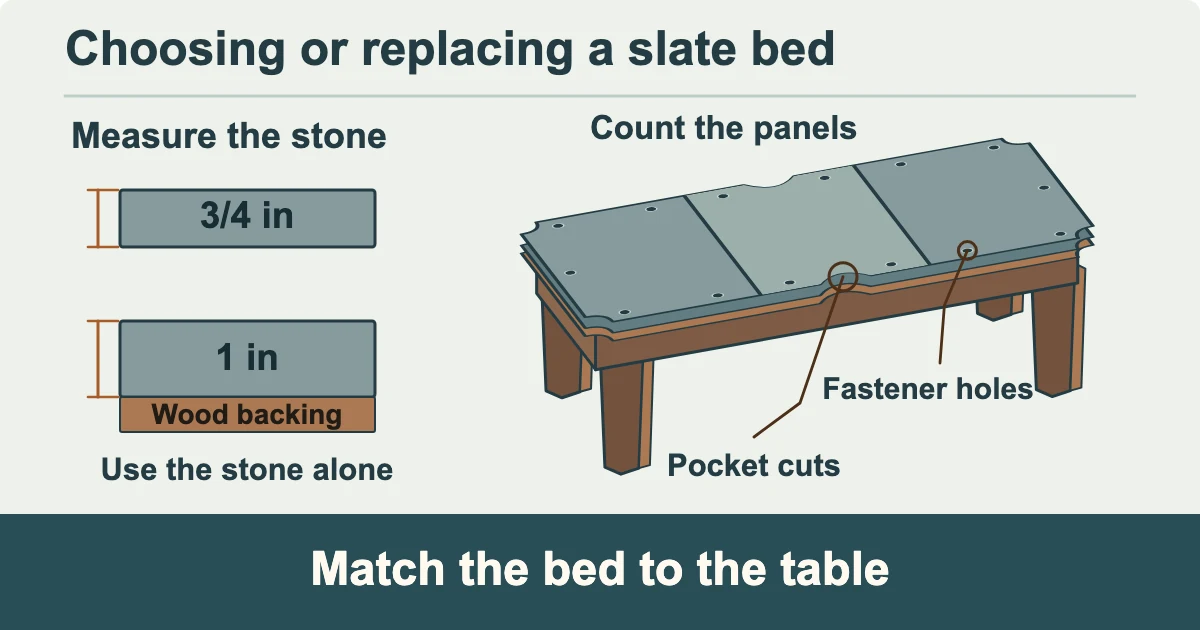
Slate is the stone bed beneath the playing cloth. Ask for three separate details on the model you’re considering: the thickness of the stone alone, how many pieces it comes in and whether there’s a wood liner attached underneath. If the listing says “one-inch backed slate,” confirm what the inch measures. In the WPA equipment specification, the stone and its attached wood frame have separate thicknesses.
| Stone thickness | How to compare it | What to confirm |
|---|---|---|
| 3/4 inch | A sound bed can play well when the table was built for it. | Condition, support, level and route to the room. |
| 7/8 inch | Find the exact model. Valley uses this size in one of its commercial cabinets. | Confirm the individual table and thickness before ordering parts. |
| 1 inch | A useful starting point for a new home table. | Whether the bed is flat when installed, whether the joints are flush and who sets up the table. |
| 30 mm (about 1.18 inches) | An example of a thicker bed, including some manufacturer replacement sets. | Read the exact measurement and confirm the weight and fit. |
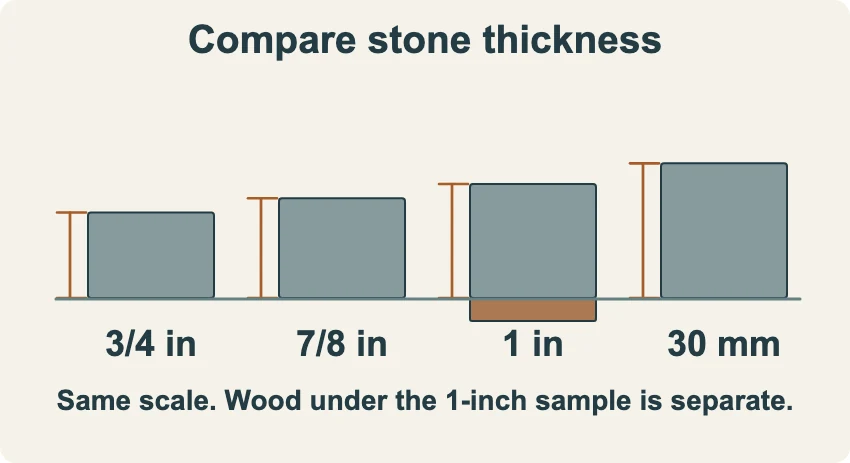
Valley’s size chart lists 3/4-inch stone for its 93-inch cabinet and 7/8 inch for its 101-inch cabinet. A thicker example is Diamond’s three-piece replacement slate, specified at 30 mm, or about 1.18 inches. If another listing says 1 1/4 inches, that’s 31.75 mm. Confirm the actual stone thickness when a listing uses round numbers or the replacement has to fit an existing assembly.
Does thicker slate make play better?
For the same stone and span, a thicker slab is stiffer. How it plays still depends on the finished surface, the support underneath and how it is installed. A heavier bed over a weak or damaged frame leaves the support problem in place.
A surface is flat when it has no dip or bow. It’s level when it has no overall slope. A flat bed can tilt, and three flat slabs can still meet at a raised joint. Ask the installer to check the bed in both directions and to bring the faces on both sides of a seam flush before the cloth goes on. Use the leveling guide to understand the difference between an overall slope and a local ball-roll problem.
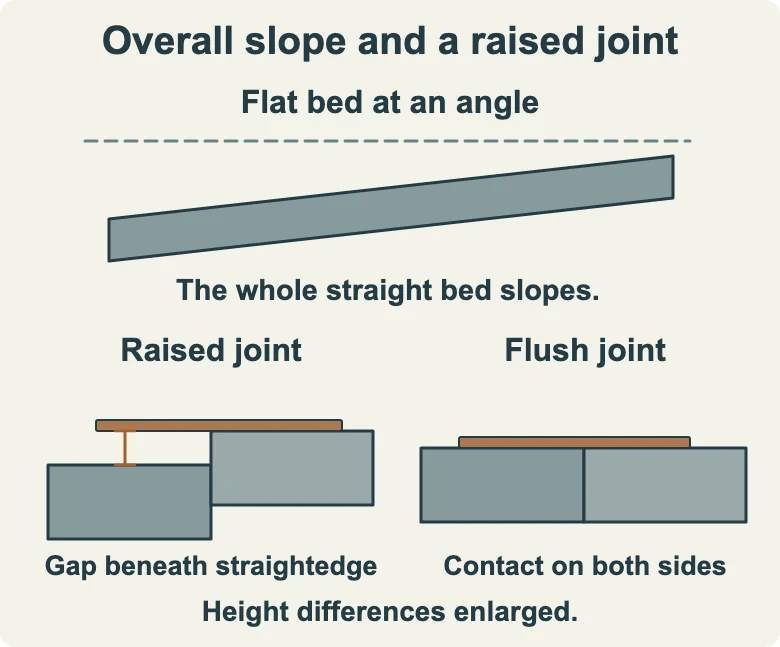
The World Pool-Billiard Association calls for stone at least 1 inch thick for its World Championships, World Tour and other events it sanctions or recognizes, with exceptions at its discretion. In that same specification, after the slate is leveled and shimmed, the faces on either side of a joint must be within 0.005 inch of the same plane. The document gives separate flatness limits for the whole bed. For a home table, ask to see how the bed plays and what your installer checks at the joints.
What does backed slate actually mean?
Backed slate has a wood liner or frame attached beneath the stone. The wood gives the installer a place to fasten bed cloth on designs that use staples. On some unbacked designs, the maker specifies a different method. A Legacy Emory 8-foot table is a backed three-piece example. Its specifications list 1 inch of slate.
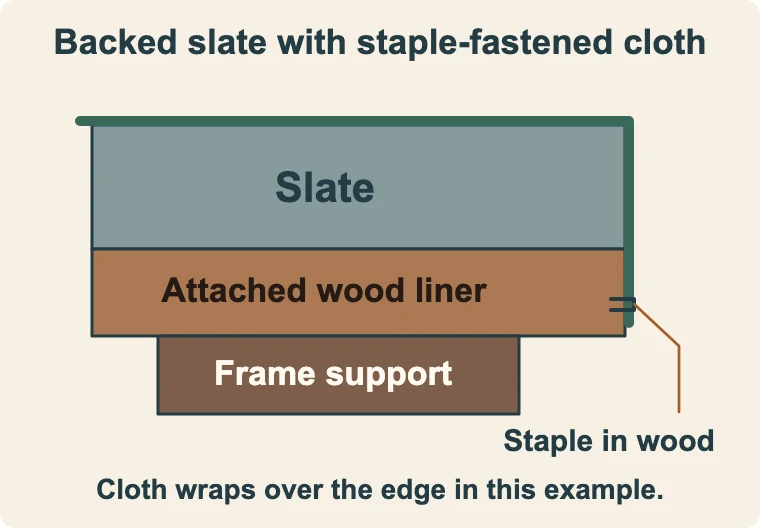
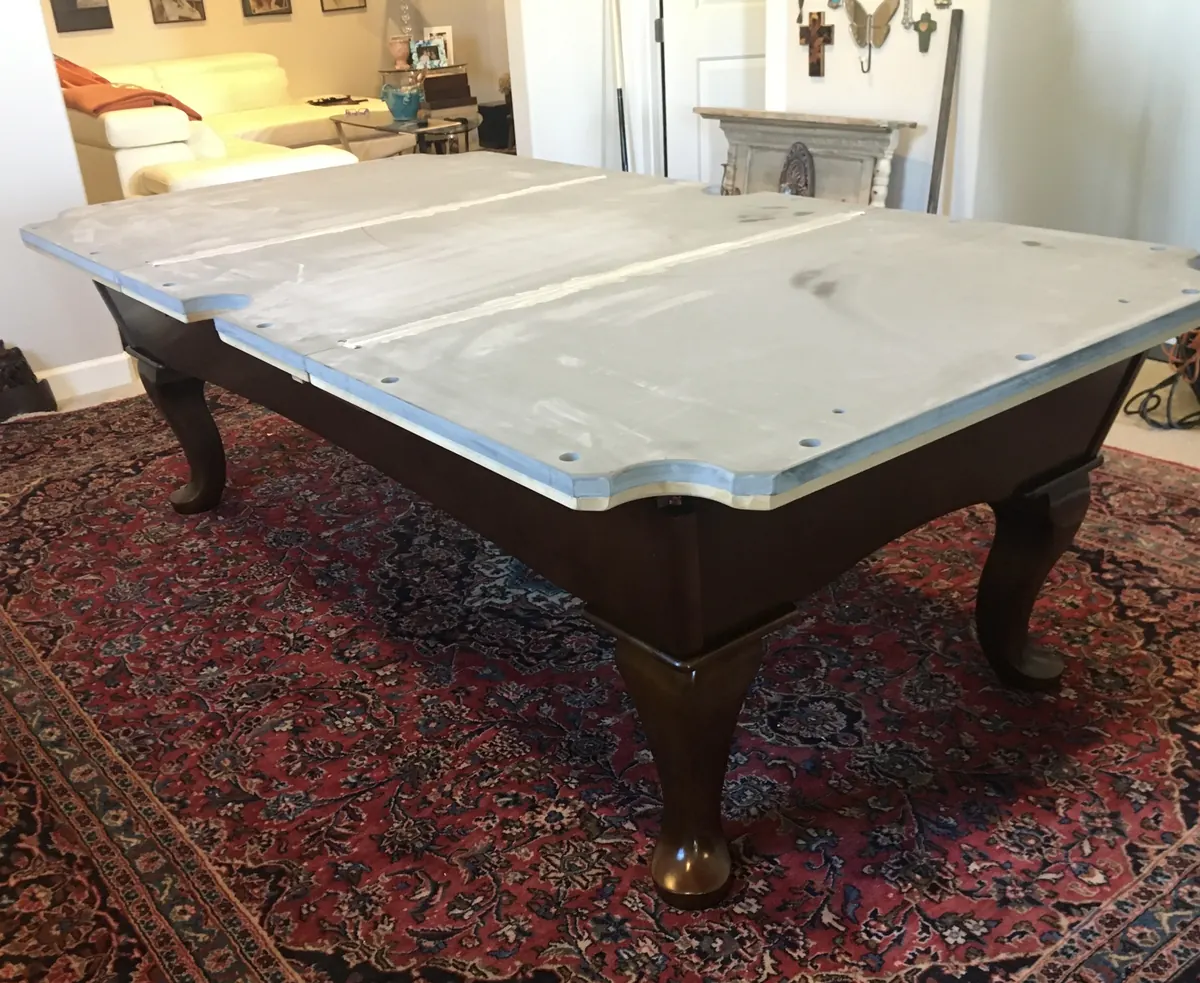
On a used table, ask the repairer to inspect the wood and the way it is attached as well as the stone. Loose or damaged backing needs attention before fitting new cloth. The refelting guide shows common attachment methods. Confirm which one applies to the actual bed and how the rail cloth is fitted.
Is one-piece or three-piece slate better?
Either can play well when the table is supported and set up properly. A single slab has no inter-panel joints, but its full length and weight have to reach the room. Three pieces are smaller to handle individually and have two joints the installer must bring flush.
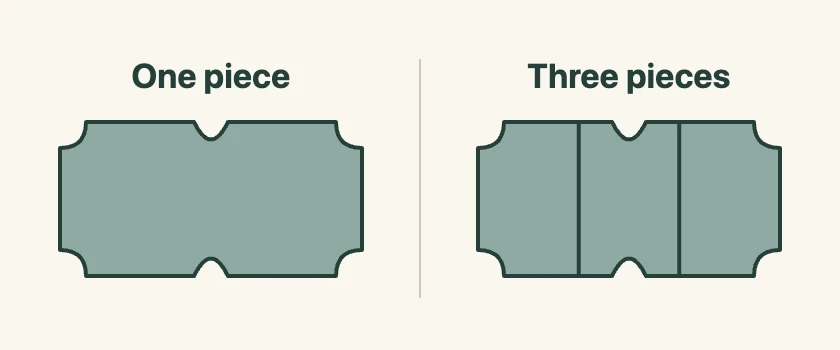
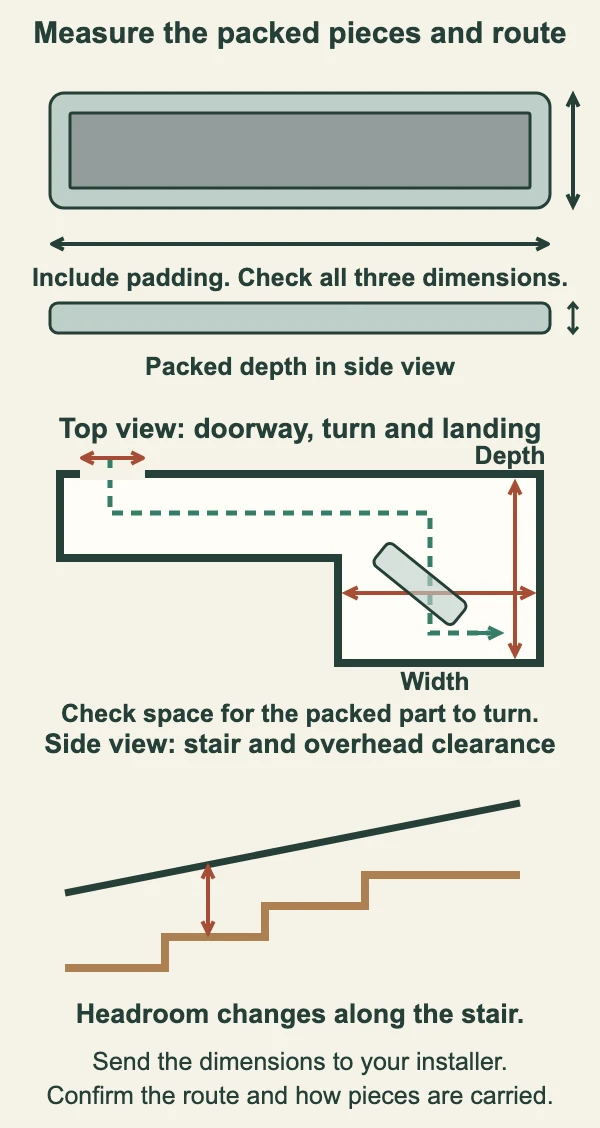
The Diamond Pro-Am is available in one- and three-piece forms. Its manufacturer brochure specifies ground-level installation for the one-piece version. Confirm current delivery terms for the exact configuration. Send photos and measurements of doors, stairs and tight turns to the mover and ask whether they can get the largest packed piece through. The moving guide shows what to measure.
How do you check your slate thickness?
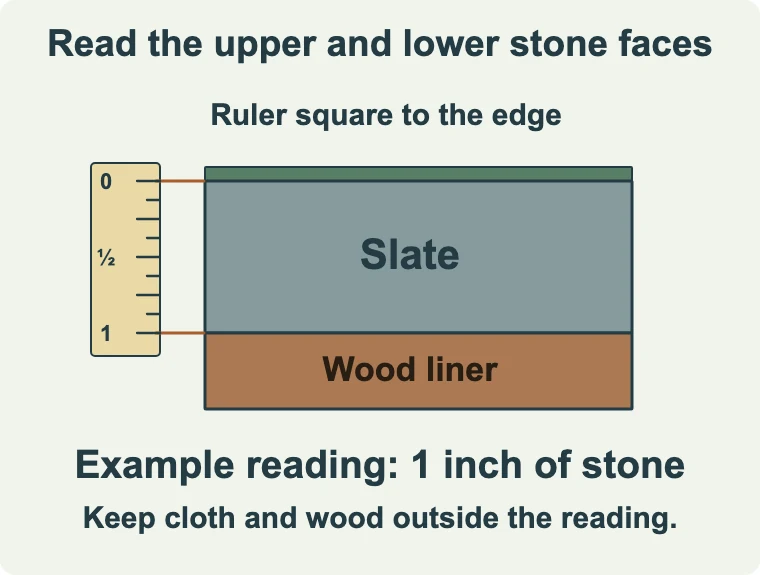
Start with the maker’s specification or a service record for the actual table. At an edge already exposed, have the seller or technician measure square across the gray stone from the upper face to the lower face. Keep cloth and wood out of the reading.
- Identify the table. Record the maker, model, size and any service paperwork. An older table may have a replacement bed.
- Check the edge. Ask which layers are stone, cloth and wood backing. Leave rails, fasteners and supports in place during a buying visit.
- Record the evidence. Ask for an edge photo taken square on, with a ruler beside the stone and both stone faces visible. Keep that measurement and the number of panels with the model details.
If the edge is covered, mark the thickness unconfirmed until you have a trustworthy model record or a technician can check it during planned service. A figure in a used listing gives you a question to ask the seller.
What do weight and frame support change?
The heaviest packed piece affects the move. The complete table’s weight matters once the table is installed. The bed rests on the frame and cross supports, then the legs and feet carry the load to the floor. On a wood-legged table, look for substantial solid-wood legs and tight cabinet joints. Check for a split near a leg connection or a damaged brace, and have any loose support assessed before play.
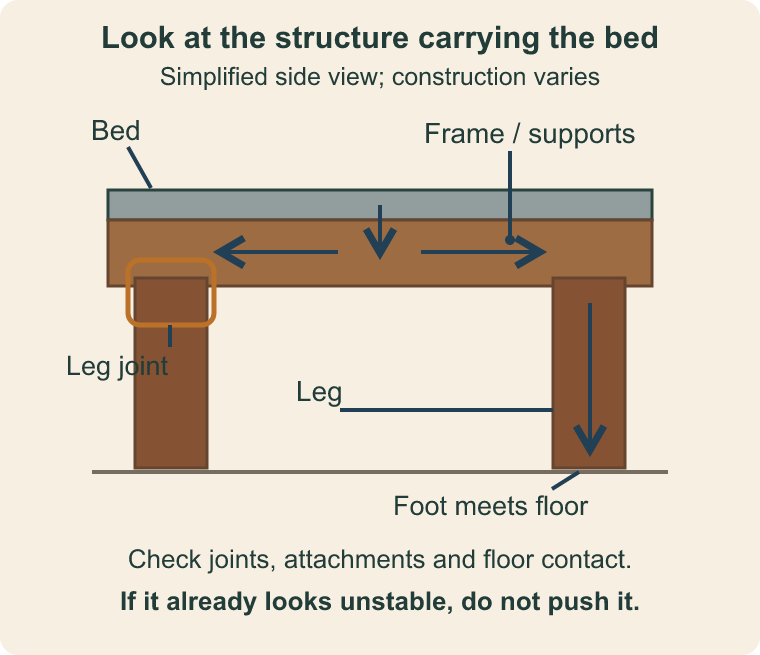
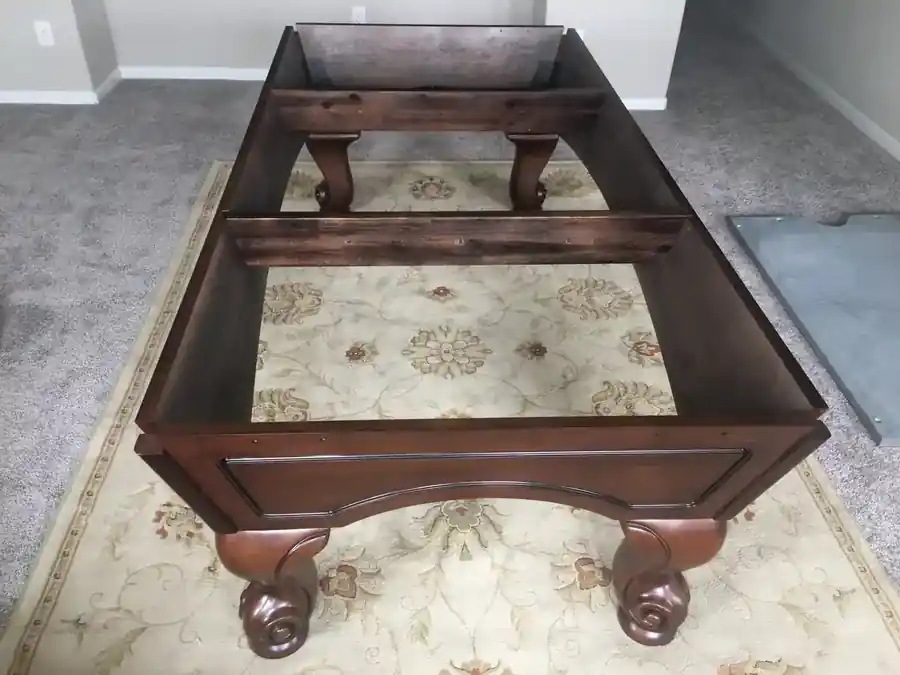
For a nominal 1-inch three-piece slate bed, early allowances for the full set are about 360 to 420 lb on a 7-foot table, 460 to 540 lb on an 8-footer and 600 to 750 lb on a 9-footer. As a separate guide for one panel in a three-piece set, allow about 120 to 140 lb, 160 to 180 lb or 200 to 250 lb at those sizes. End and center panels can differ. Ask for the actual heaviest packed component and installed weight for your model.
The same nominal table size can have separate weights for a replacement set, its crate and a complete table. Diamond publishes these figures for two different 7-foot listings. The complete Pro-Am page also lists 1,000 lb for 8 feet and 1,200 lb for 9 feet. These are figures for the named models.
| Published 7-foot example | Weight | What the figure describes |
|---|---|---|
| Diamond three-piece replacement slate, product specification | 400 lb | The replacement product as listed. |
| Diamond three-piece replacement slate, shipping specification | 450 lb | The crated shipment. |
| Diamond Pro-Am, assembled specification | 800 lb | The complete table. |
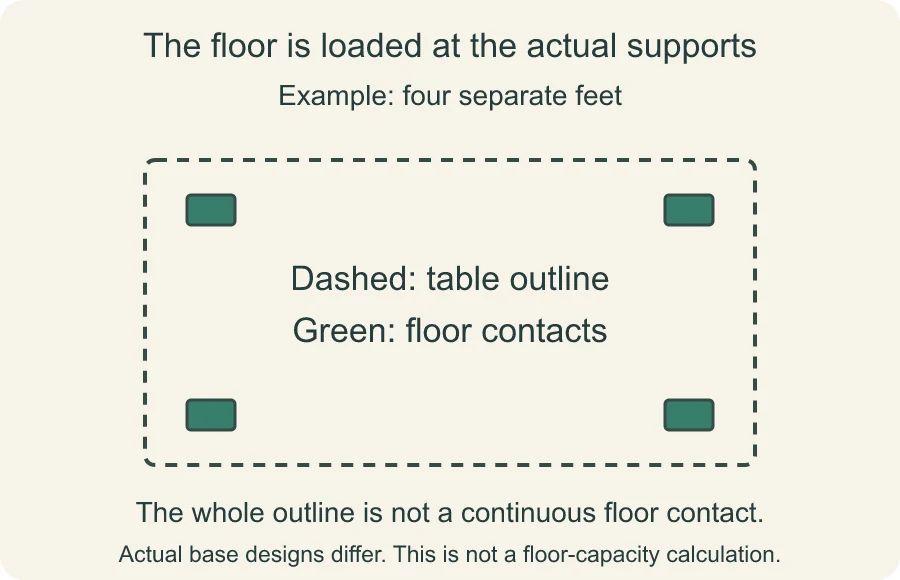
For an upstairs room, give the mover the actual component dimensions and weights. If you’re unsure whether the floor can carry the table, a qualified building professional needs the installed weight, proposed location and the size and spacing of the feet or other actual floor contacts. Check clearance to play separately.
Should you replace or upgrade the slate?
Replace the slate if the maker or a repairer confirms it’s damaged beyond a sensible repair and can identify a compatible part. A recurring hop or drift could come from the cloth, an uneven setup or a joint. Find the cause before buying a slab.
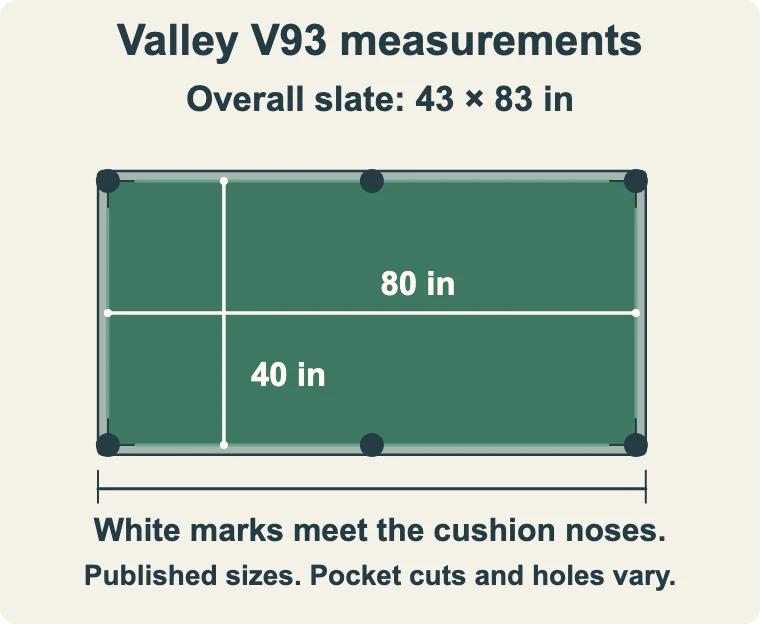
Have the repairer match the full stone length and width, pocket cutouts, bolt and screw holes, backing and supports. Ask whether the rails will fasten as designed and remain the correct height above the cloth. Valley’s model 93 has a 40 × 80 in playing area measured between cushion noses and a 43 × 83 in slate outline. That larger outline is the size to check when asking about compatible stone. On other models, use their own drawings and measurements.
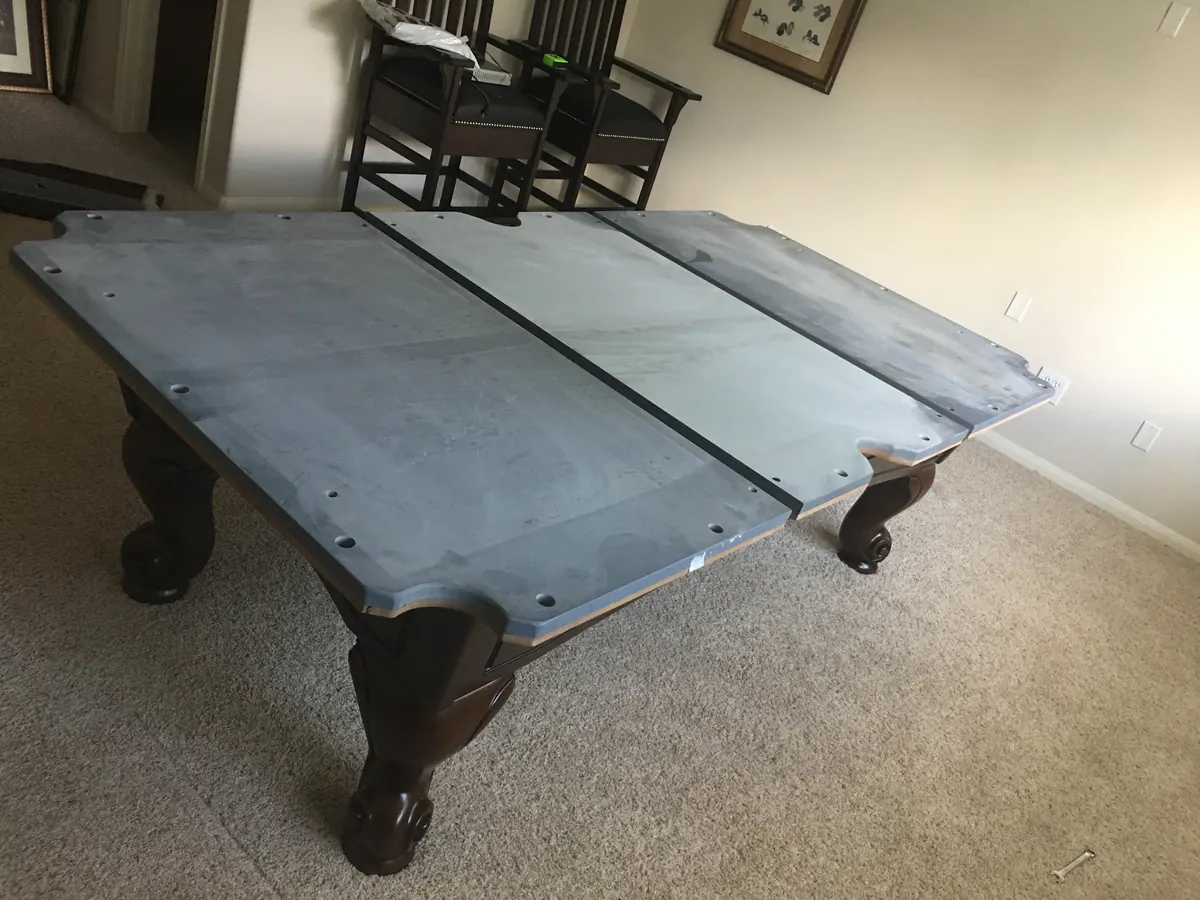
For a three-piece bed, ask whether the repairer can match a single panel to the two you have or needs a complete set. The joints, thickness, cutouts and fasteners must fit together. Use the used-table inspection guide to price the work on the rest of the table too.
What should you confirm before buying?
Before you pay or agree to collect the table, ask for the exact bed specification and a quote that gets it playing in your chosen room. Go through these checks with the seller and whoever will move and install it.
- Bed. Stone thickness, piece count, backing and condition. For a replacement, confirm which panel or set fits.
- Support. Sound cross supports, frame and leg joints, plus an appropriate floor location.
- Play. Ask the installer to check level, confirm flush joints where present and repeat a slow roll along and across the bed after setup.
- Access. Give the mover both addresses, the packed size and weight, stair and doorway measurements and photos of turns.
- Quote. Confirm who handles disassembly or unpacking, room delivery, setup, cloth or repairs and any return visit if an installation problem shows up.
Suppose you’re weighing a sound used three-piece table against a thicker one-piece table for an upstairs room. Ask the mover to confirm whether the disassembled table can get through. For the one-piece option, check the maker’s delivery restriction first. If both can reach the room, compare the cost of the two jobs with the same delivery, setup and repair items included.
If the seller’s table is already apart, ask the repairer to look over photographs of every panel, the frame and the legs before you price the work. Agree on a slow roll check after installation.
Use the Pool Table Room Size Calculator if its preset matches the actual playing area. For a different size, add two cue lengths to the measured length and to the width, then allow room to pull the cue back and test the tightest spot. The room-size chart lists references for 48-, 52- and 58-inch cues.
Save the playfield, cabinet and cue measurements on the printable room-measurement worksheet (PDF). Use the Game Room Planner to place the table around posts, doors and furniture. Have the mover confirm the separate delivery route before ordering.