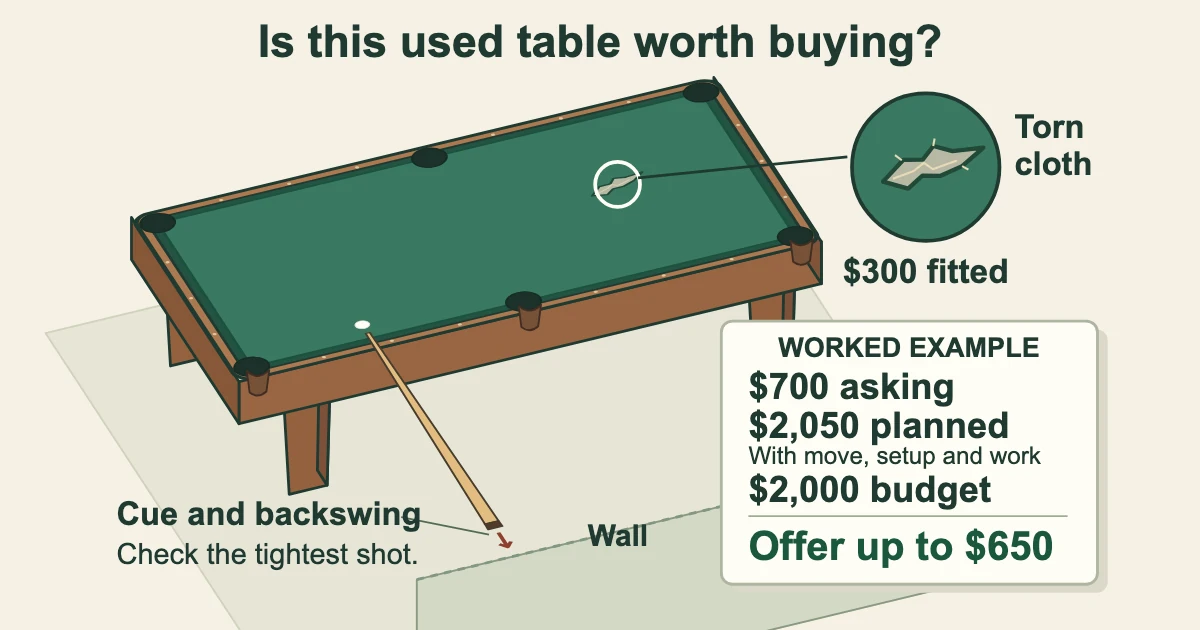
When a used pool table is worth buying
A used pool table is worth a look if you have room to play and the bed and frame are sound. To see whether it’s a good deal, add the move, setup and any repairs to the asking price. If it needs new cloth, get a quote that includes fitting it.
Ask a dealer what it would cost to have a comparable new table or an inspected trade-in delivered and leveled in your room. Match the playing size and bed material. Compare that delivered price with the asking price plus all the work your used table needs.
Two listings can both say “8 ft” and have different playing areas. Ask the seller for four measurements: the length and width between the cushion noses, where the balls touch, and the outside length and width of the cabinet.
At home, mark the planned cushion line on the floor at the tightest spot. Hold your usual cue at playing height with its tip just inside that line and its butt pointing toward the wall, post or cabinet. Take your normal stance and see whether you can draw the cue back as far as you would for a shot. The pool table room-fit guide shows where to measure.
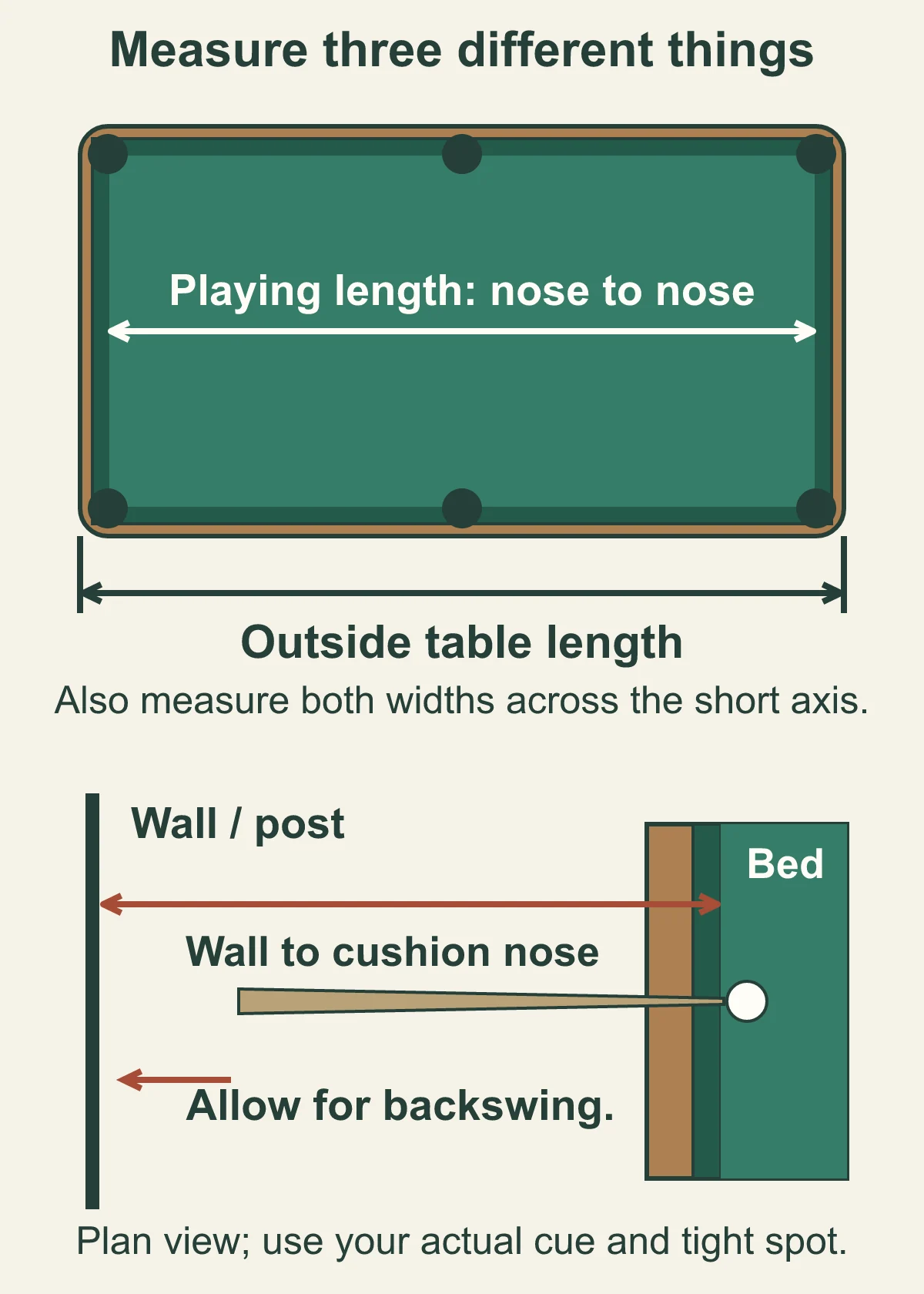
Use the printable room-measurement worksheet (PDF) to write down the table and room measurements, your cue length and the tightest spot. Take it with you to the viewing.
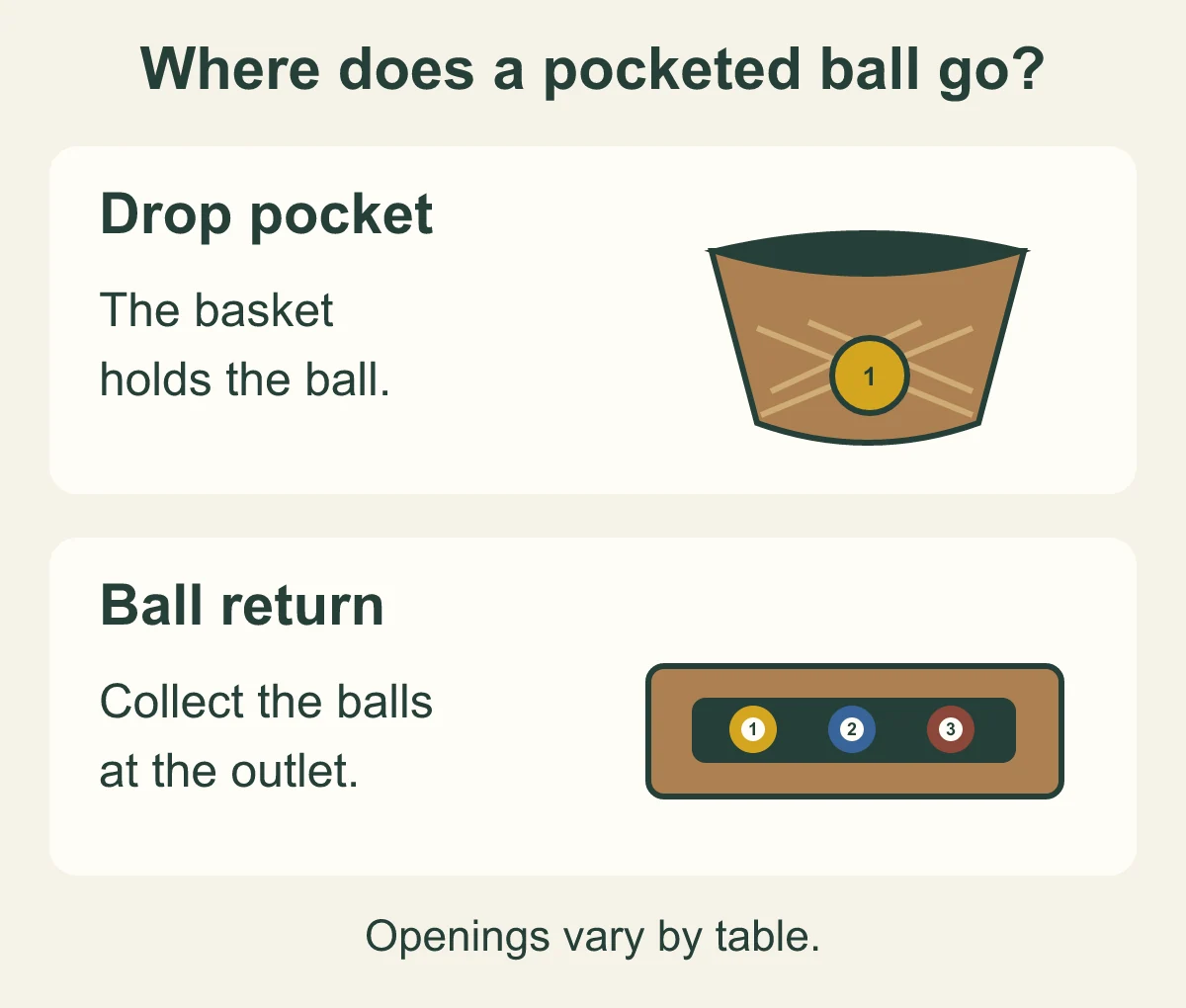
Choose a table that suits the way you play. If you play in a league, compare the playing area and pocket openings with the tables you practice on. On a table with drop pockets, you collect the balls from the pockets. A ball-return table brings the balls to a collection opening. In a shared room, leave space for people to walk by while someone is shooting.
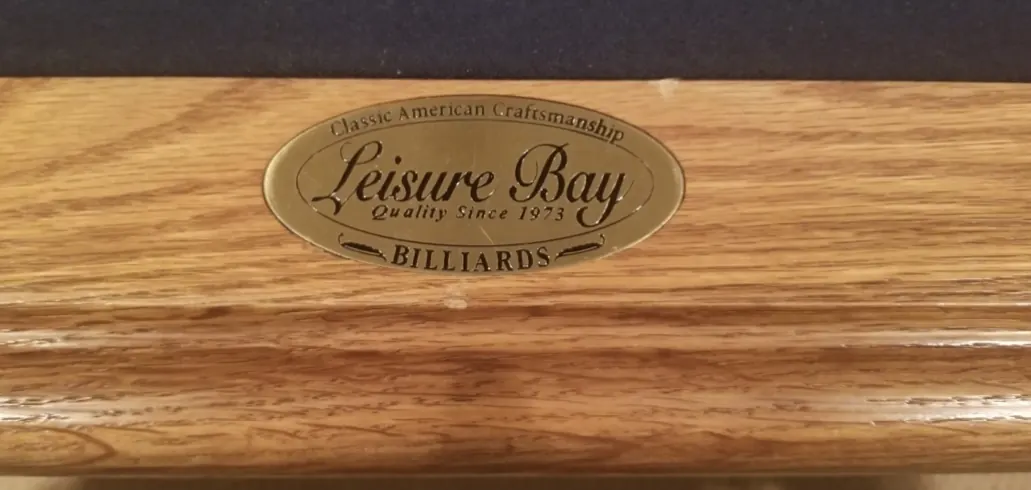
If you’re unsure what game an older table is set up for, ask for a photo of the whole playing surface, the pockets and the model label.
Where to find used pool tables
Look for used tables in local classifieds, at estate sales, through pool rooms and from dealers that take trade-ins. In a private sale, you may have to arrange the move and repairs yourself. A dealer may include setup or other work in the price. Ask what is included before comparing prices.
| Source | What to confirm |
|---|---|
| Local classifieds or marketplace | See the actual table, confirm which pieces and accessories are included, and ask who arranges removal. |
| Estate sale or auction | Ask when the table has to be out, what the sale terms say, and whether a billiard mechanic can inspect or collect it. |
| Pool room or bar | Check the rails and returns on the specific unit, verify the cabinet and slate configuration, and ask for the keys if it’s coin-operated. |
| Pool table installer or dealer | Ask about inspected trade-ins and what the price covers, including cloth, delivery, setup and any written service warranty. |
With a dealer, clarify what “refurbished” means. New bed cloth, new cushion rubber and repaired cabinet joints are three different jobs. Ask what they did to the actual table, what parts were replaced, and whether the price includes installation at your address. A private sale with worn cloth can still be a reasonable buy. A dealer’s higher price can be worth it if it includes work you would otherwise need to buy separately.
For a marketplace listing, keep the messages, photos and agreed terms. Check whether the platform offers buyer protection for the way you plan to pay and collect it. Avoid sending a deposit to reserve an unverified table. If you need a pickup appointment, arrange it after you’ve confirmed the table exists and the seller can show you what you are buying. See the FTC’s marketplace buying advice.
What to ask the seller before visiting
Ask for identification, condition, and access photos before you commit to a drive. The useful pictures show the actual table, including its underside and the route it will take out of the building. A wide shot of new-looking cloth can leave all three questions unanswered.
- Identification. Ask for the brand and a close photo of the model or serial label. If the label is missing, ask for the original bill of sale and a wide shot of the table. Ask for photos of the tape measure across the length and width, with the tape ending at the cushion noses. Find out what the seller knows about the bed material and number of pieces.
- Condition. Ask where it has been kept, whether it was moved or taken apart, and whether the cloth, cushions or pockets were replaced. Request a picture of any repair. A dated service receipt is more useful than a general claim that the table was recently restored.
- Access and inventory. Ask whether the table is assembled and what floor it’s on. If there’s a narrow door or a tight stair turn, ask for a wide photo from each side. If the table is in pieces, ask for pictures of the slabs, rails, legs or base, and fasteners.
A seller may know the table’s history without knowing how it was built. Treat an uncertain answer as something to confirm. Here’s a message you can send.
“Could you send the model or serial label, the playing-area and cabinet sizes, and a close-up of the bed edge if it’s visible? A wide shot of the table and photos from both sides of the tightest doorway or stair turn would help me check the move before I come out.”
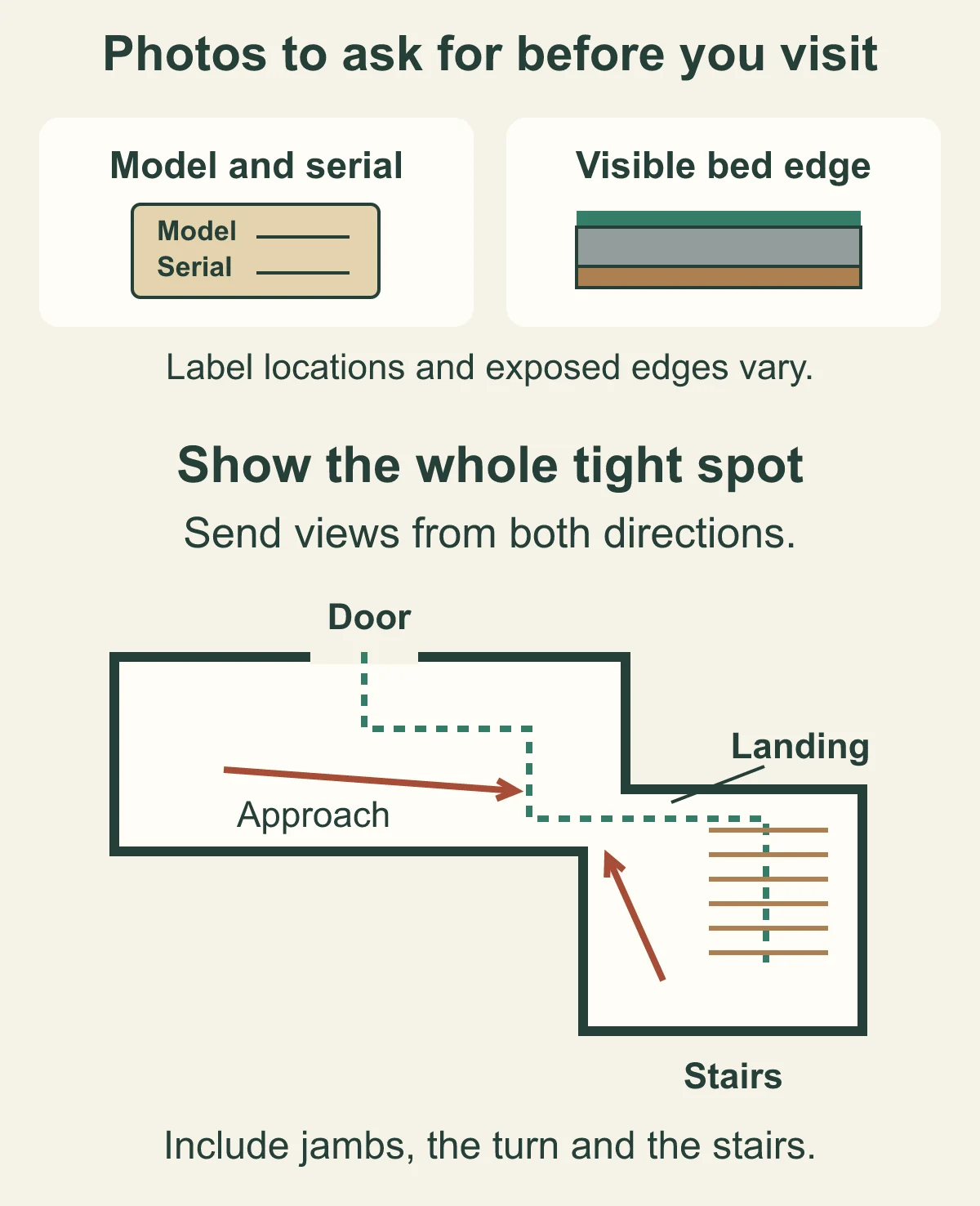
Ask if you can roll a few balls at the viewing and use a light to look at the frame from beside the table. If you can’t see it in person, or there isn’t time to confirm the route, decide what you need the seller to show before you pay. Save a paid inspection for a serious question about a table you would still want at the total price.
What to inspect first on a used pool table
Check the bed and the structure that carries it first. On a slate table the bed sits under the playing cloth. The cabinet, cross supports and legs carry that load. Above it, the rails hold the rubber cushions and form the edges of the playing area. Pockets either catch the balls at the openings or route them into a return. Each of those parts has a different job and a different repair.
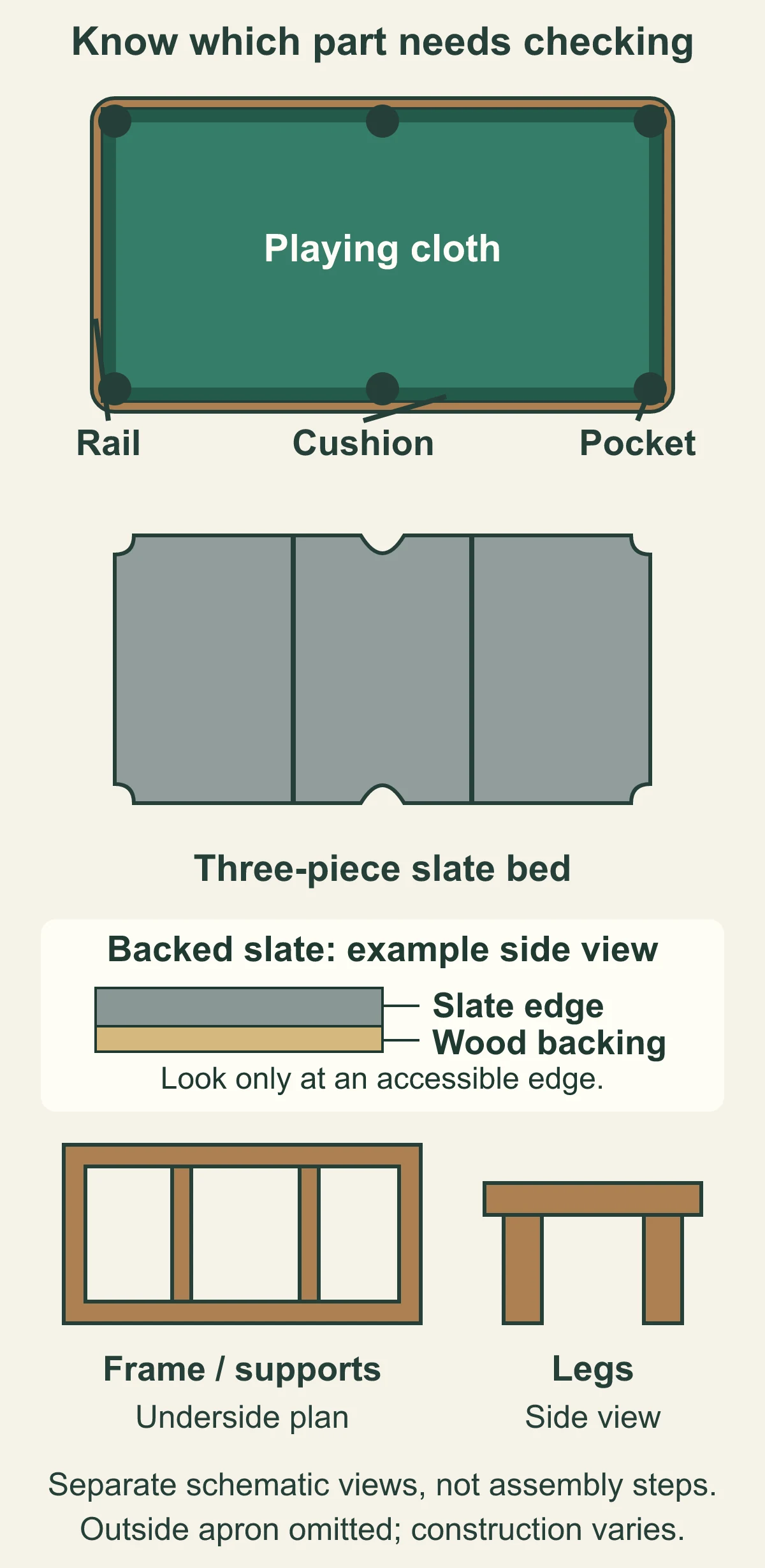
Bring a flashlight, a tape measure and your phone. Ask to use the table’s ball set, or bring a clean ball that matches it. Get permission before you take photos or test the table. From beside the table, look at its feet, leg mounts and visible frame. If the table is wobbling or a leg looks loose, leave it alone until the support is checked. If the table looks stable, inspect the bed, try slow rolls and compare the cushions and pockets. Check scratches and accessories after the table has passed those checks.
If you need a table that folds or moves out of the way, compare a design made for that purpose. “Non-slate” covers several constructions and does not by itself tell you the weight, folding method or how the table plays.
On an assembled table you are screening for signs. The mechanic’s disassembly is a chance to inspect what the cloth and rails cover.
How to inspect the slate and test the roll
Confirm that the bed is slate, check the exposed parts for damage, then roll a ball slowly over several paths. The roll tells you about the current setup. A cracked bed, uneven seam and table that needs leveling call for different work, so keep the symptom and the diagnosis separate.
Look for what the seller can show
Use a light at an accessible edge or look from beside the table where the underside is visible. Have the seller or mechanic show you the bed if the cabinet blocks the view. Slate may have a wooden backing, so a board under the table may be the backing rather than the bed itself. Use the exposed edge together with the model paperwork to confirm what is there. Leave rails, cloth and slabs in place during this first look.
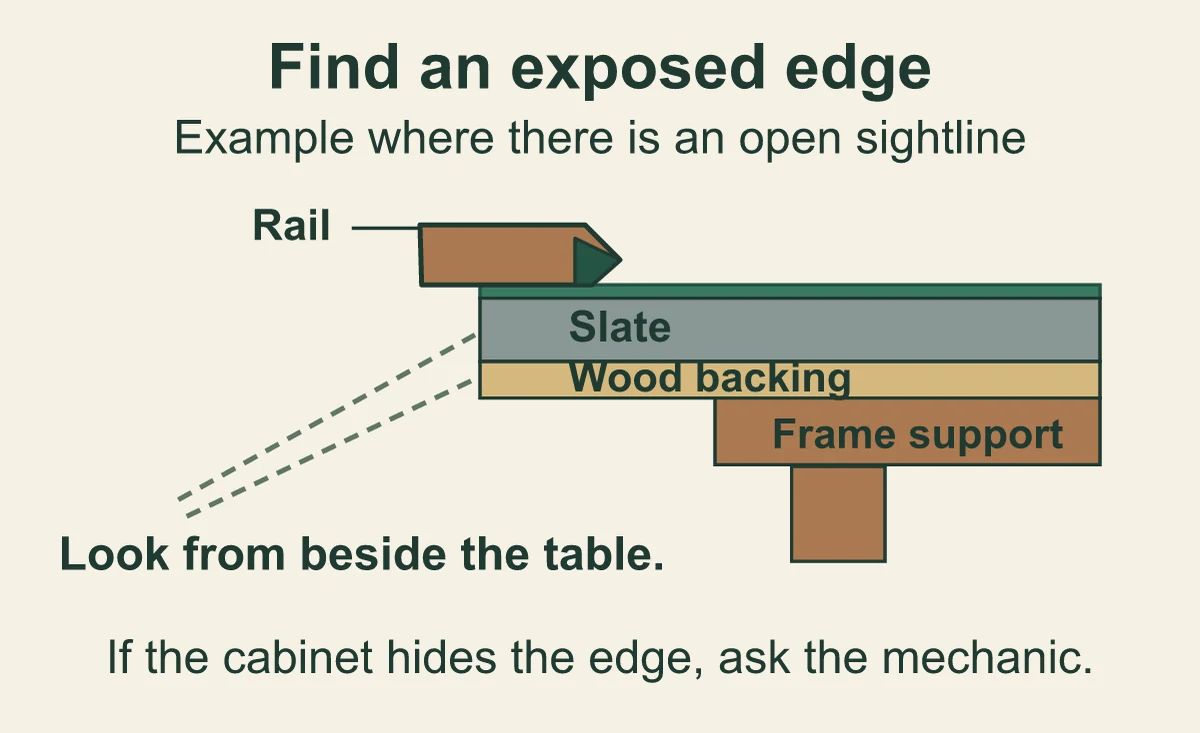
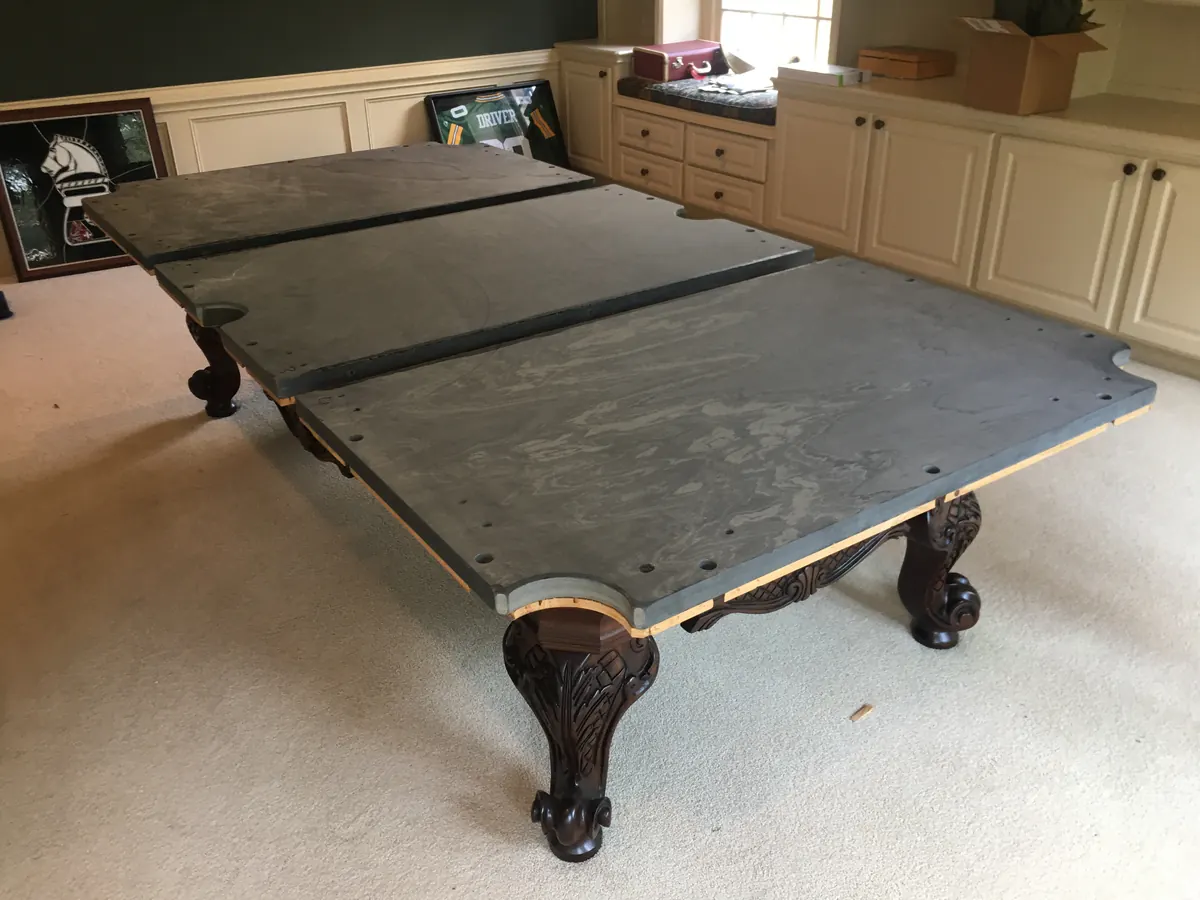
Look at the slate around the pockets, screw holes and exposed edges. If you find a line, chip or old patch, take a close-up and a wider photo that shows where it sits in relation to the playing surface and the supports. A joint between two panels, a mark within one panel and a break at an edge can look similar at first. Ask the installer to identify the mark and tell you whether it affects play or support before you agree on a repair allowance.
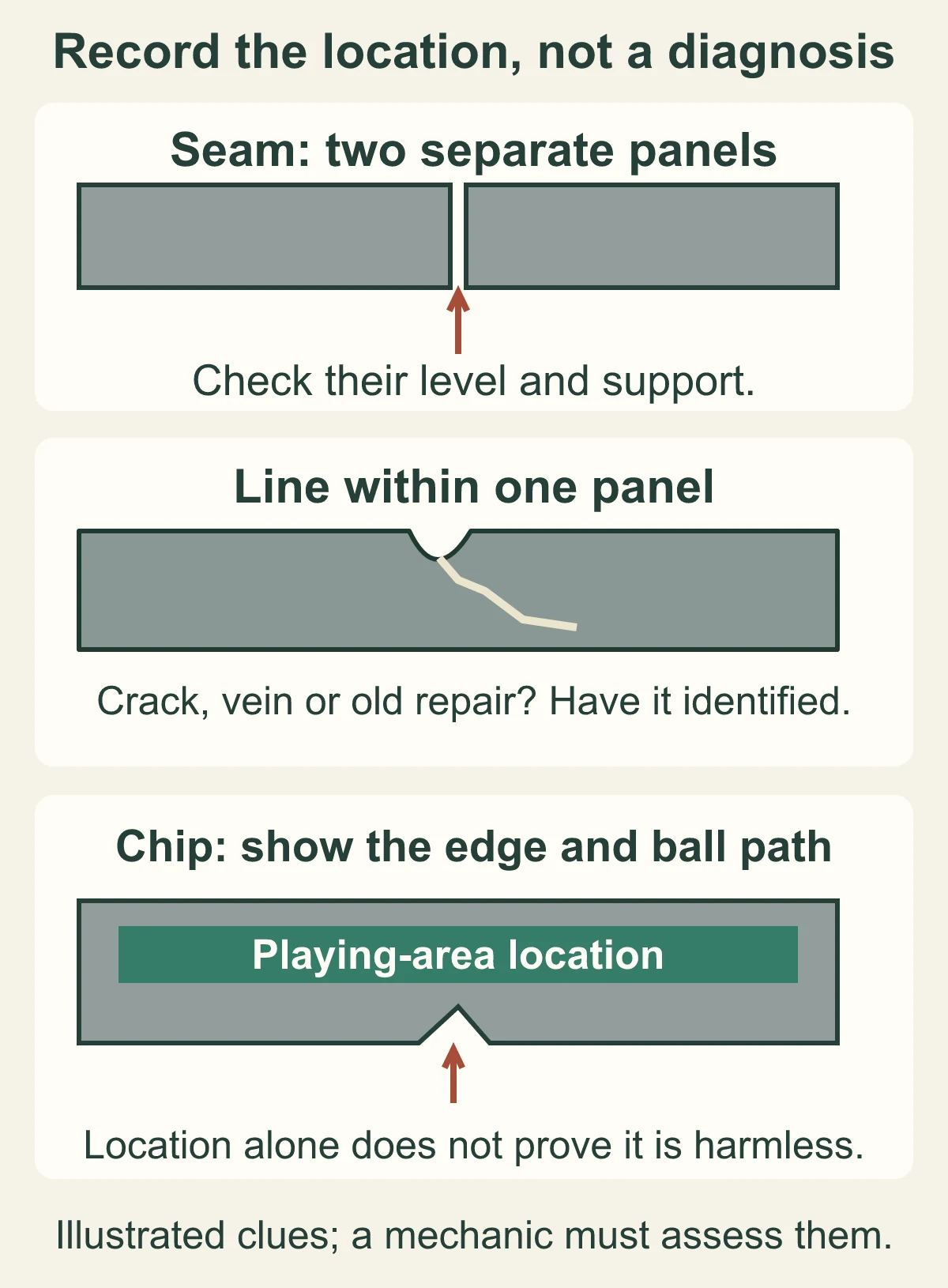
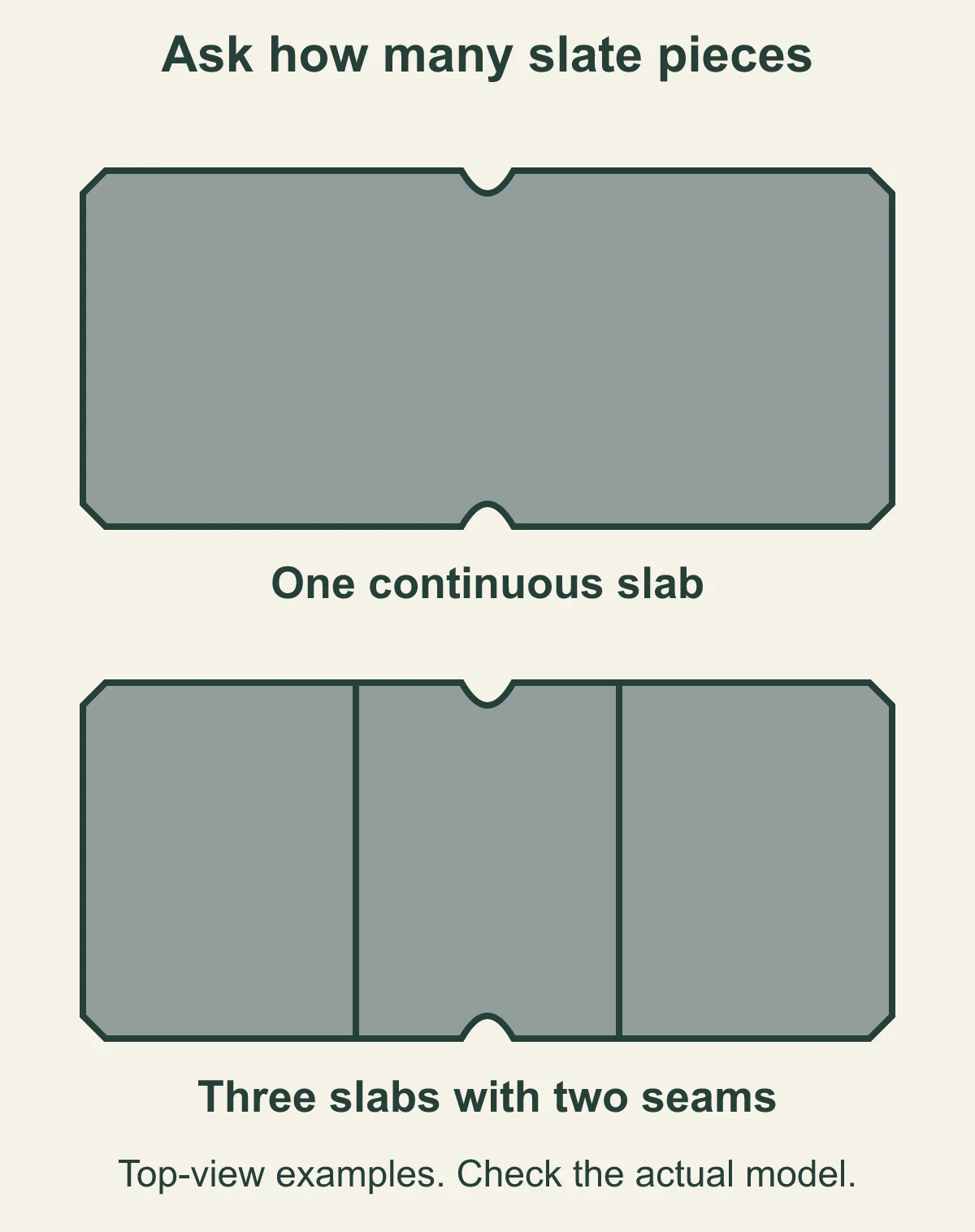
Find out how many pieces the bed has. A well-finished seam can be hard to see through cloth. Check the model’s documentation and ask for photos of the individual slate pieces if the table is already apart. A single-piece slate can be a workable purchase when the mechanic has approved the route and the equipment. A multi-piece table with a missing or mismatched panel still needs a repair plan and a quote before it is a fair comparison with a complete table.
Roll the same ball in several directions
Roll a clean ball gently down the middle, along the sides, across the width and over the likely seams. Repeat any suspect path in the opposite direction and, if possible, with another clean ball. Watch for a gradual drift toward one side and for a repeatable hop or change where a panel joins another. Compare paths through the same spot. A fast shot can carry through a small problem that shows up on a slow roll.
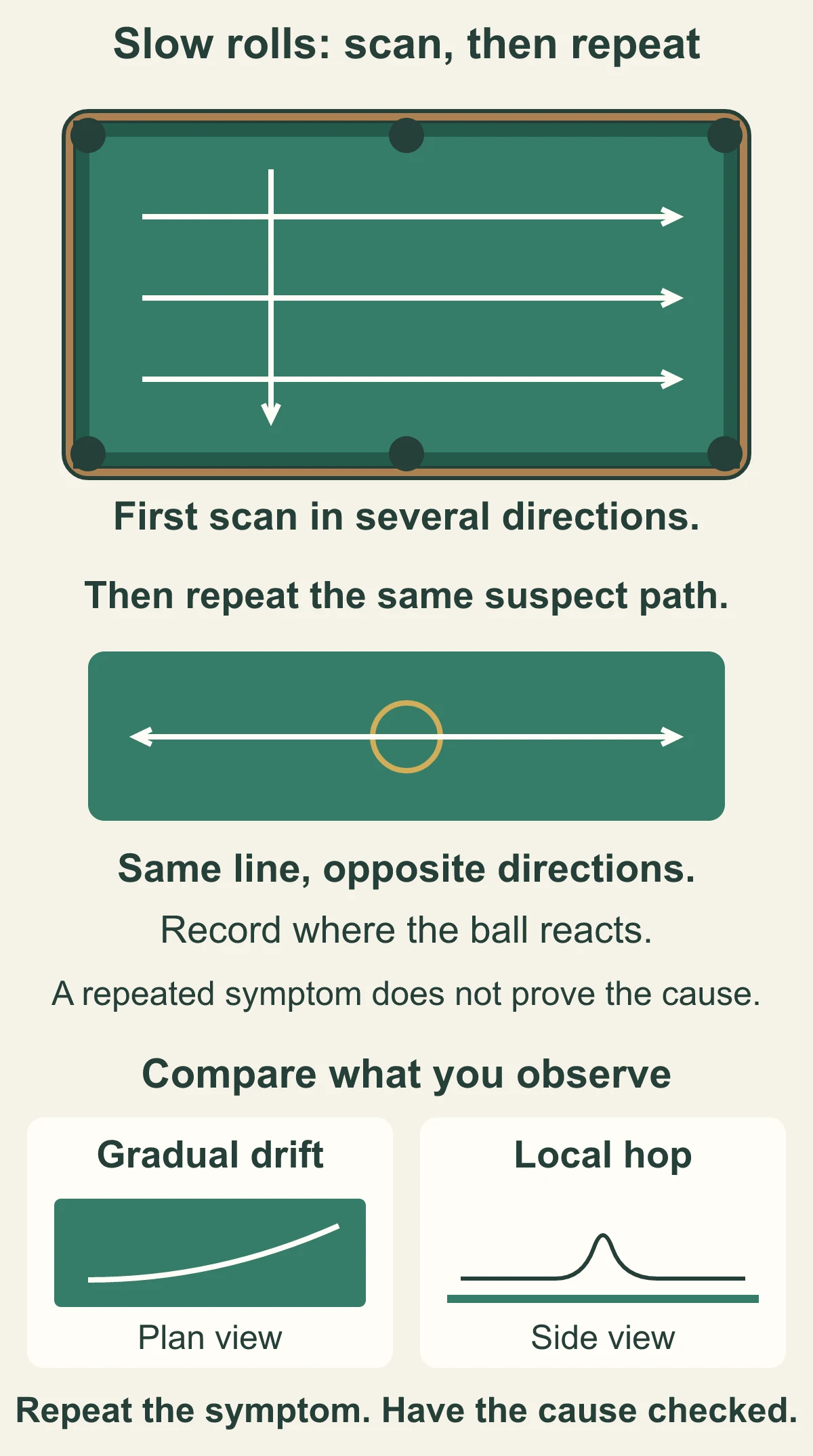
If several paths drift toward the same side, ask the installer to check how the table sits and whether the bed is level. If the ball hops or changes direction at the same spot on repeated rolls, show the installer where it happens so they can check the joint, bed and support there. Get their diagnosis before setting aside money for a repair. See the inspection guides from Crane’s Billiard Service and Dom’s Billiard Services.
Check the frame, cabinet, and legs
Look at the frame, joints and legs that carry the weight of the slate to the floor. Look past surface scratches and check the wood around the cross supports and leg mounts. A loose joint or swollen wood at a leg mount can change whether the table is worth buying.
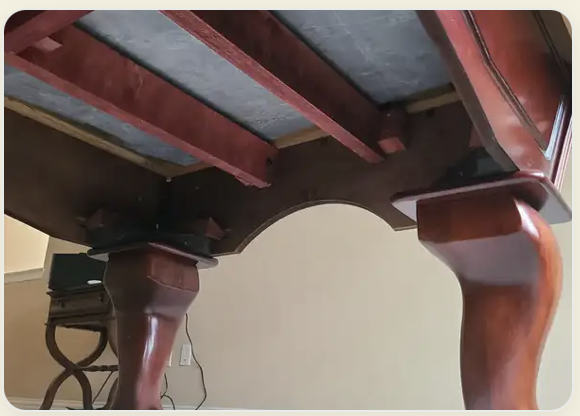
Look along the supports under the slate for a split, a gap at a joint, a loose corner block or an old repair around a bolt or screw hole. At the legs, look at the attachment points and feet. Compare the corners. Water marks, softened wood, swelling or pulled fasteners in those areas deserve a mechanic’s opinion. If the table already looks unstable, skip the push test and step back. On a stable table, gentle pressure on the cabinet can reveal movement at a joint. A rocking foot on an uneven floor and a leg that shifts at its mounting point are different findings.
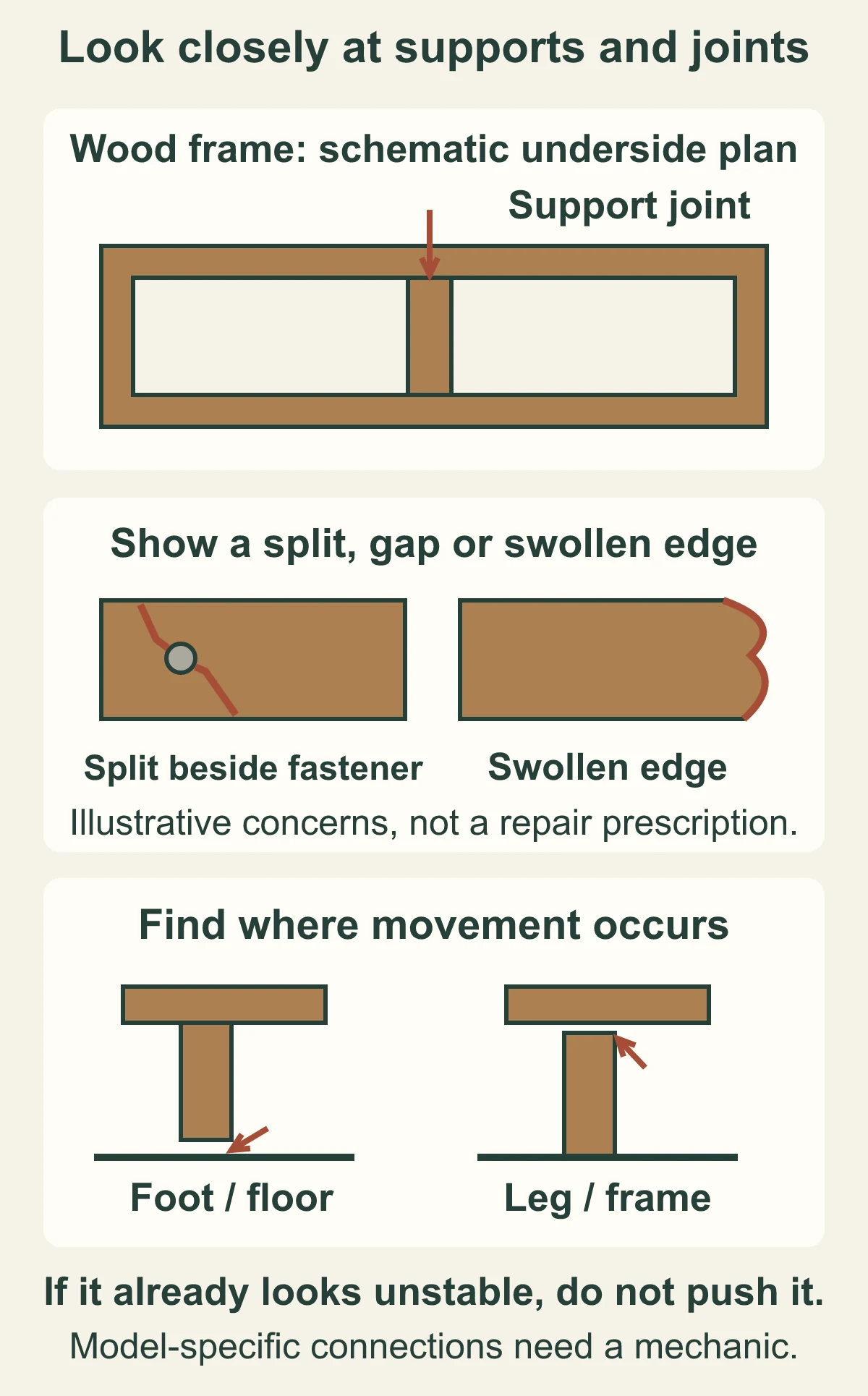
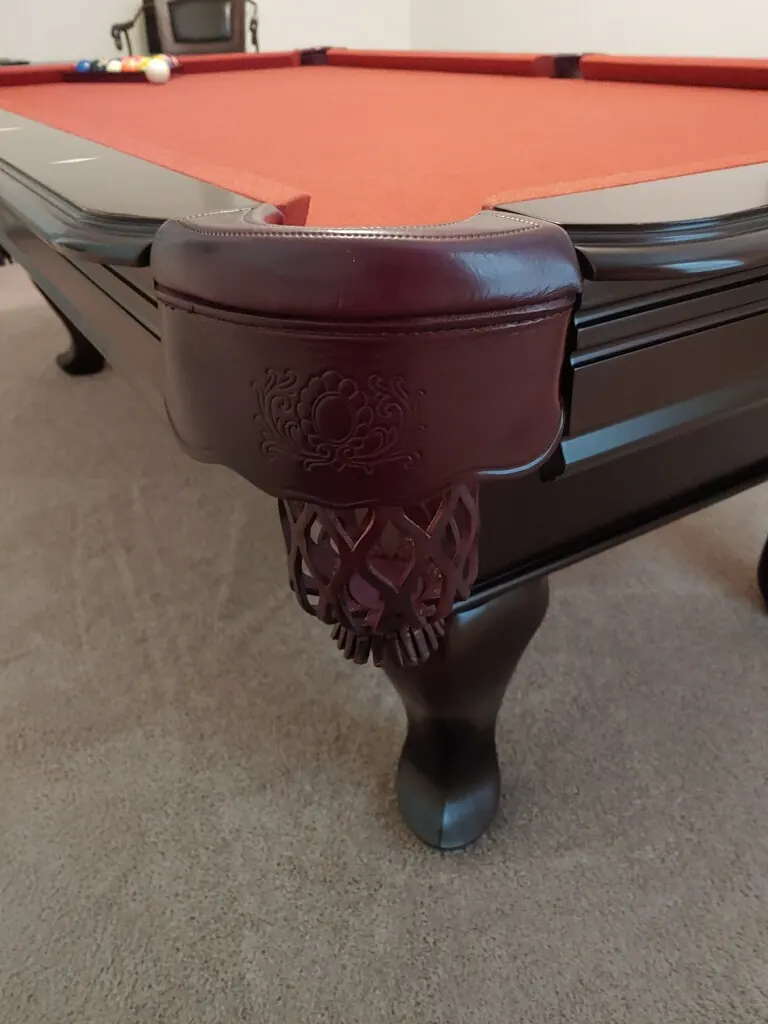
On a wooden furniture table, look for thick, solid-wood legs and sound joinery at the frame. Inspect the wood at each attachment. A finish color or wood-grain veneer alone tells you little about what is supporting the slate. Splits, swelling or pulled fasteners in the supporting wood need a repair assessment.
Check the designed connections on a steel frame or pedestal base. On a California House hardwood chassis, for example, the maker describes mortise-and-tenon joints, corner blocks and legs that bolt through the chassis. Whatever the model, check the parts that carry the load. See the California House construction and installation guide.
How to tell if the cushions are bad
Compare the rebound at several spots on each cushion using the same clean ball, angle and similar speed. A repeated dead spot is useful evidence. One short rebound after an uneven hand roll needs a repeat test before you price the repair.
- Start near the center of a cushion. Roll or shoot the ball squarely into it at a moderate speed. Note the return and sound. Test the corresponding cushion on the other side with the same approach.
- Check the ends as well. Move along the straight portion of the cushion while staying clear of the pocket facings. A rail can respond normally at the middle and differently at a point nearer the pocket.
- Repeat the weak spot. Record which rail and location produced the short return or dull sound. If the whole rail moves or rattles, ask the installer to inspect the attachment as well as the rubber.
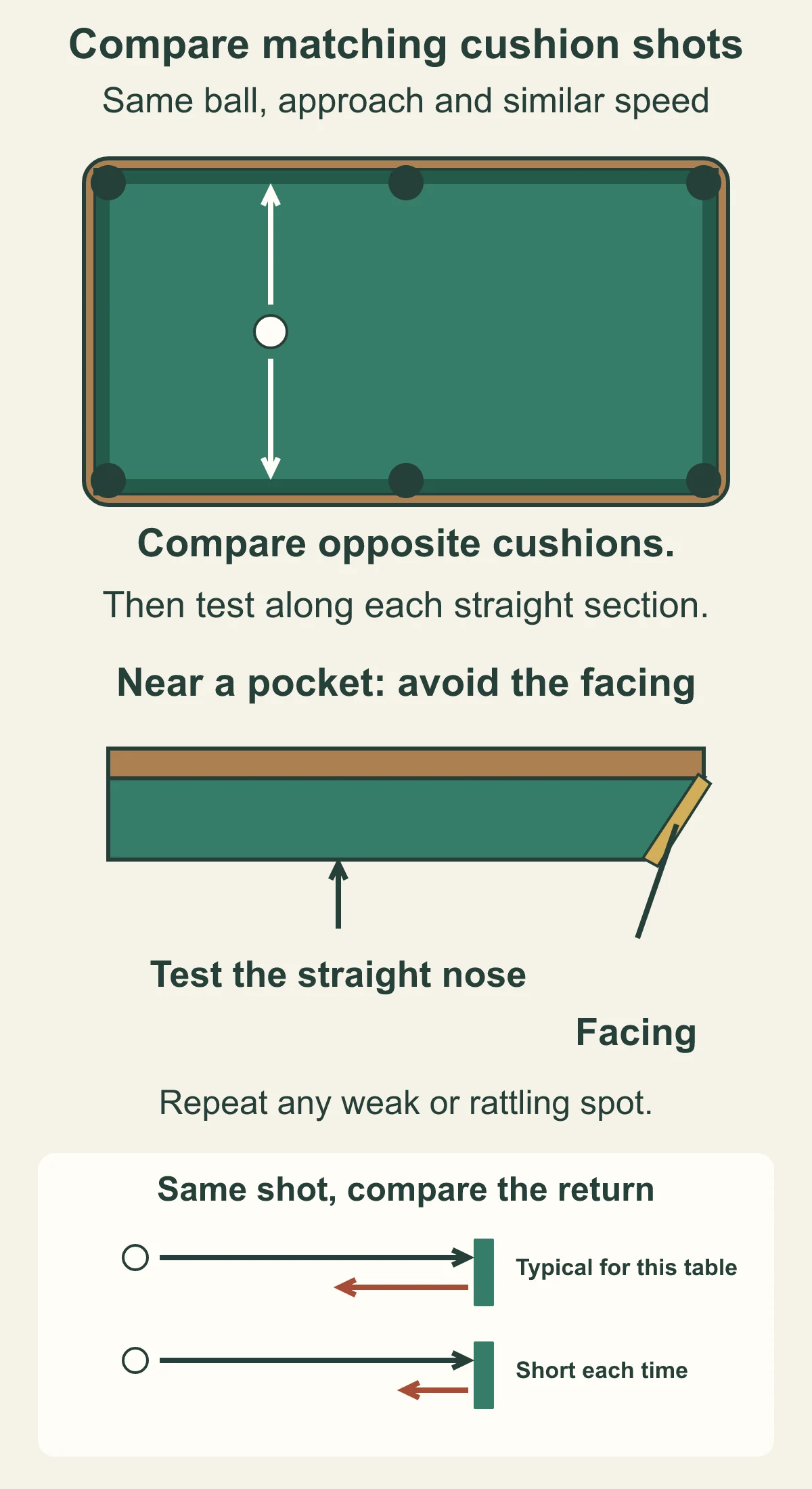
Use the same square shot at each cushion. In the close-up, aim for the straight cushion nose. The lower pair shows a ball coming back a shorter distance after the same approach. Repeat any weak spot and record where it happens.
Finger pressure can flag an obvious difference in firmness between cushions. The more useful result is the repeated ball response. Rail mounting, the condition of the rubber and the cloth all matter to the diagnosis. Compare like shots on this table rather than using a fixed rebound distance from another table. A replacement quote should say whether the mechanic will repair a rail, change a set of cushions, and recover the rails as part of the job. Pool Table Masters cushion testing and service
Check the cloth, pockets, and hardware
Once the bed and frame check out, look for torn or loose cloth, pockets that shift or fail to hold balls, and loose or missing hardware. Work out which issues will cost money to put right.
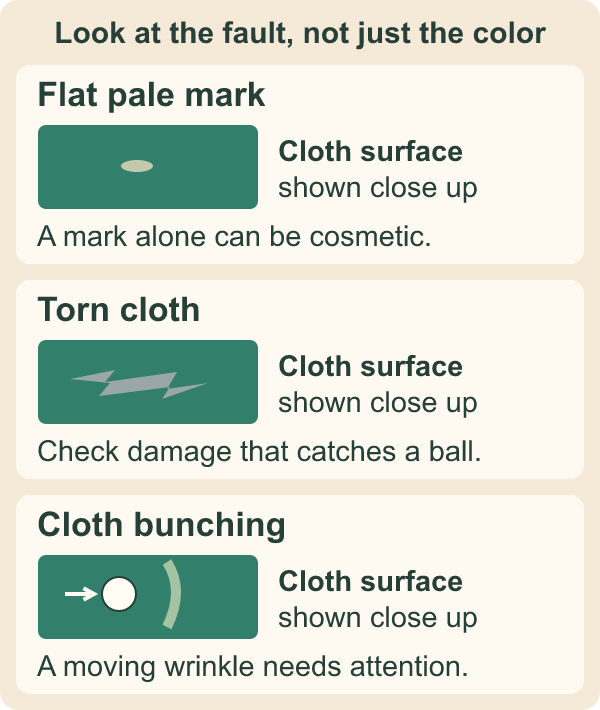
Look across the cloth in good light. See whether the wear is a surface mark, a cut or a loose patch. Ask the mover if the bed cloth can be taken off and reused and whether the rail cloth needs separate work. When you ask for new cloth, get a quote for the material and installation and confirm whether it covers both bed and rails. If that work is bundled into the move, put it in your budget once.
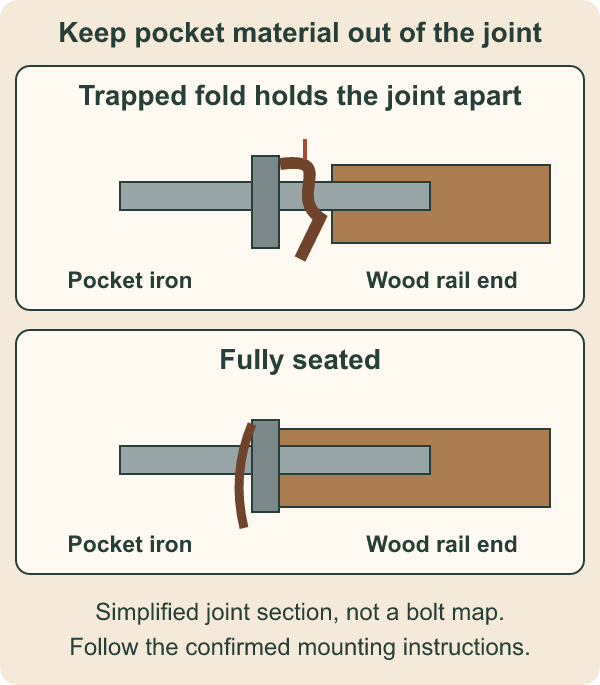
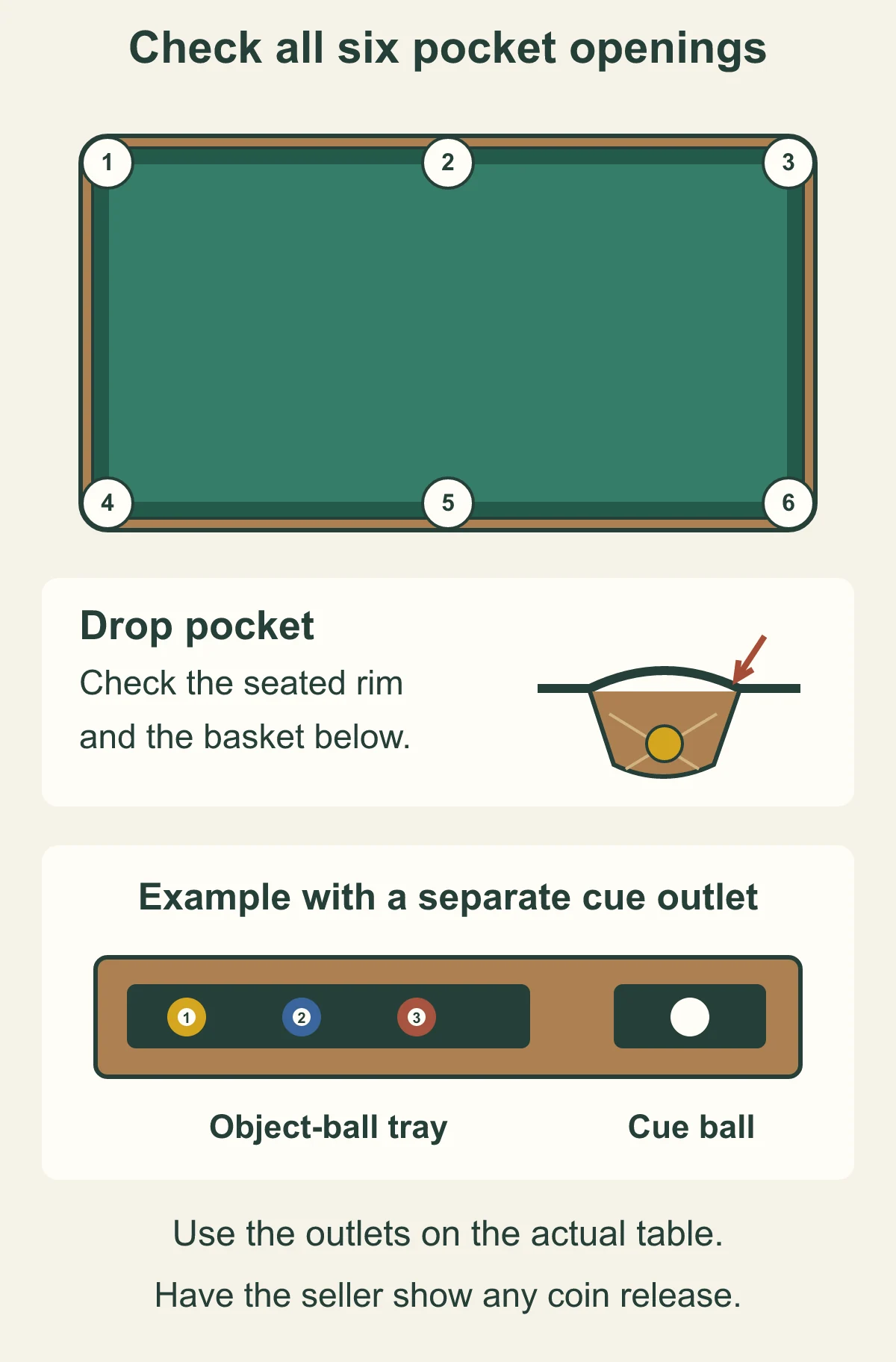
Try each pocket with the balls the table is meant to use. On a drop-pocket table, check that the rim sits in place and the basket or liner holds the ball. A loose fastener may only need tightening during setup. A torn basket, broken fitting or damaged mount can require a part. If the connection is hidden, ask the installer to look at the attachment if the pocket shifts or can’t hold a ball.
On a ball-return table, roll an object ball into each pocket and check where it comes out. If the model has a separate cue-ball outlet, send that table’s cue ball through too and check that it comes out at its own opening. If the table takes coins, have the seller operate the release and check that the held object balls reach their tray. Ask which keys come with it. The Valley service guide for older tables and its cue-ball separator note show why the correct ball matters.
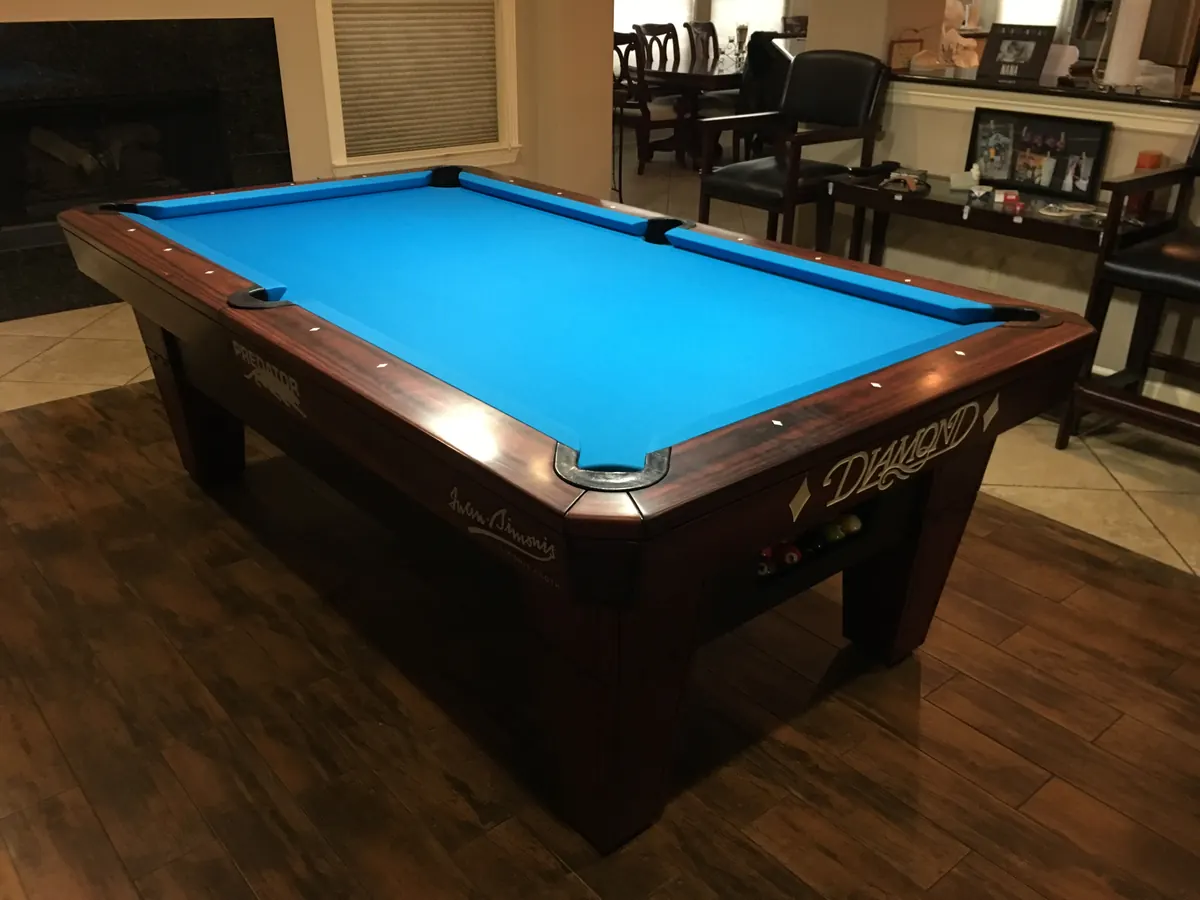
Check the accessories one by one if they are part of the offer. Look for a complete, usable ball set, racks that fit it, and cues you actually want. Ask what stays with the seller. Count included accessories only if they are usable and you intend to keep them. If you plan to replace the set, put the replacements in your budget. Do not raise your offer for accessories you would not otherwise buy.
Can you still get parts for it?
Favor a table a local mechanic can identify, move and get parts for. The maker’s badge is a start. The exact model, size and generation tell the mechanic which cushions, pocket fittings, rail bolts or return parts to look for.
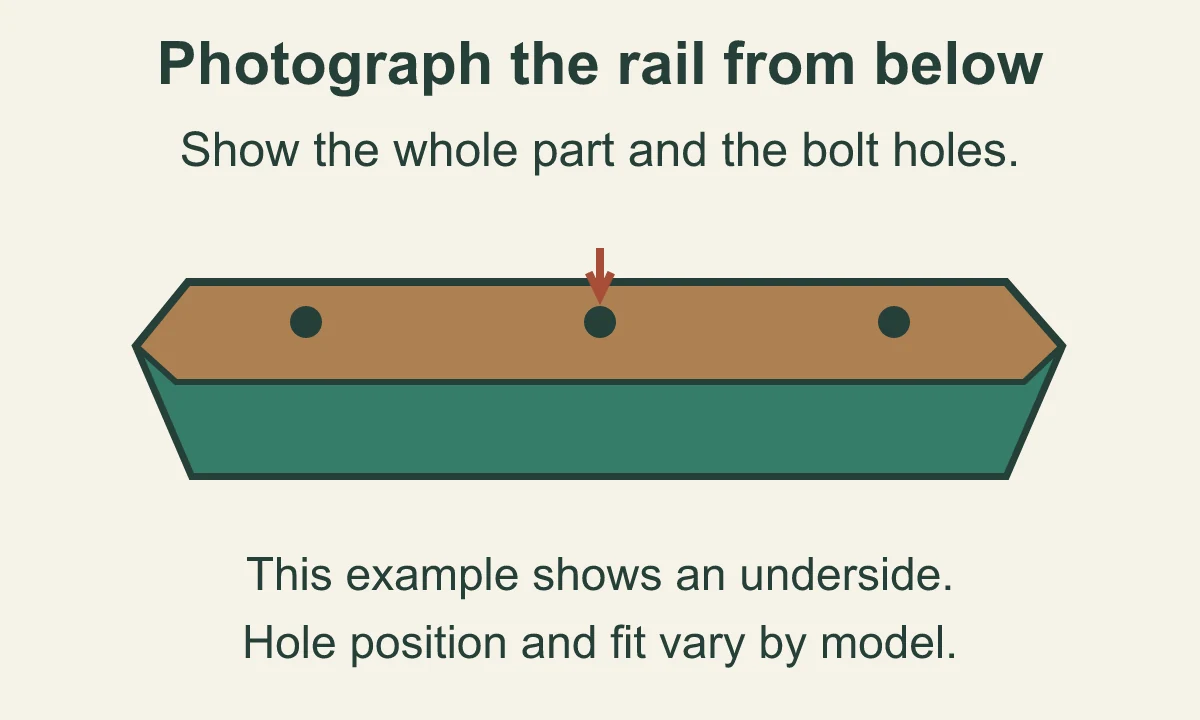
Send the mechanic the label, the part’s size and a photo of how it mounts. If you’re replacing a rail assembly, show its whole underside and all the bolt holes so the mechanic can match the pattern. Pages 4 and 5 of the Valley and Dynamo cushion rail FAQ describe which tables take their newer rails and where older tables need adjustments. Get a price for the parts and labor after the supplier confirms the fit.
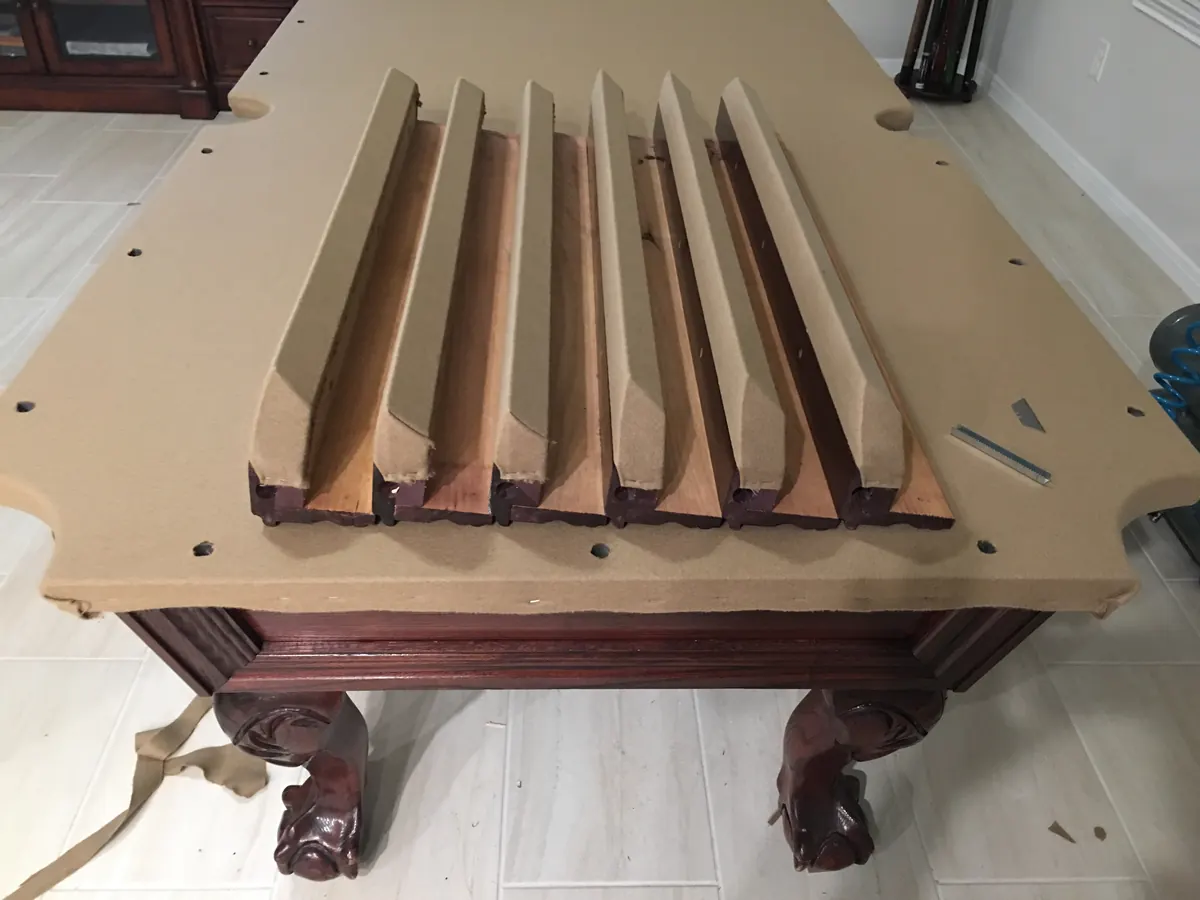
For an older or restored table, ask what work has already been done and whether the original parts you care about are present. If you are buying a playable home table, price it on condition, fit and available service. If the asking price depends on age, rarity or restoration quality, get a specialist familiar with that model to verify those claims before using collector prices as comps.
Ask who stands behind the table after it moves. A written dealer warranty on a used table and the original manufacturer warranty are separate. For example, Brunswick’s current published terms generally limit its warranty to the original purchaser and specify installation and service terms. Ask the seller or dealer for the terms that apply to this exact unit. Brunswick warranty terms
When to buy, negotiate, or walk away
Price wear you can identify. Pause when the condition or the route is unknown. Walk away from an ordinary playing-table purchase when an unresolved structural, slate or access problem could make the total exceed your budget. One serious issue is enough to stop the deal while you get it checked.
| Finding | Next step |
|---|---|
| Faded cloth, intact bed, sound structure and even response | Price the cloth you want and continue to the installed cost. |
| Repeatable weak rebound or a damaged pocket fitting | Ask what needs tightening, repair or replacement. Get a quote for any parts or added labor before reducing your offer. |
| Slow ball drift or a repeated hop in one area | Ask a mechanic to inspect the setup, seam and support before putting a number on the repair. |
| Cracked slate, swollen load-bearing wood or an unstable leg joint | Pause the purchase. For a repair project, have a billiard mechanic confirm what can be fixed and quote the work before you buy. |
| Hidden slate, unknown model or unconfirmed stair access | Make the agreement conditional on the necessary inspection or route confirmation. Pass if you can’t get it confirmed. |
Check the pieces before paying for a table already taken apart. Ask the seller to show the full set of matching slabs, rails, pocket fittings, cabinet or frame sections, legs or base, and fasteners. A photo of the table before removal gives you a reference for its intended assembly. If you can’t see the parts safely, ask the installer to check them. Covered slabs and an unsorted bag of bolts do not show whether the set is complete.
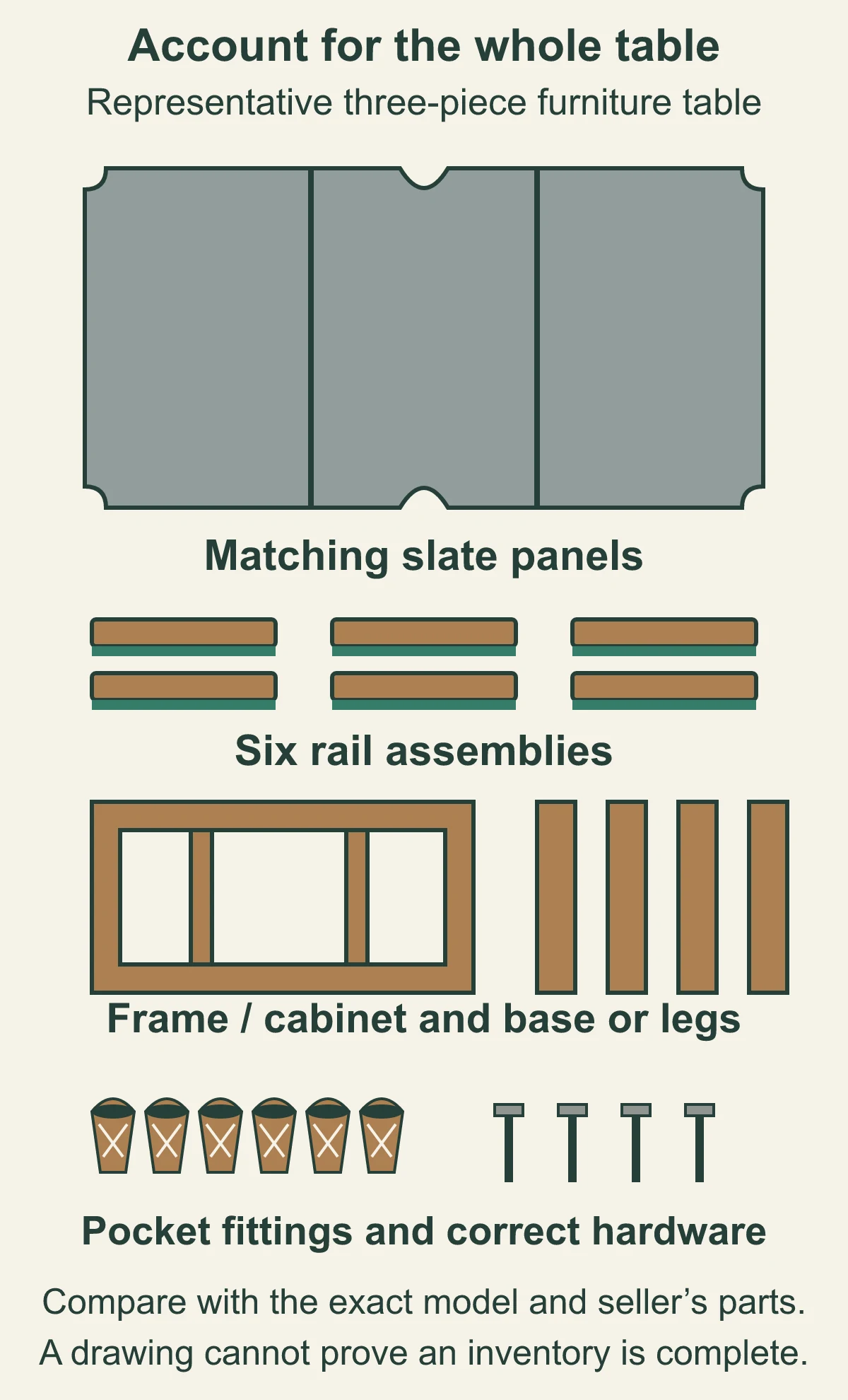
If the slate’s condition will only be visible during disassembly, agree in writing what happens if the mechanic finds a crack, missing panel or previous repair. Clarify who pays for disassembly if the sale stops and who is responsible for the parts at that point. For a table advertised as already inspected, ask which parts were visible and when. Settle those terms before you pay for the table or book the move.
What to include in the moving quote
Get a billiard mechanic’s quote for the whole job from the seller’s room to a level, playable table in yours. Compare the same services on each quote. Disassembly only, transport only and a full move can all appear under the same service name.
- Give the mover the model and bed configuration. Include photos, the actual size, the number of slate pieces and anything already taken apart. Ask which parts they will remove and which pieces will travel together. For an older commercial cabinet, ask whether the crew works on that specific design.
- Describe both routes. Photograph the stairs, tight turns, door openings and landings at each address. Tell them about long carries, elevators and any rules for using them. Ask which pieces are longest, widest or tallest as packed and whether they can clear every turn at both addresses before you pay.
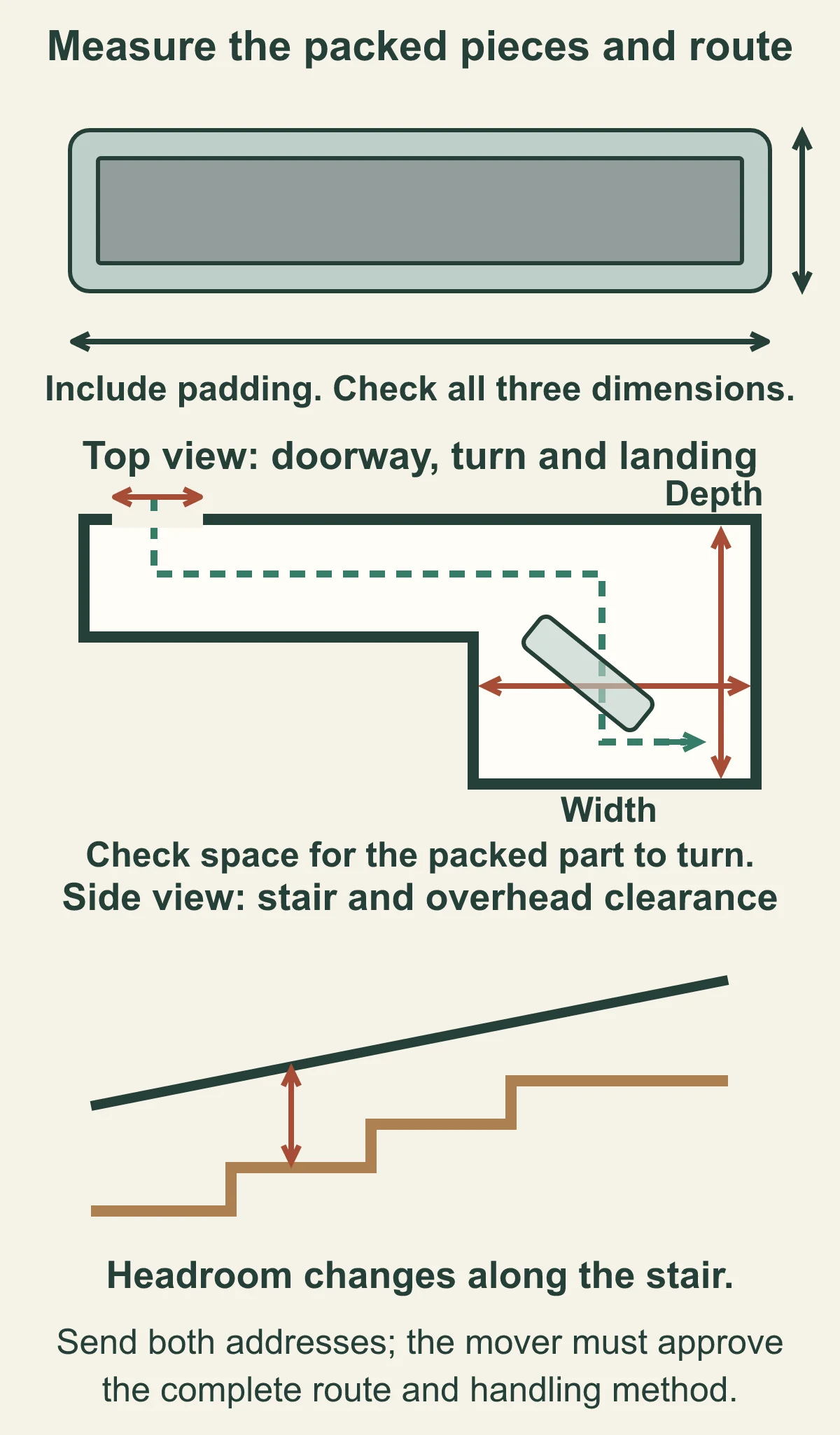
Have the mover check the size of the largest parts as they’ll be carried, including their wrapping. Give the mover the clear doorway, landing and headroom dimensions at both addresses. The rotated shape shows why a part that clears a door still needs room for the turn. - Confirm setup. Ask about assembly, leveling, work on the slate joints, and whether the old cloth can be reused. Find out who supplies missing hardware, whether replacement cloth is separate, and what the crew charges if the job must stop for a previously hidden problem.
Check what each price buys. The San Diego mover’s rates include disassembly, transport and setup for a local move within the stated scope. The Denver mover’s terms price stairs separately and include refitting the old cloth when it can be reused. Ask for the work and any extra charges in writing. The pool table moving cost guide helps you compare quotes. For a three-piece slate table, the moving cost calculator gives you an estimate based on distance, stairs and access. Get a separate quote for special handling.
Leave the carry and assembly method to the mechanic. A single-piece bar-box bed and a three-piece furniture table present different lifting and access problems. Ask who will handle pickup, what happens if the route turns out to be unsuitable, and what the mover covers if the table or either property is damaged. If the floor’s ability to support the exact table is uncertain, give its model, weight and leg locations to a qualified building professional before choosing the room.
Before move day, confirm the handoff:
- With the seller: date, pickup window and which pieces are included.
- With the mover: both access routes and the work you approved.
- For your room: final table placement and the checks you will make after setup.
What is a good price for a used pool table?
A good price is one you can afford after the move and repairs, and one that makes sense next to what similar tables sell for. Start with recent sales and find out which costs were included. Your maximum offer for the private table should leave enough for the work it still needs.
Compare like tables and like terms
Start with the exact model and size when you know them. Match the bed configuration and usable condition. Then check whether the price includes a mover, setup, cloth, parts or a dealer warranty. A private table you must remove and a dealer table installed in your room can look far apart on the sticker and much closer once you price the same work.
Use recent completed sales when you can find the actual sold price. Compare nearby examples first, especially when pickup limits who can buy. Active listings show what sellers are asking. If an accepted offer is hidden, leave that number out of your sold-price comparison. Use broader examples when exact local sales are scarce and allow for the added uncertainty. eBay’s guide to sold-price research
Keep different categories separate when you compare. For a non-slate table, look for the same portable or fixed design and include its condition and pickup terms. For a home slate table, look for a similar cabinet, bed and service history. For a commercial table, compare the same return or coin equipment and the move it requires. Restored antiques need an exact-model and restoration comparison. These distinctions are more useful to your offer than a nationwide tier based on the badge alone.
The used pool table value estimator can give you a rough range for comparison. It uses fixed assumptions about brand, size, age and condition. Use the exact model, recent comparable sales and your written move quote to make the offer.
Work out the most you can offer
Start with whichever is lower: your total budget or the price of a comparable table delivered and set up. Subtract your move, setup, repairs, missing items and a reserve for small surprises. What’s left is the most you can offer the seller. If you have no useful comparison, the calculation gives you an affordable limit. Look for actual sold prices before deciding whether that limit is a fair offer. Get a written repair quote for any suspected slate or structural problem before pricing the table.
Suppose your all-in budget is $2,000. These sample numbers show how the offer changes when the work or alternative changes. They are not market rates.
| Scenario | Calculation | Seller ceiling |
|---|---|---|
| Original plan | $2,000 limit − $650 move/setup − $300 cloth/labor − $150 reserve | $900 |
| Add a $250 rail repair | $2,000 − $650 − $300 − $150 − $250 | $650 |
| Same repair with a $1,900 installed alternative | $1,900 limit − $650 − $300 − $150 − $250 | $550 |
At a $700 asking price, the original plan totals $1,800. Adding that $250 repair makes it $2,050, above the budget. With a complete $1,900 installed alternative you would be comparing $2,050 with $1,900, so the private-table seller ceiling falls to $550. Confirm that the alternative really is comparable and includes the same necessary work. Use your own quotes and avoid counting bundled cloth or setup twice.
Tell the seller which repairs or missing parts are holding down your offer. Show the quote if you have it. Faded cloth that still plays well only costs you money if you choose to replace it. If the rails need repair or a fitting is missing, include the cost. Agree in writing on any condition that still needs to be checked before you pay.
What to check after delivery and setup
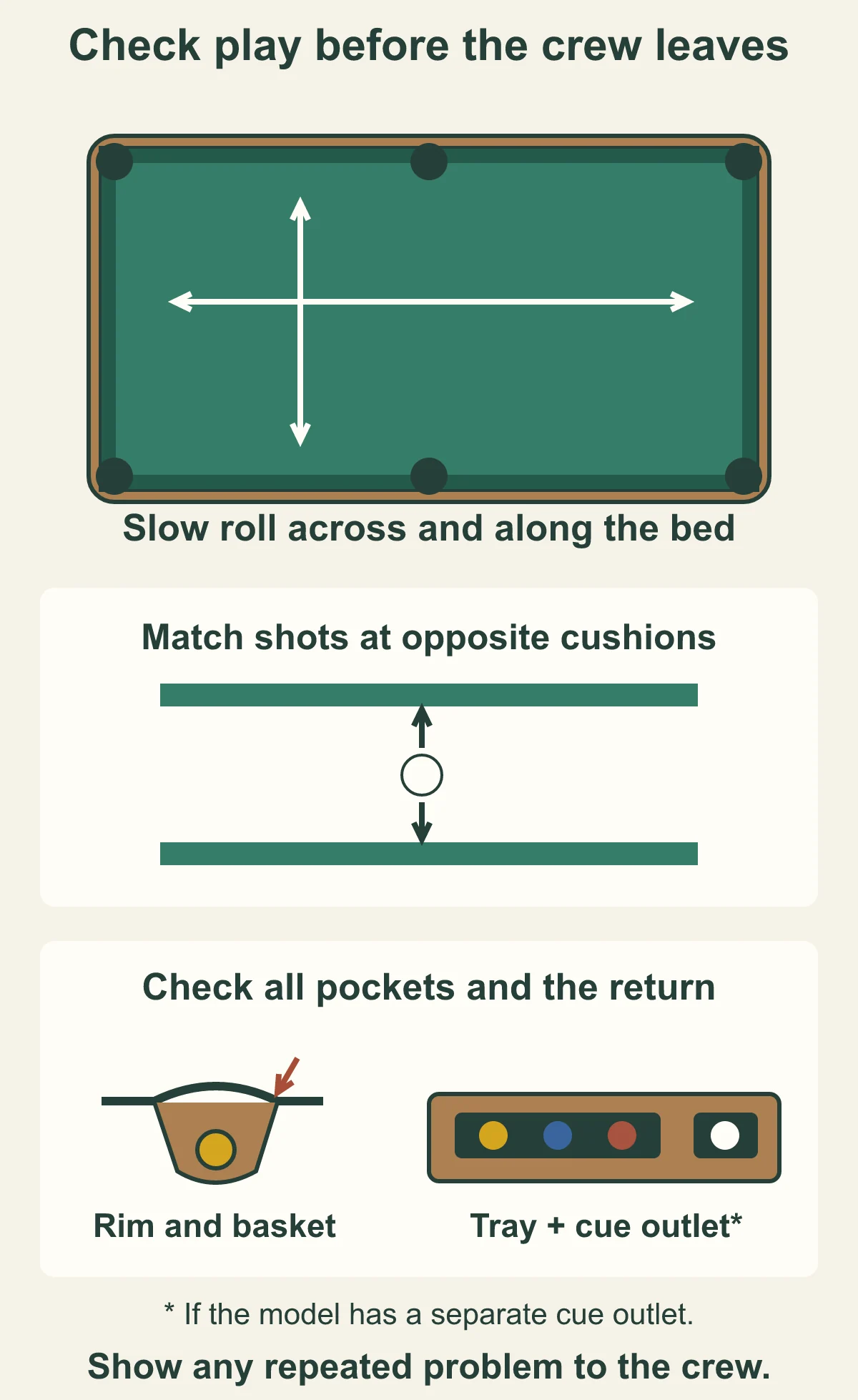
Make sure the assembled table plays as agreed before the installer leaves. Look for complete parts and seated pockets, then send a ball on slow rolls in both directions across the playing area. Compare matching shots at opposite cushions and try all the pockets. On a return table, watch where the object balls and the cue ball collect. Show the installer any problem you can reproduce while the crew is there.
Keep the model and serial photos, the itemized receipt, and the terms for any return visit. Ask how the installer wants you to care for the fitted cloth and who to call if the same ball path starts drifting or hopping. Follow the cloth maker’s care instructions and use a clean ball when comparing play over time. The Brunswick table care guide is one example of manufacturer maintenance advice.