Start with the table you actually have
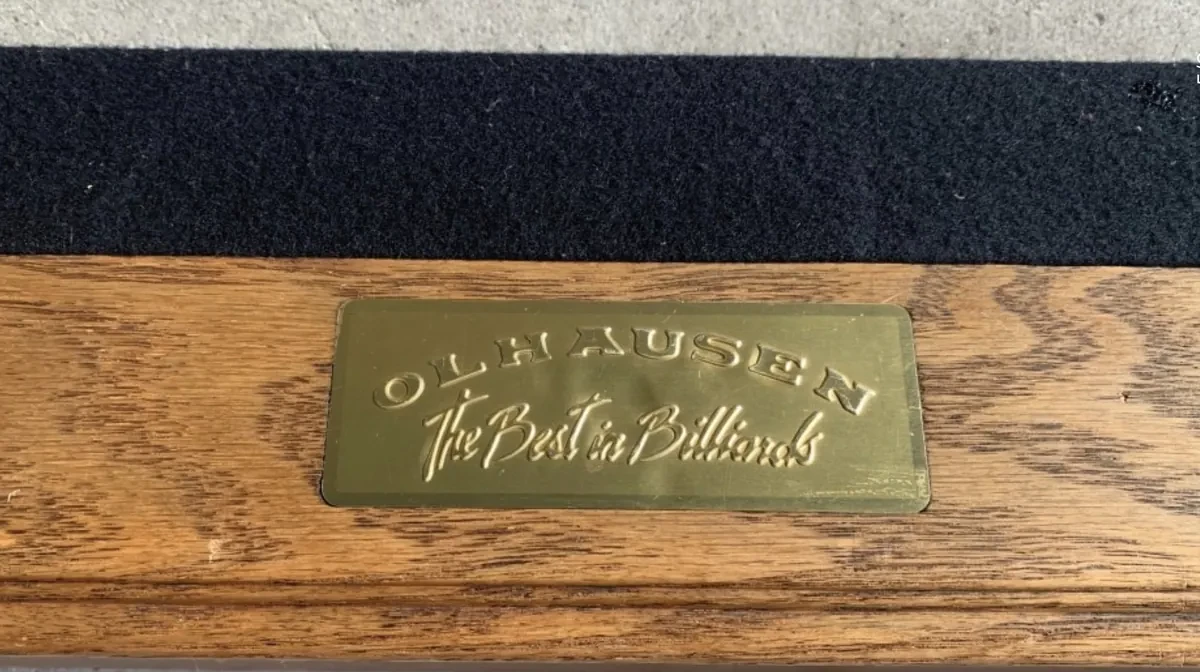
Before you price a used pool table, look for the maker’s name on the rail or cabinet. The exact model may be on a separate label or in the original paperwork. Missing both? Send photos to the maker or a local dealer to see if they can identify it. If the model is still unknown, describe the table by its size, playing surface, pocket type and condition. Buyers need those details to find comparable tables.
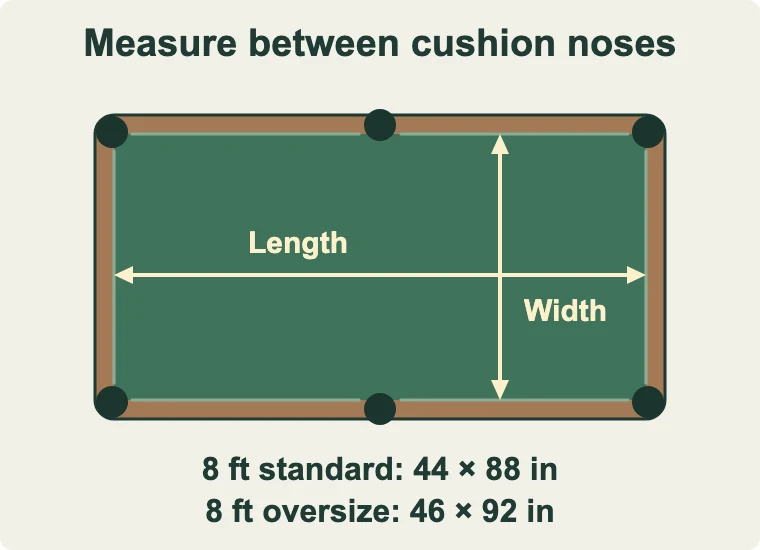
Measure the playing surface between the cushion noses and record both dimensions. The nose is the part of the cushion the ball hits. Also note the overall length and width of the cabinet. Use the playing measurements to compare models and give the cabinet dimensions to the mover. If you’re buying, choose By room size in the room size calculator. Check the tightest shot separately if a wall or post is close.
Confirm what supports the cloth. Match a wood-based playing bed, such as MDF, with similar wood-based beds. Compare slate with slate. The comparison of playing surfaces shows what to check under the cloth when two cabinets look alike. Ask about the number of slate pieces when the table has slate. One-piece and three-piece tables may have very different pickup requirements. If you can’t confirm what’s under the cloth, leave it as unknown. Check paperwork, a label or photos you already have before paying to take a table apart for a listing.
Make a note of anything else that changes what a buyer gets. That could be a working ball return, the operating parts for a coin mechanism or a dining top fitted to that cabinet. Record what goes with the table and what stays with the seller. If an auction groups a table with accessories, that sale price covers the lot.
Find out what comparable tables sold for
Search for the maker and model first. Add the playing size or bed material if the results mix different versions. When two listings say “8-foot,” the pool table size chart shows how standard and oversize playing surfaces differ. Look through completed auctions and recent sales that show the actual amount. Start close enough to home that a buyer could reasonably choose between the tables. If the same model rarely comes up, widen the area and record the distance. A table you have to collect a few towns away can make a useful comparison once you know the extra cost of getting it home.
Keep a short record for each completed sale you might use. You can copy these fields into a note while you search.
- Table. Maker, model, playing size and bed material.
- Condition. What needed work and what came with the table.
- Sale. Amount paid, date, town and any known buyer fees.
- Pickup. Whether the sale included delivery or setup and who paid for removal.
A dealer table that includes cloth and installation makes a useful alternative for a buyer. Keep that price on its own line so you can compare it with the total cost of a private purchase.
A live ad gives you the asking price. Mark it that way until you have a completed-sale record. A listing can disappear when the seller withdraws it, gives the table away or takes a different price. Some sales marked Best Offer also hide the amount accepted on the public page. If you use eBay’s seller tools, its Product Research guide explains how it reports the actual accepted price. Check the result carefully to make sure you’re looking at a whole table and the right model.
Try to collect several close matches before choosing an asking price. A sale from the same area with a similar condition and pickup arrangement deserves more weight than a higher bid on a distant table that came with delivery. If you find only one good match, use it as a reference and keep looking. Two different models from short estate sales can show what to watch for without telling you how much yours will sell for.
Two sold pool tables and what the bids covered
Both estate auctions added a buyer’s premium to the winning bid and left removal to the buyer. The auctioneers published these prices and the condition of each table. See Wardlow’s Brunswick Orleans lot and Brown Button’s Olhausen Innsbruck lot description. The auction catalog lists the final price for the Olhausen.
| Table and sale | Winning bid | Condition and pickup |
|---|---|---|
| Brunswick Orleans Louisville, KY October 14, 2026 | $530 | Rail and frame finish wear, worn pocket trim and tears near pocket openings. Wardlow’s terms added a 10% buyer’s premium and required the buyer to arrange the move. |
| Olhausen Innsbruck Leawood, KS November 1, 2026 | $180 | Brown Button described the 8-foot, three-piece slate table as fair and included accessories. The bid excludes the buyer’s premium. The lot required insured movers. |
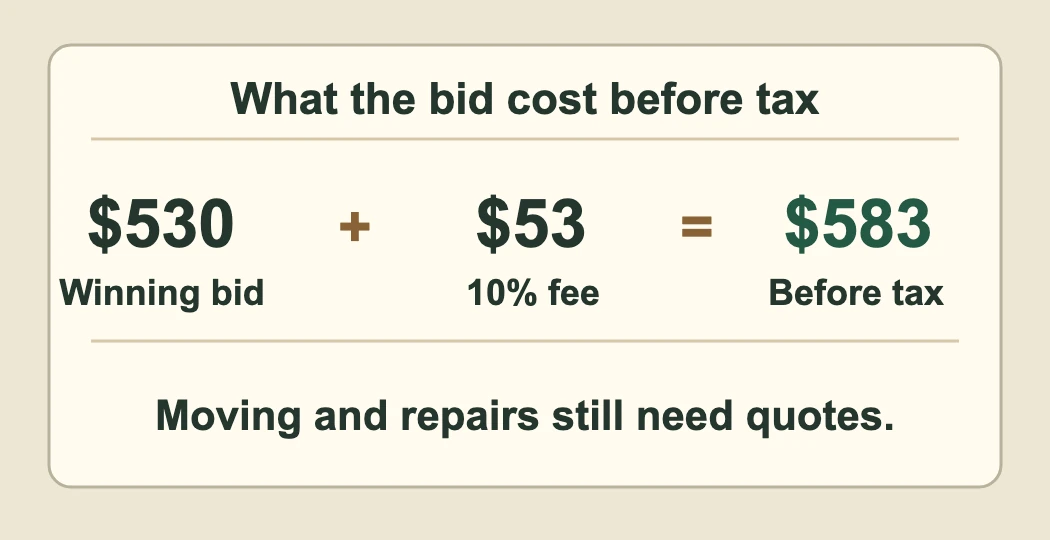
Apply the fee to the Louisville bid and the purchase comes to $583 before any tax, moving or work on the table. Get a quote for recovering the torn cloth. The ad gave cabinet dimensions but didn’t identify the slate piece count, so a mover would still need that information before confirming how to get the table out. Ask the mover for a quote that covers removal, setup and any cloth work.
The $180 Leawood bid comes to $208.80 before tax and moving after Brown Button’s 16% premium. Buyers also needed an insured mover for a scheduled pickup window. Before bidding on a table with those terms, confirm an insured mover can meet the deadline. Ask the auctioneer about access and whether the crew can take the table apart on site.
Price the condition and the work it needs
Start with the slate, frame and legs. The legs and their joints carry the bed, cabinet and rails. On a wood table, look for thick, solid-wood legs with sound joints. Check the maker’s specifications or ask the seller what the legs are made of. From floor level beside the table, look where each leg meets the frame. A gap at the joint, a split in the wood or a fastener backing out needs a closer look. Ask for photos of the joints, braces and exposed slate edges you can’t see without moving the table. A split joint, broken brace or cracked slate can cost far more to deal with than worn cloth. The inspection guide from Crane’s Billiard Service explains what to check on the slate, cabinet and cushions.
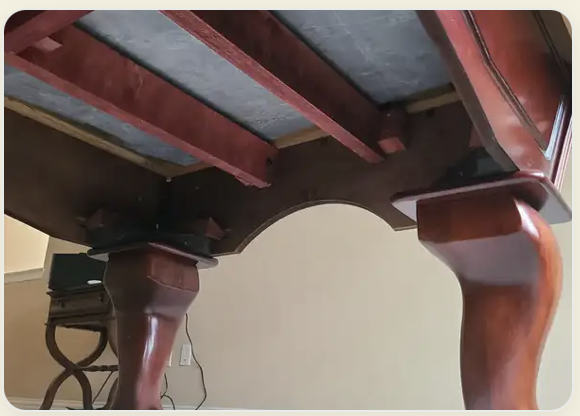
Look at finish wear separately. You may be able to live with a shallow scratch in the apron. Get a separate finish repair quote for any gouges or lifted veneer you want fixed. A pocket that wiggles may just need its attachment tightened during setup. Write down a torn liner, broken bracket or missing hardware separately and ask what that specific repair takes. The price should reflect what’s wrong with the table you’re looking at.
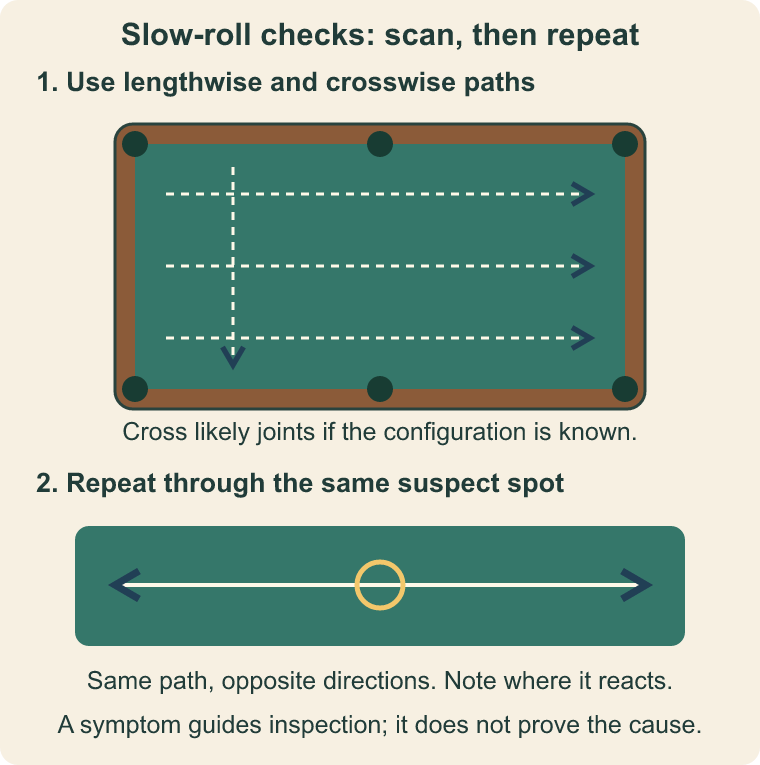
Roll a clean ball slowly along the length and across the width. If it drifts or hops in one spot, roll it through that spot in the opposite direction. Note where it happens so the installer knows where to check the level, slate seams and supports.
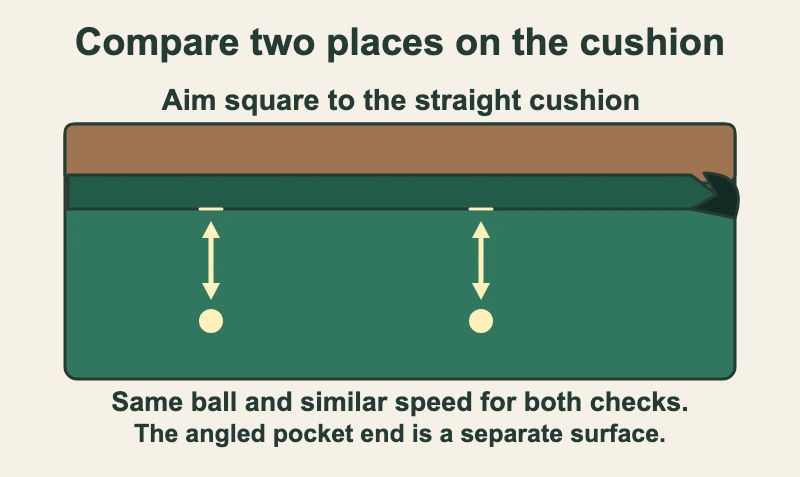
To compare cushions, send the same ball straight into the middle of several cushion sections at about the same speed. Look for a section that gives a much weaker response than the others. That gives you somewhere to look closer. Ask about loose rails, worn rubber and work already done before pricing new cushions. Have the installer confirm which cushion profile fits your rails.
Check the cloth near the pockets for tears and feel for ridges or loose spots. If you want new cloth anyway, get a quote for recovering the table while it is apart. Ask whether the installer can reuse the existing cloth if you plan to keep it.
If the table is already in pieces, compare the panels and check around screw holes, pocket cutouts and edges where chips or damage might be visible. Count the rails, legs and fasteners and ask the seller to point out any missing pieces. An unassembled table gives you a better look at some parts, but you can’t test how the ball rolls or how the cushions play. Put that uncertainty into your offer or look for one you can see assembled. Use the used pool table inspection guide for a walk-through before you agree to a price.
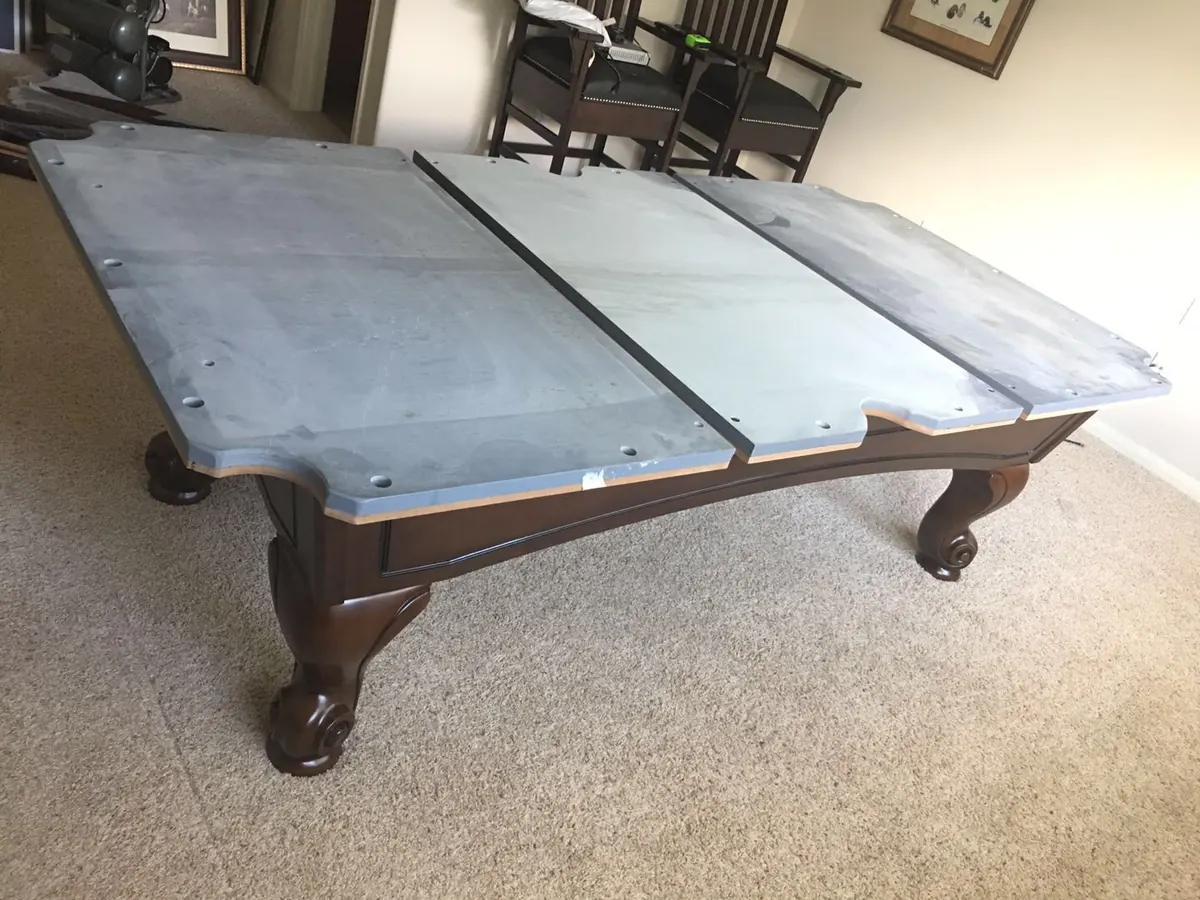
For routine wear, send the mover or installer photos first and ask what can be priced from them. If the frame or slate looks damaged, find out whether a repair or the correct replacement is available before committing to the sale. Leave room for the actual work in your budget or pass if you can’t find out what it will take. If both tables need new cloth, use that sale as a match on cloth condition. Include your own cloth quote when you work out what the table will cost you installed.
Buying? Start with the installed cost
Ask for a move quote based on the actual table and both locations. Give the mover the model, bed type, piece count if known, pickup date, stairs and any tight turns. Ask whether the price covers disassembly, transport, reassembly and leveling. Get the price of the complete move and setup before you agree on a purchase price. Ask what happens if the mover finds something missing once the table is apart.
Compare the total with a similar table you could buy from another seller. Keep the playing size and type of bed comparable. Include cloth if you need it and check whether the dealer’s price includes the work of getting the table level in your room. If a reasonable dealer option is close in price, it’s worth asking about condition, support after installation and what any warranty covers. Use the pool table cost guide to see which charges may sit outside the price of a new table.
Suppose a dealer can get a comparable table ready to play for $1,500. For the private sale, assume these three amounts cover the entire purchase.
- $500 to move the table and set it up.
- $200 for the repairs it needs.
- $800 for the table itself.
Both options cost $1,500. You would need to offer less than $800 to save money on the private sale. For your own comparison, check tax, fees and missing gear, and count setup once if it’s included in the move.
Keep the highest amount you are willing to pay for the whole job in mind while negotiating. If you’re at an auction, include the buyer’s premium before choosing your maximum bid. At a private sale, ask who pays for dismantling and what goes with the table. Then put the price and pickup arrangements in writing so both sides are counting the same work.
Selling? Set a price you can explain
Start with a completed sale that matches your table and pickup terms. If the sale included moving and setting up the table and yours is pickup only, subtract a quote for the same work. Suppose a similar table sold for $1,050 with disassembly, transport, reassembly and leveling included. Your mover quotes $450 for those four steps on a comparable route. That puts the pickup-only comparison around $600 before you adjust for condition or included accessories.
Say whether the table is assembled or already taken apart. Give buyers enough information to ask a mover for a price before they visit.
- Show the whole table and close-ups of the maker’s label, cloth and any damage.
- List the accessories that stay with the table.
- Give the pickup deadline and describe stairs, tight turns or other access problems.
Before you decide what to ask, put the two or three closest sales next to your listing. Once the pickup terms are comparable, look at any differences in condition. If the closest pickup sale had torn cloth and yours is sound, ask a mover if yours can be reused. A buyer who wants new cloth either way may pay little extra for it. Then decide what you can accept if a buyer can meet your pickup date.
Keep your asking price and the amount you’ll keep separate. Suppose you accept $800. If you agree to put $100 toward removal, you’ll keep $700 before any selling fees. A dealer offer with pickup included can be worth comparing to a larger private offer if that private buyer wants you to cover part of the move. Decide what you need to keep based on the arrangement you can actually make.
When time is short, get a dealer’s pickup offer or widen your local audience before the last day. Add an answer and a clear photo when buyers keep asking the same question about access or condition. If interest drops after they get move quotes, compare the installed cost with their alternatives. That tells you more about what to change than a count of listing views.
When there are few comparable sales
Look for an older sale of the same model before comparing a different one. If you still need a match, choose a similar model of the same playing size, bed type and use. Save the date and note which feature differs. A working coin-operated table can have a different buyer from a home table, so compare it with other working coin-operated tables. Check the return and coin mechanism if those are part of the price. Valley-Dynamo’s valuation FAQ points owners to local supply, demand and condition when looking for examples.
If all you can find are active ads, use them to see what a buyer could choose today. Check whether delivery is included and how long each ad has been up when that’s visible. Ask a local billiard dealer what they’d pay and whether their offer includes pickup. If you’re buying, ask a mover what it would cost to move the table and set it up in your room. You can list a table and see which offers arrive, provided you have time. Need a specialist valuation for a possible collectible? Gather the maker’s marks, documentation and photos before committing to refinishing or taking a quick offer.
A free used pool table still has to leave the room. Before you put it up for free or take one home, check who will handle the move and how soon they can do it. When there’s a firm deadline, get a written removal quote while you’re still looking for a buyer. You can then compare an offer with a pickup date against the amount it will cost you to have the table removed. As a buyer, do the same math you would on a paid listing. A free table with a long carry and missing parts can cost more to put into play than a table already in good shape nearby.
Use the Used Pool Table Value Estimator if you want a starting range while you look. It uses preset prices by brand and size plus adjustments for age, condition, slate, cloth, accessories and the demand level you select. Use the model field as a label for your search. The calculation still uses the brand and size. Keep the estimate alongside actual local sales to see if the preset figures fit your market. Add the cost of moving, setup and any repair separately if you’re buying.