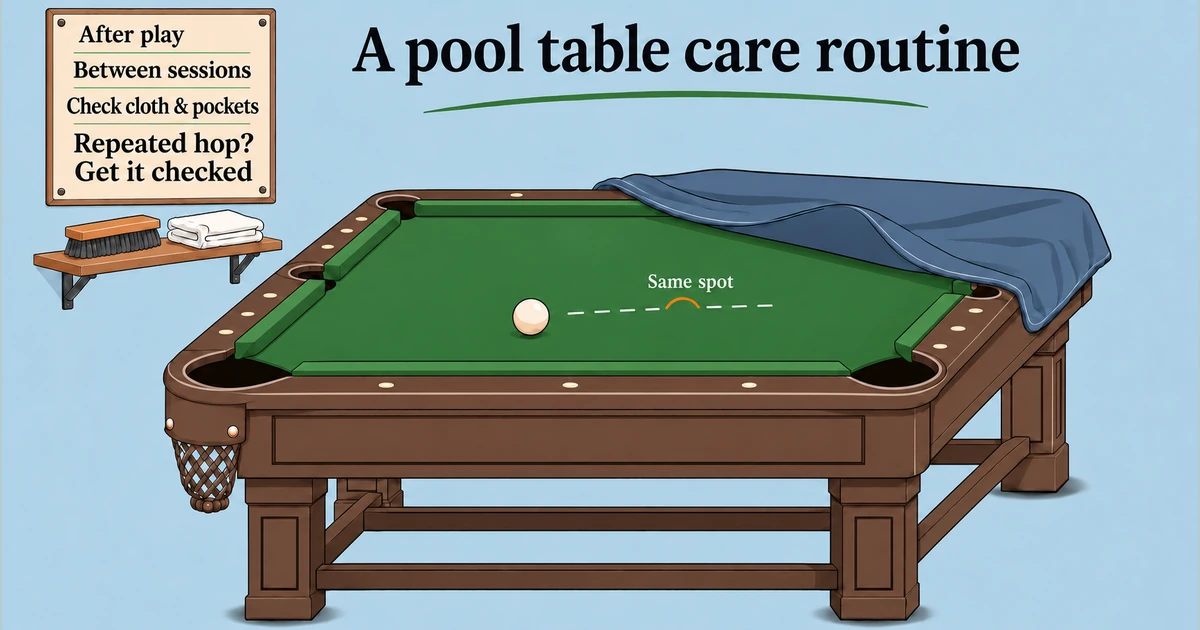
A pool table maintenance schedule you can adapt
For pool table maintenance, start with the table model and the name of its playing cloth. If you bought it used, look for the table plate and ask the seller or last installer which cloth they fitted. The plate can identify the table brand. Use the invoice to confirm the cloth. Wait to vacuum, damp-wipe or apply a cleaner until you know the cloth maker’s method.
| When | What to do | What changes the plan |
|---|---|---|
| After play | Remove loose chalk by the approved method, put equipment away and cover the dry table. | Blot a fresh spill right away. Heavy play may leave more chalk to pick up. |
| During your regular room clean | Dust the cabinet, check pocket openings and clean the balls as directed. | A product or cloth change can require a different method. |
| A periodic inspection | Look at cloth, cushions, pockets, feet and room conditions. Compare a few gentle rolls. | A new noise, loose part or repeatable roll problem needs an earlier check. |
| At the maker’s service interval | Have the relevant parts inspected by a billiard mechanic. | Repairs, a move or flooring work may need a visit sooner. |
Put a monthly reminder on your calendar if it helps you remember to look for loose parts and changes in play. Some manufacturers specify a service interval. Dynamic recommends a specialist check after 650 to 700 hours of play, at least once a year. Look up the interval for your model. Dynamic care and maintenance sheet.
Open the Table Care Schedule and leave only Pool selected for a pool-table checklist. Choose Usage level and select Generate schedule. Use Print schedule for a copy by the table. Use your maker’s instructions if they give different intervals or cleaning methods.
What to do after each playing session
Clear the surface and remove loose debris after play. Put on a table cover once the cloth is dry. Brunswick recommends gentle brushing after use and a cover while you are away from the table. Brunswick care FAQ.
- Keep chalk off the bed. Chalk the tip beside the table. Put the chalk on a separate shelf or holder rather than dropping it onto the cloth.
- Use a cue rack. Put cues away instead of leaning them against a wall or leaving them where someone could knock them onto the table.
- Keep drinks on another surface. Use a nearby shelf or side table so a tipped glass will miss the rails and cloth.
- Clear balls and accessories. Use their storage place. Do not leave heavy items on the bed or use the rails as seating.
- Check the cover. Keep its cloth-facing side clean. Do not trap a damp spill under it.
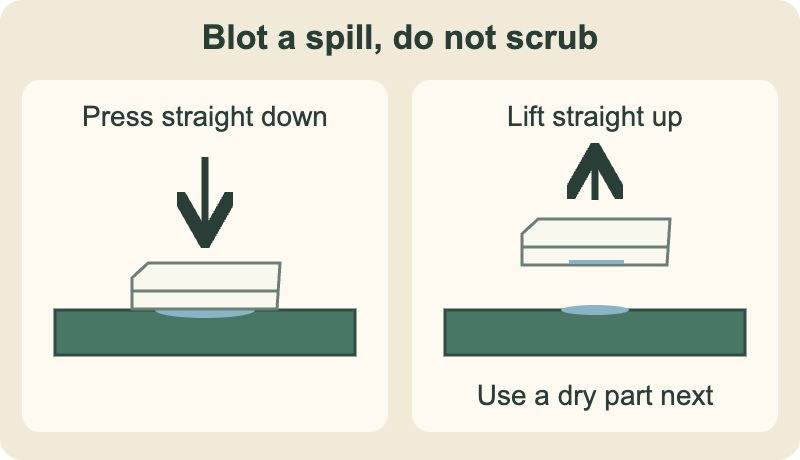
If a drink does spill, stop play and blot with a clean, dry absorbent cloth, lifting and using fresh dry sections. Do not rub or pour more liquid over it. Our spill instructions explain the next step and when to ask the cloth supplier about a stain.
Clean the cloth, finish and balls by their own methods
Use a method suited to each material. For the balls, check the original box or receipt before choosing a cleaner. Clean them away from the playing surface so cleaner and chalk stay off the cloth.
| Surface | Useful care | Avoid the assumption |
|---|---|---|
| Playing cloth | Remove chalk with the cloth maker’s approved brush or dust-removal method. | Every fabric permits the same vacuum, damp wipe or cleaner. |
| Wood, laminate or decorative trim | Dust gently, then use the finish-specific instructions for smudges. | Every finish needs furniture wax or oil on a fixed calendar. |
| Balls | Clean and polish using instructions for the actual ball material. | Soap, bleach or a household polish is a universal ball cleaner. |
| Pocket material | Remove loose debris and follow the leather, plastic or rubber care instructions. | One leather dressing suits every pocket and nearby finish. |
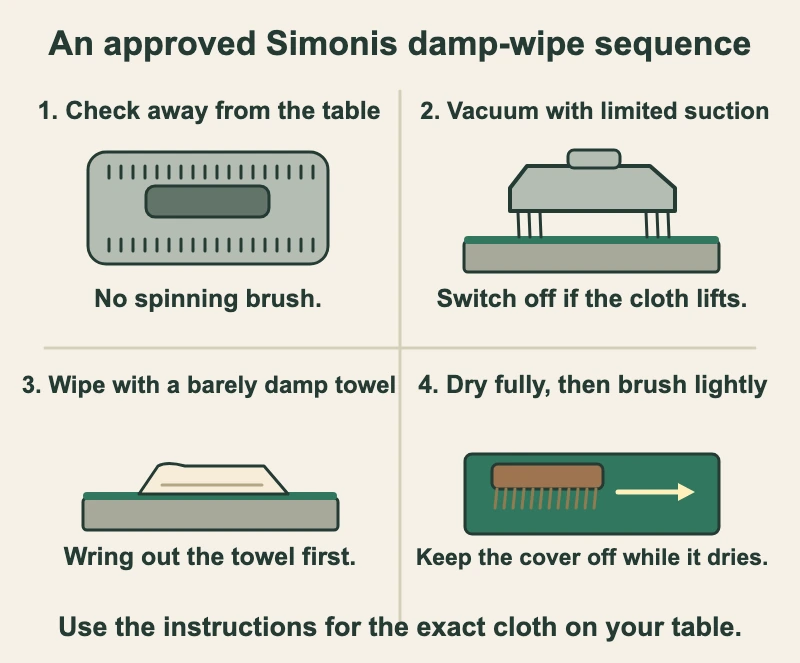
Some cloth makers allow a careful vacuum and some do not. For Simonis, use a non-rotating brush head with limited suction. Check the running attachment away from the bed, and stop if the cloth starts to lift. For its damp-wipe method, vacuum first, use a barely damp towel, wait for the cloth to dry and finish with a light brush. Check the full vacuum and damp-wipe steps before using either method. Simonis care instructions.
For Aramith phenolic balls, the maker specifies its ball cleaner followed by polishing with a dry cloth. Work away from the bed so cleaner cannot transfer to the fabric. Check the balls as you handle them and set aside a chipped or visibly damaged one for assessment. Aramith cleaning directions.
The finish determines what you can wipe it with. The timber finish on the American Heritage Ann Arbor, for example, can be dusted with a soft, dry cloth. For old or unidentified finishes, start by identifying what is on the rails or cabinet before trying wax, oil or a touch-up product. American Heritage care and maintenance instructions.
Inspect the playing surface, cushions and pockets
Inspect the parts separately before deciding which one needs work. The wooden rail top is different from the cloth-covered rubber cushion facing the ball. A pocket has an opening beside the cushion ends and a liner or basket below. Check those areas with the table empty and good light across the surface.
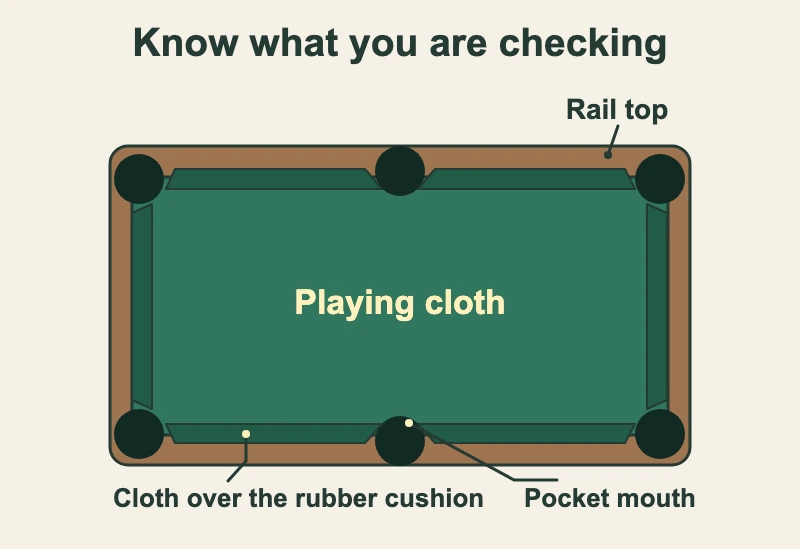
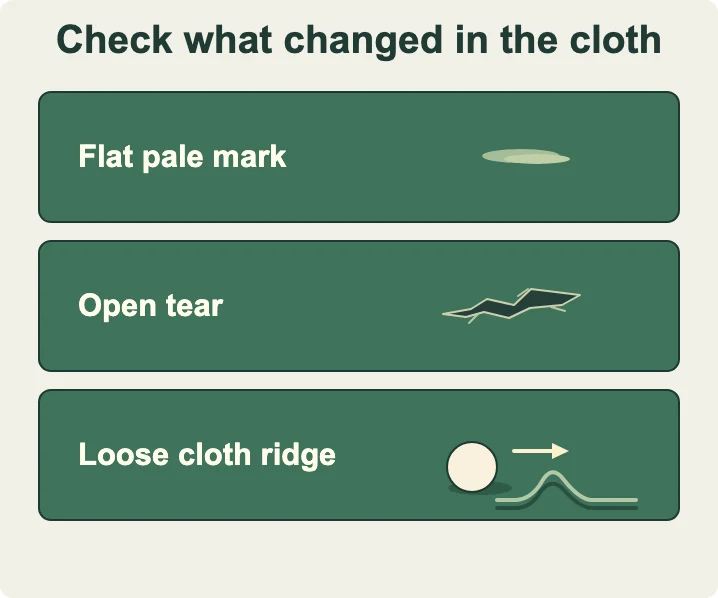
- Look over the cloth. Note tears, loose ripples, worn areas and lifting edges near the pocket mouths. Distinguish a mark in the color from missing or moving fabric. Look at an adhesive table spot, if fitted, and replace it by the maker’s method when loose or worn.
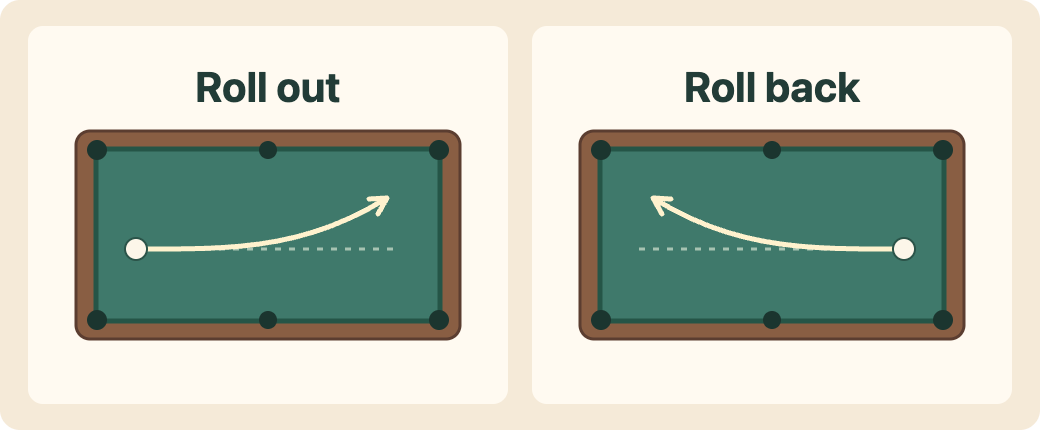
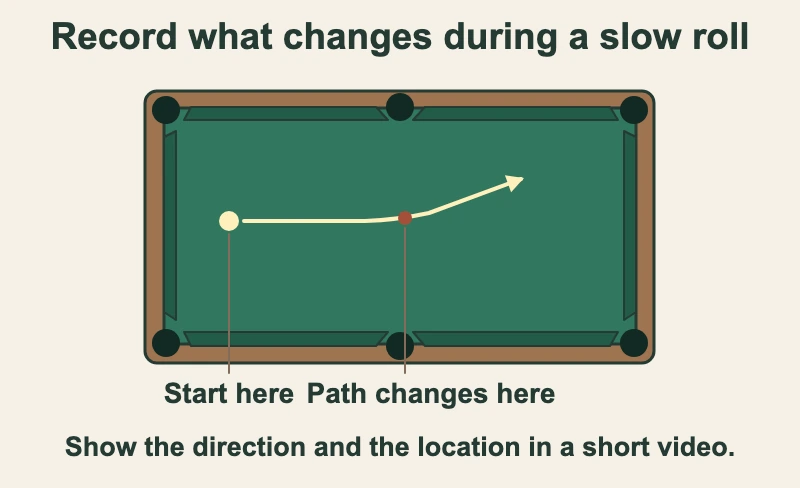
- Compare gentle rolls. On a clean bed, roll a clean ball along several lanes in both directions. Repeat an unusual result with another clean ball. Record whether the ball drifts toward one rail or hops at one location. The roll shows where to investigate. Use a suitable level when you need a measurement.
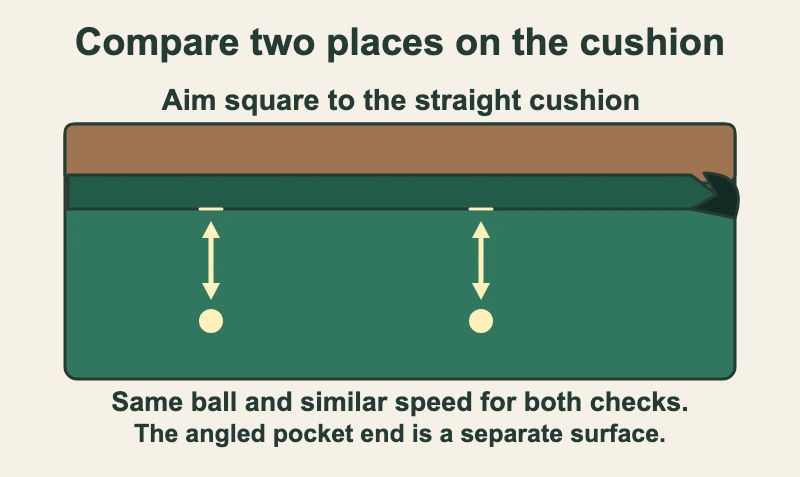
- Compare cushion response. Use repeatable shots without sidespin against different sections. Note a weak area, unusual noise or visible separation. Do not condemn the rubber from one hard shot or a universal count of table lengths.
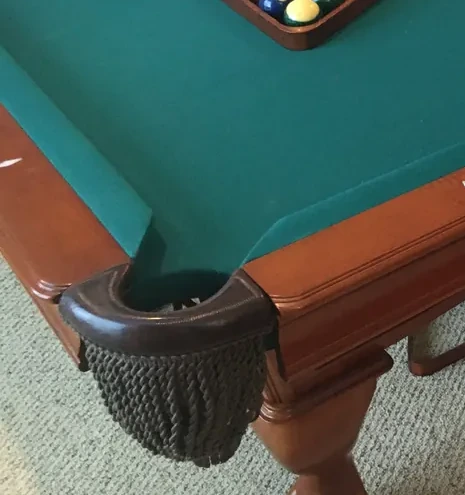
- Look into each pocket. Remove loose debris and check for a tear, exposed hard fitting or edge coming away. If a liner is loose or a metal fitting sticks into the ball’s path, stop play until the part is safely secured.
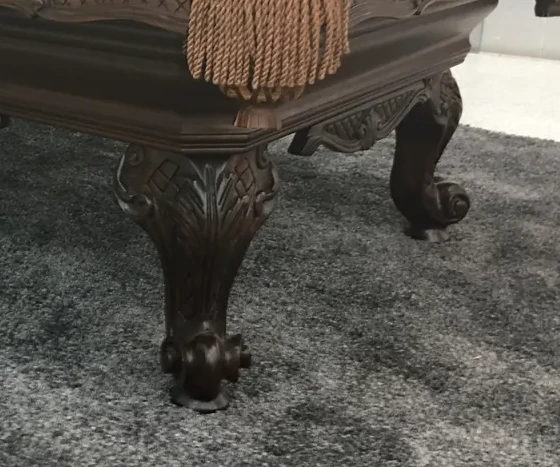
- Look at the base. Check for a shifted floor pad, a new gap, a crack or moisture. If the table rocks, stop and have the base assessed rather than crawling under it or turning unfamiliar bolts.
A weak rebound can have several causes. In a test on a Brunswick Gold Crown III, Joe Waldron measured a change in how far the ball came back after a rail bolt was loosened. Tell the mechanic where a weak or noisy rebound keeps happening. Leave the fasteners in place while you compare shots.
If you see a consistent drift or a repeated hop, start with the slow-roll checks. Use a precision machinist’s level for measurements when your own table instructions call for it. Only adjust the parts your model describes for owner use. Have a billiard mechanic check an unstable leg, slate support or any work that requires lifting.
Keep room conditions stable without moving the table
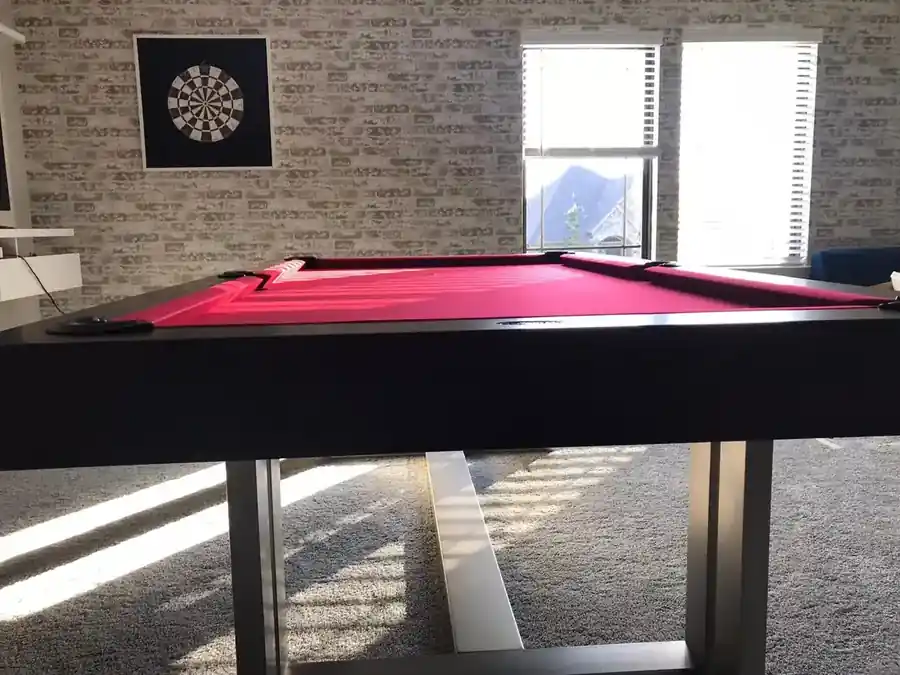
Protect the table from direct sunlight, nearby heat and large changes in room temperature or humidity. Watch where the sun lands on the bed during the day and adjust the blinds or shades. Leave an assembled slate table in place unless you arrange a proper move.
Use your maker’s environmental limits. Dynamic specifies approximately 64 to 72°F (18 to 22°C) and 45 to 60% relative humidity for its tables. Compare your room reading with the instructions for the table you own. Dynamic room guidance.
If the table is in a basement, look for dampness around the floor and cabinet as well as the room reading. Look for the source of water or condensation before doing more work on the table. Keep heater outlets from blowing directly at the table. Brunswick’s general guidance also recommends stable room conditions and protection from strong sunlight. Brunswick maintenance guidance.
Plan flooring or room changes before work begins. Tell the contractor a slate table needs a proper move and setup, not a shove across new carpet. Our short-move guide explains the options for work within a home. Confirm the exact route and who will reassemble and check play afterward.
Know when maintenance has become a repair
Base a service decision on what has changed, not just the table’s age. Normal ball and racking marks can remain on usable cloth. Championship identifies those as normal play occurrences for Saturn II. Tears, a loose ripple or a problem in ball travel need a different response. Championship care sheet.
| What changed | What to ask about |
|---|---|
| White marks on intact, stable cloth | Whether they are cosmetic. Avoid scrubbing merely to restore the color. |
| Tear, bald patch or loose cloth | Repair, refitting or replacement after the bed is checked. |
| Repeated drift or a local hop | Have the bed, its support and the cloth checked. Describe which balls you used and, if you know, whether the bed has multiple pieces. |
| One weak or noisy cushion | The rail attachment, cloth and cushion condition before ordering rubber. |
| Loose pocket or exposed fitting | The correct attachment and replacement part for that model. |
| Rocking base or structural crack | A safe base and support inspection before more play or adjustment. |
A small white mark after a break may be cosmetic. If two clean balls hop at the same spot, have the playing surface and its support checked. That check helps determine whether the cloth, a slate joint or something else needs work.
Use the refelting decision guide if the cloth is torn or loose. For a loose pocket, check the mounting before ordering a replacement. Ask the mechanic to name the cause and what you need to approve before work starts.
Prepare useful information for a service visit
Start with the manual and last service invoice. Add the installation date and a short note about when the symptom began. The mechanic can use those details to check which parts and cloth were fitted, especially on a table you bought used.
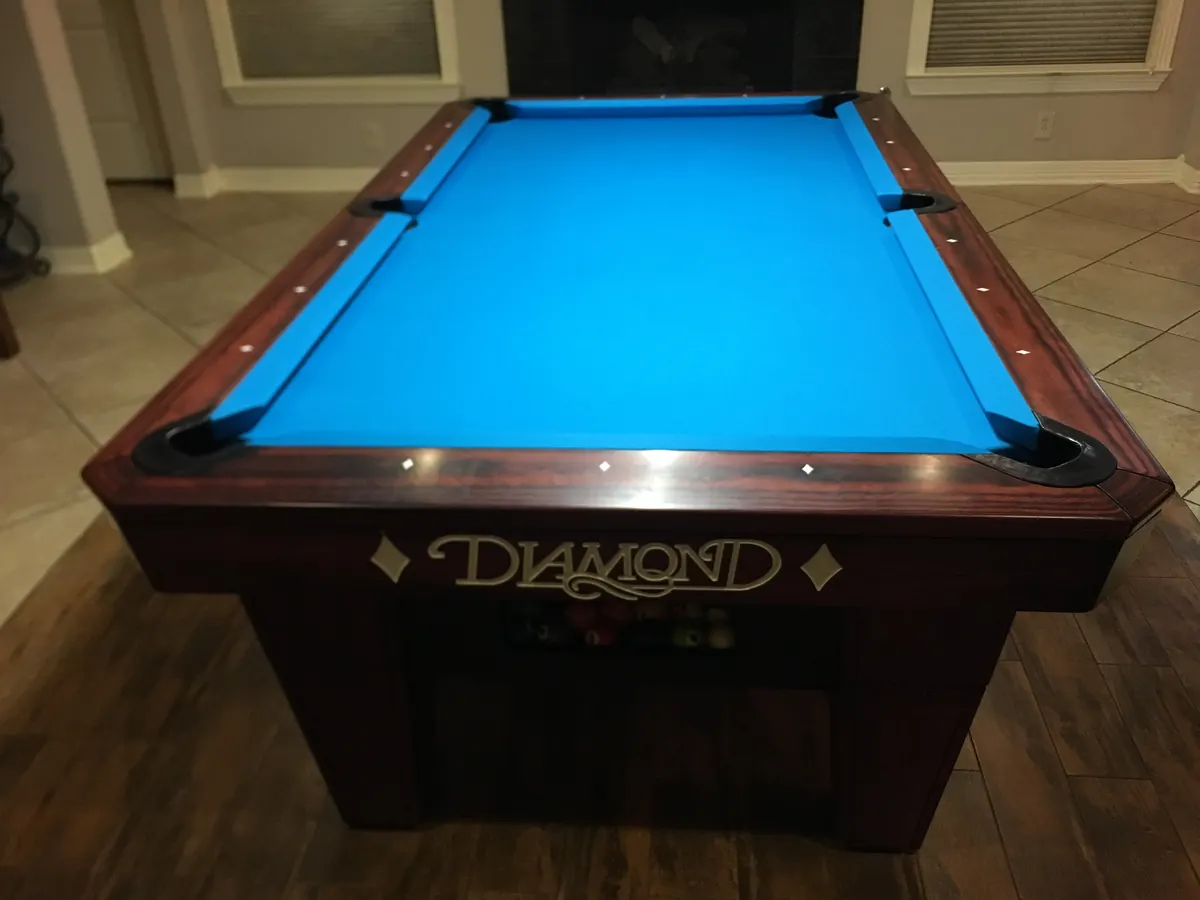
- Identify the table. Send the brand, model and overall view, plus a label or serial number when available.
- Show the symptom. Photograph the loose pocket or damaged area. For a roll problem, record the ball’s starting place, direction and the point where it changes path.
- Describe the room. Mention a recent move, flooring change, leak or change in heating. State whether the table is steady.
- Separate the work. Ask for inspection, leveling, cloth, rubber and pocket work to be identified separately. Confirm travel, access, reassembly and the finished play checks.
- Check service terms. Check who can do the work under the manufacturer’s warranty. Ask the mechanic separately how their labor is covered.
Brunswick’s published warranty lists exclusions for tables installed, moved or repaired outside its authorized network. Check the terms for your model and ask what coverage applies before booking.
Keep the invoice and check the work you ordered with the mechanic. Compare slow rolls in both directions after leveling, check the path into a repaired pocket, or compare rebounds after cushion work. If the original symptom is still there, agree on the next check and note it on the job record before the mechanic leaves. Update your routine to match any new cloth or parts.