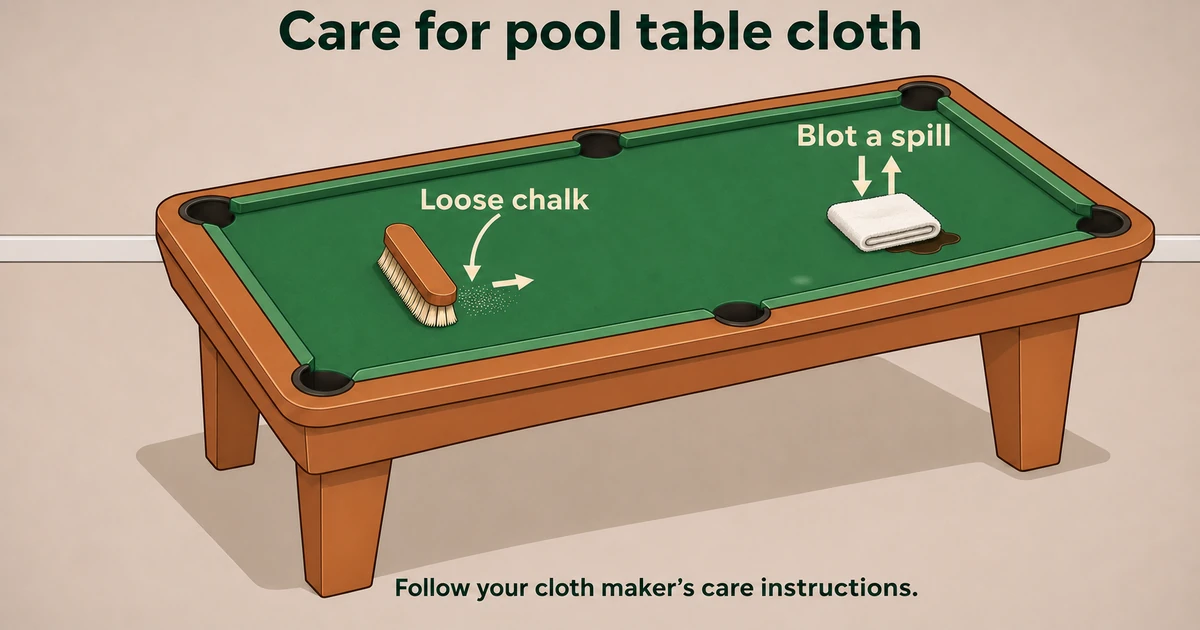
Check the cloth before choosing a method
To clean pool table felt, use the care instructions for your exact cloth, especially before vacuuming, damp wiping or applying a cleaner. The invoice or installer can identify the brand and line. Some cloth makers allow a light vacuum. Others advise brushing only. Check the instructions for the cloth on your table.
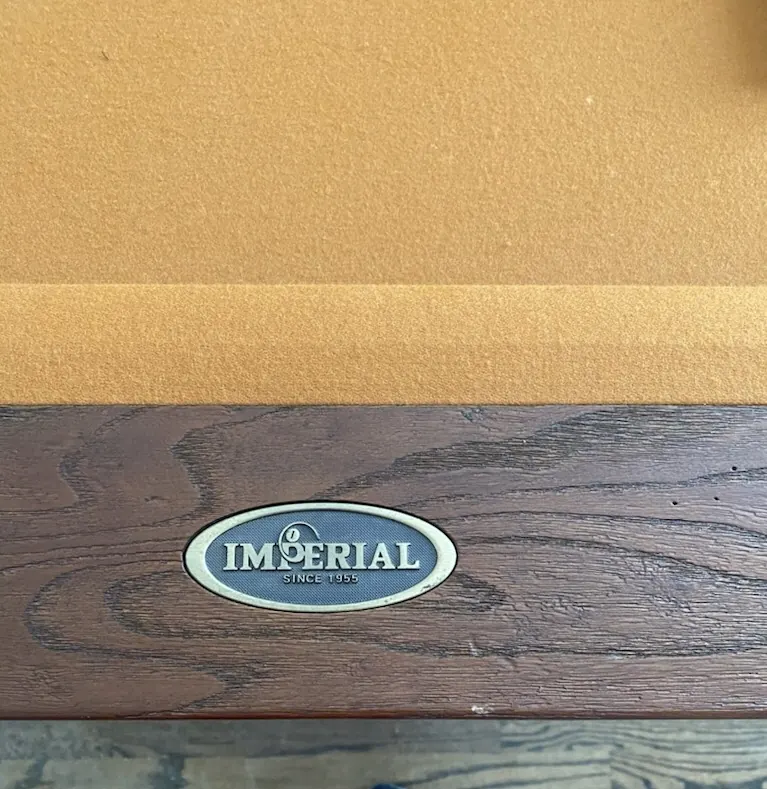
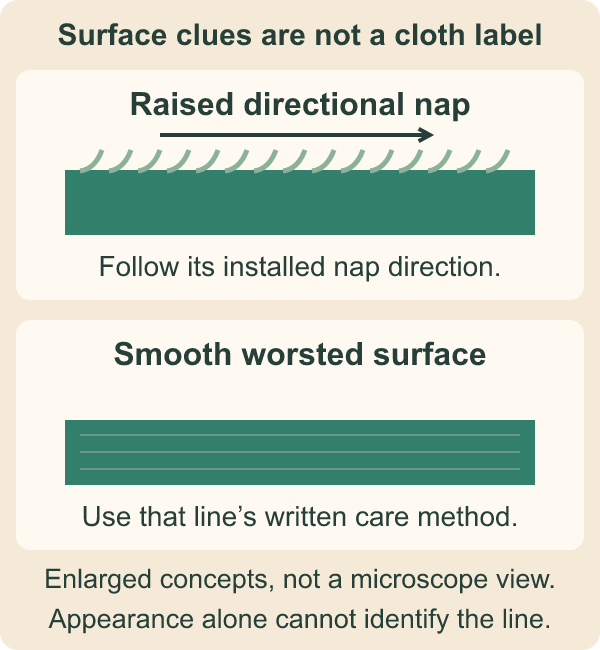
Nap is the raised layer of fibers that lie in a direction. For napped cloth, confirm its installed direction before brushing. Hainsworth describes restoring the nap and occasional dry ironing only after the cloth is clean and well brushed. Use heat only if the maker recommends it for the cloth on your table. Hainsworth care instructions.
| What you have | Starting point | Check before going further |
|---|---|---|
| Simonis worsted cloth | Gentle brushing or its approved dust-removal method. | A non-rotating vacuum attachment with limited suction. Damp wiping comes after vacuuming. |
| Championship Saturn II | Soft brushing and regular vacuuming, as its care sheet describes. | Use a soft tapered brush under the rails. Do not assume another line has identical instructions. |
| Directional napped cloth | Light strokes with the nap. | Confirm the installed direction and any special equipment with the maker. |
| Legacy cloth care | Brush lightly in straight passes following the maker’s order. | Legacy advises leaving the vacuum off the felt. |
| Unknown cloth | Identify it before adding liquid or suction. | Ask the installer for the line and written care method. |
The Championship Saturn II care sheet permits a hose attachment and warns that chalk, dust and lint need regular removal. Legacy’s cloth instructions say to brush and skip vacuuming the playing surface.
How to brush pool table felt
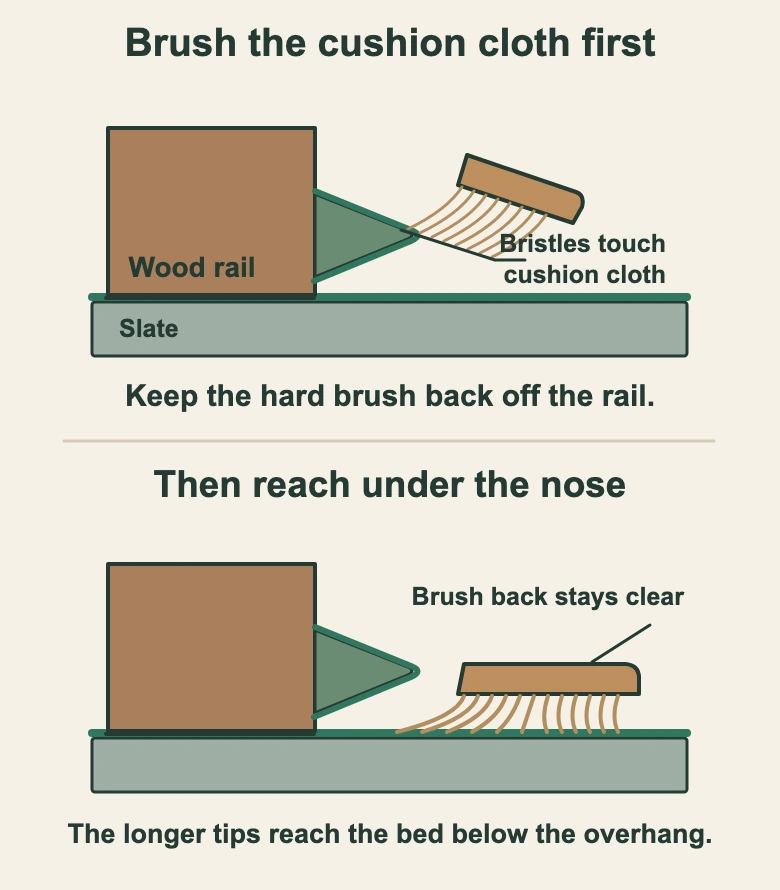
Brush the cushion cloth first, then the bed, using light, straight strokes in the direction specified for the cloth. Clear the playing surface before you start. A clean, soft billiard brush should touch the fabric with its bristles, without dragging its wooden body across it.
- Start with the rails. Brush the cloth on the cushions without dragging the brush across polished wood. Then use the longest soft bristles for the playing cloth just under the cushion nose. Loose chalk that falls onto the bed comes off in the next pass.
- Make straight passes over the bed. Work in adjacent strips rather than circles or repeated scrubbing. The example starts at the head end, where you break, and works toward the foot end. Use the direction your cloth maker gives. Lift the brush to return it for the next pass.
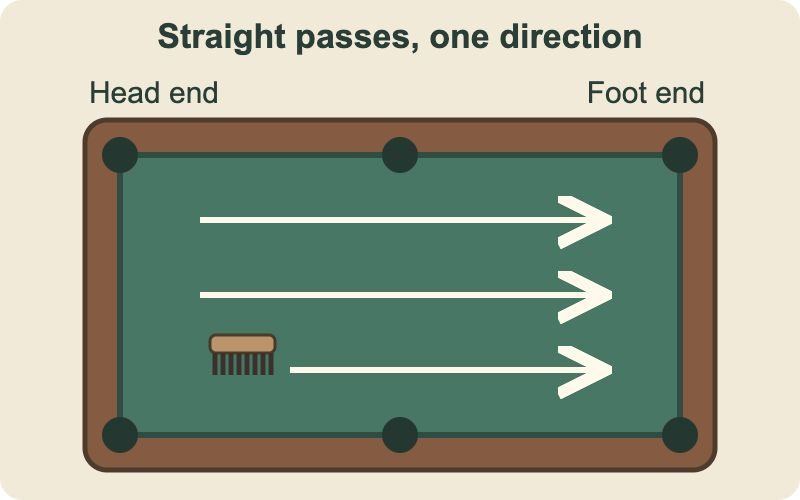
- Clean the brush between passes. Remove the collected dust away from the table. Otherwise the next stroke deposits it again.
- Pick up what you brushed together. Sweep the dry debris lightly across the flexible lip of a clean soft-edged dustpan. Lift it off the bed before emptying it. Wipe any loose chalk out of the pockets with a separate clean cloth.
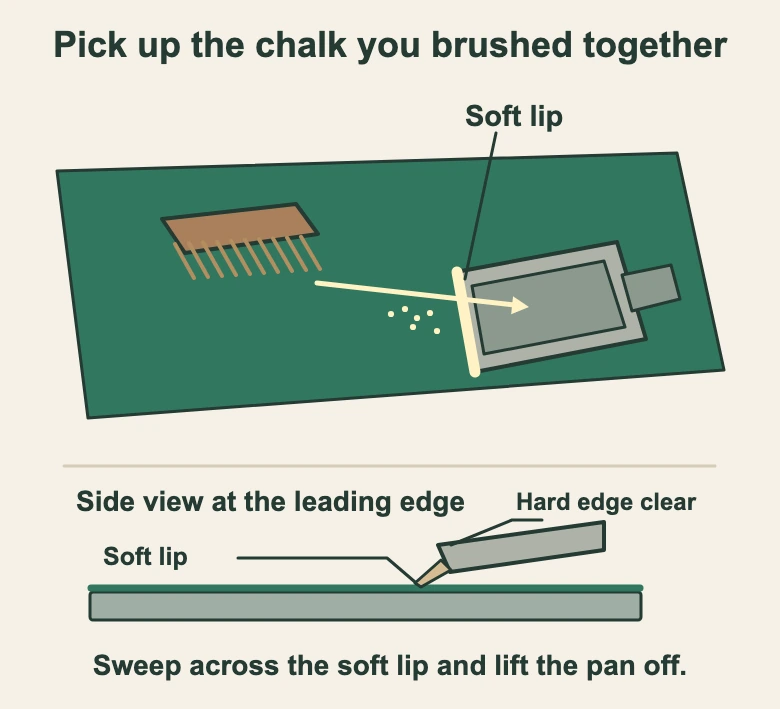
Brunswick’s current care guide recommends light one-way strokes toward the pockets. Legacy shows how to collect the dust using a pan with a soft edge.
Can you vacuum pool table felt?
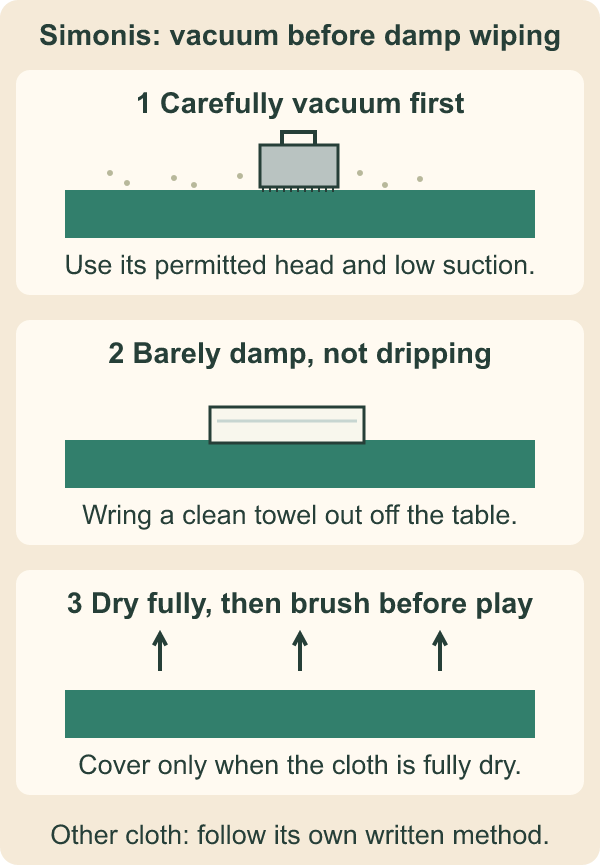
Use a vacuum only when the cloth maker permits it, with the attachment and suction it specifies. A handheld is not automatically safe. Simonis warns that even a small vacuum can pull too strongly, and its care instructions allow careful use of a non-rotating brush head. The linked head shows what fixed bristles look like. Check that any head fits your vacuum and meets your cloth maker’s instructions.
- Check the attachment. It should be clean, with no powered roller, beater bar, sharp edge or stiff bristles against the cloth.
- Test away from the bed. If the cloth maker permits vacuuming, run the machine away from the table on the specified low setting. Look underneath the head and check that no brush or roller spins.
- Stop if the cloth lifts. Watch the cloth as you go. If it moves upward, stop the vacuum and lift the head away. Holding it over a stain can pull on the fabric.
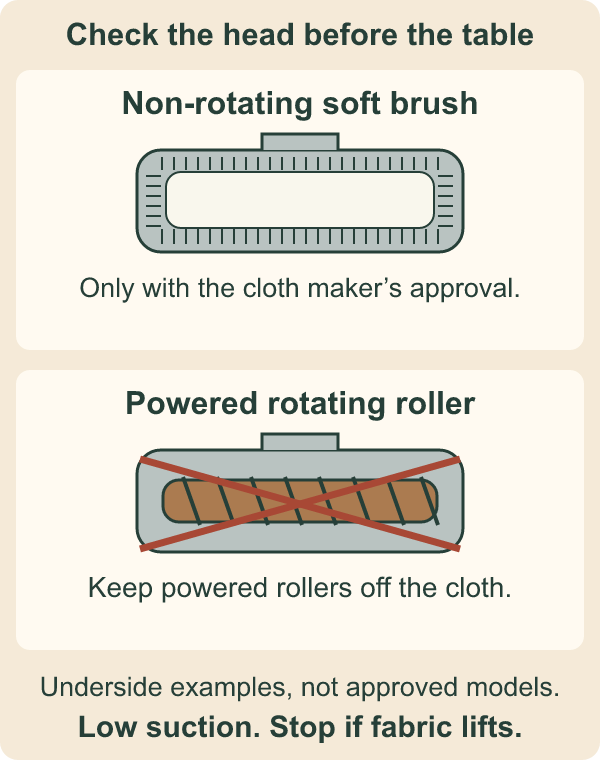
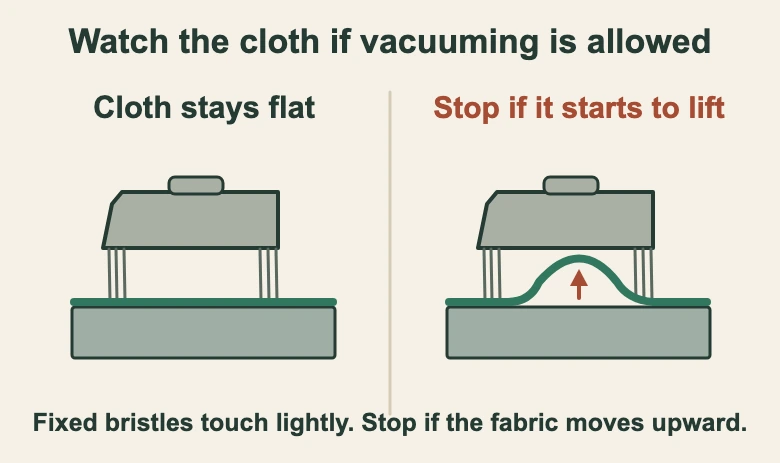
See Simonis’s cloth care instructions for its permitted fixed-head method. Use the next section if your cloth also allows a damp wipe.
For example, a clean-looking bed with a film of loose chalk may need the approved dust-removal method. A distinct white dot that remains after that pass is a different problem. Increasing suction because the dot stays visible can damage cloth that only had a cosmetic mark.
When should you damp-wipe the cloth?
Damp-wipe only when the exact cloth’s instructions allow it, after its required dry preparation. For Simonis, vacuum first. Brushing alone does not replace that instruction. Damp means a little moisture in a clean towel, with no dripping or water pooling on the bed.
- Remove dry debris first. Follow the exact dry-preparation sequence. Simonis requires vacuuming before the damp towel. Do not apply this sequence to a cloth whose maker prohibits suction or moisture.
- Use a clean towel. Wring out a clean white cotton cloth until it will not drip. Wipe lightly and switch to a clean section as you go.
- Let the cloth dry fully. Keep balls and the table cover off while it is damp. Wait until the cloth is dry across the area you wiped.
If color transfers to the towel and you cannot tell what it is, stop and ask the cloth supplier. More water could make the patch worse.
For a spray or foam, check whether the cloth maker approves that product. Follow the product’s label only after confirming the match.
What to do when a drink spills
Blot the spill promptly with a clean, dry absorbent cloth. Press down and lift, changing to a dry area as it absorbs liquid. Do not rub across the cloth or pour water onto the stain. See C.L. Bailey’s dry blotting guidance.
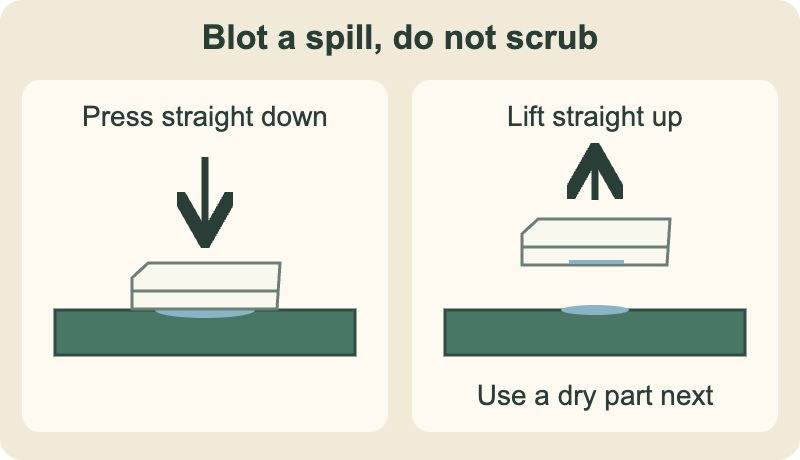
When the towel stops picking up liquid, take it off the bed and let the cloth dry uncovered. Leave the area alone while it dries.
If the dried spot stays sticky or discolored, tell the cloth supplier what spilled and what you used so far. For Simonis, tell the cleaner it is worsted wool. A mark that stays visible may still need specialist treatment.
Which marks need cleaning or repair?
Clean loose dirt, but judge lasting marks by the condition of the fabric and how the balls roll. White ball marks do not automatically mean the cloth needs replacing. Championship describes burn, racking and ball marks from normal play as normal occurrences.
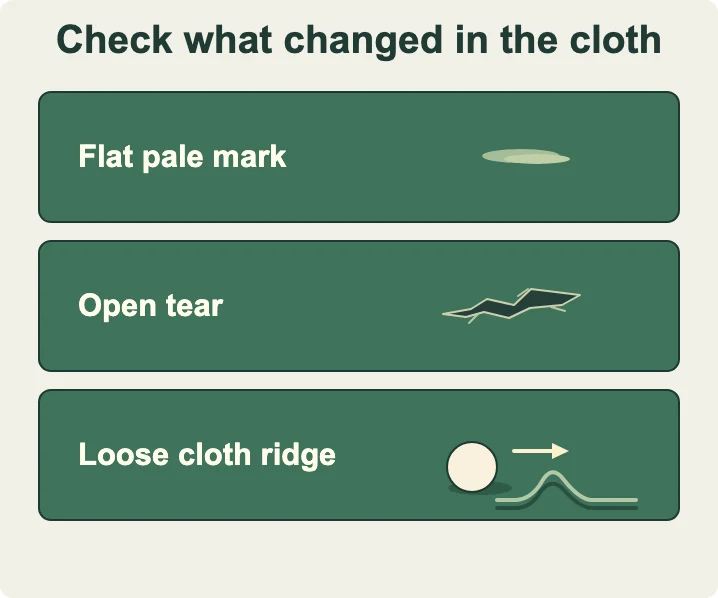
| What you notice | Useful next step |
|---|---|
| Loose chalk, dust or hair | Use the maker’s dry cleaning method and inspect again. |
| White spots or racking marks, intact cloth | Stop trying to scrub the color back. Check whether the mark affects play. |
| Colored stain after blotting | Get cloth-specific advice before using stain chemicals. |
| Tear, bald area or loose ripple | Ask a table mechanic about repair, refitting or replacement. |
| Repeated hop or drift in one area | Have the bed and its supports checked, including the joints if it has more than one piece of slate. |
Use a clean pool ball for a gentle roll check. If the cloth shifts under the ball, have the cloth fitting checked. Our refelting guide separates cloth wear from problems underneath it. The slow-roll checks explain what to have inspected if a ball repeatedly misbehaves at the same place.
Myth: A white mark that will not brush out means the table needs new cloth.
Reality: Some marks are cosmetic. A tear, moving wrinkle or repeated disturbance to the roll is a more useful reason to have the table assessed.
Keep the cloth clean between sessions
Keep chalk, food and dirty equipment off the bed so the cleaning routine has less to remove. Chalk the tip beside the table rather than above it. Use a separate surface for drinks and keep the table covered when it is dry and unused. Predator’s care guidance for its Arcadia Select cloth makes those habits part of cloth care.
Clean the balls by their maker’s method, away from the bed. For Aramith phenolic balls, follow the directions for Aramith ball cleaner, then polish with a dry cloth. Keep ball polish and household furniture products off the playing cloth. Do not assume a water-and-soap recipe suits every ball material. Aramith’s cleaning directions.
How often you clean should follow use and the maker’s instructions. Brunswick recommends a gentle brush after use. For Arcadia cloth, Predator recommends a light brush once a week or after about ten hours of play. These are product-specific starting points, not competing promises that one calendar fits every table. Brunswick care FAQ.
After a busy session, inspect the area where you break, the cloth alongside the cushions and the edges of the pocket openings for loose chalk or fresh damage. After a quiet week under a clean cover, check the bed before deciding it needs another treatment. Store the cover so the side touching the cloth stays clean.
Open the Table Care Schedule, leave only Pool selected and choose your usage level. Select Generate schedule for a printable checklist. Follow the cloth maker’s instructions for the exact cleaning method and timing.