Which pool table felt color should you choose?
Start with medium blue, green or gray if you’re undecided. Ask for a few shades in the cloth line you’re going to buy. Then pick the sample that looks good beside the rail wood and lets you see the edges of the balls under your table light.
Cloth colors vary by maker and line. Scroll through the Simonis color range or Championship’s color selector to make a shortlist. Ask the seller which shades are available in the exact material you need.
| Color | What to compare beside it | What to look for |
|---|---|---|
| Medium blue | Blue and purple balls, then the cue ball. | Check their edges separately on the blue shades you’re considering. |
| Green | Rail wood and the green ball in your own set. | Check a darker and lighter green if both suit the table. |
| Medium gray | Dark balls under the light you play by in the evening. | Compare medium gray with charcoal if you like a darker room. |
| Camel or tan | Wood, flooring, the yellow balls and white cue ball. | See how much the light balls stand out. If you can see cloth already in use, check how chalk marks look on it. |
| Wine, burgundy or red | Red or maroon balls and the rail wood. | Look at similar-colored balls from the far end and decide how prominent you want the table to look. |
| Black, charcoal or navy | The black 8-ball and the darker stripes. | Look for the whole outline around each ball. Give the corners and rail edges the same attention as the center. |
If a ball blends into your first choice, try it on a shade that gives its outline more contrast. Keep a second color in the same cloth line in case your first choice is unavailable.
Write the line beside every color on your shortlist. Simonis 760 lists Camel, Grey and Tournament Blue. Simonis 860 HR includes Tournament Blue among a different group of shades. If a dealer offers your color in another line, compare the cloth and finish as well as the sample. Ask which line is included if you’re ordering a new table.
Does felt color change speed or durability?
Ball speed and durability depend on the cloth’s construction, finish and installation. The same shade of green can come in several different cloths. Ask the fitter to identify the line you have if you want to keep a familiar playing speed when you change color. The worsted and woolen cloth guide explains how to compare those constructions.
Myth. A darker or brighter color will make the table faster.
Reality. The same color can be sold in cloths with different weaves and finishes.
Check the finish on the exact shade. Hainsworth’s Elite Pro specification lists several shades that get spill guard only when ordered as two full rolls. For a single table, confirm the maker’s finish before you approve the color.
Two installed tables can play differently even if the material and shade match. Ask how the cloth will be fitted and how the installer will check it. A loose sample is for looking at the finish and color. Try a table with the cloth fitted to see how it rolls.
For a shared room, tell the fitter how often you play and who uses the table. If you’re recovering the bed because the cloth is worn or slow, explain where the balls behave differently or where the fabric has loosened. Get the fit and the condition checked before treating the job as a simple color change. That also gives the fitter a chance to tell you whether the old material suits the way you play now.
Check ball visibility with your own set
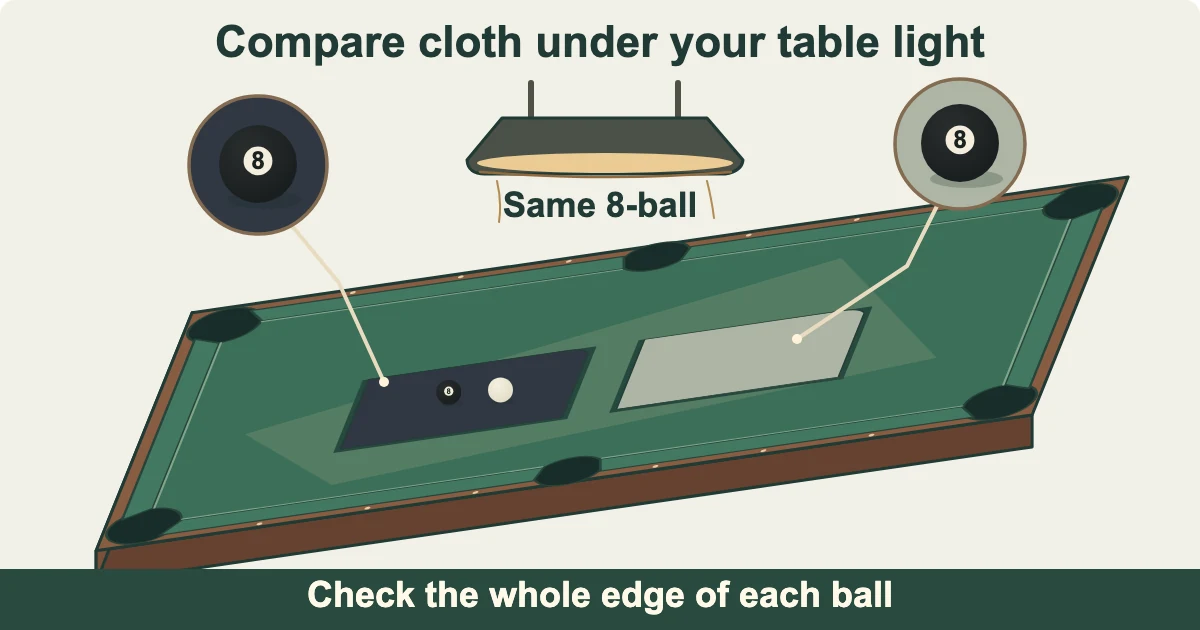
Set the black 8-ball on each sample and look for its whole outline. A white number patch can be easy to see while the outside of the ball blends into the cloth. On a light sample, try the white cue ball and a yellow ball first. On other shades, try an object ball with a similar color. Use at least one stripe so you can check its edge and see the colored band.
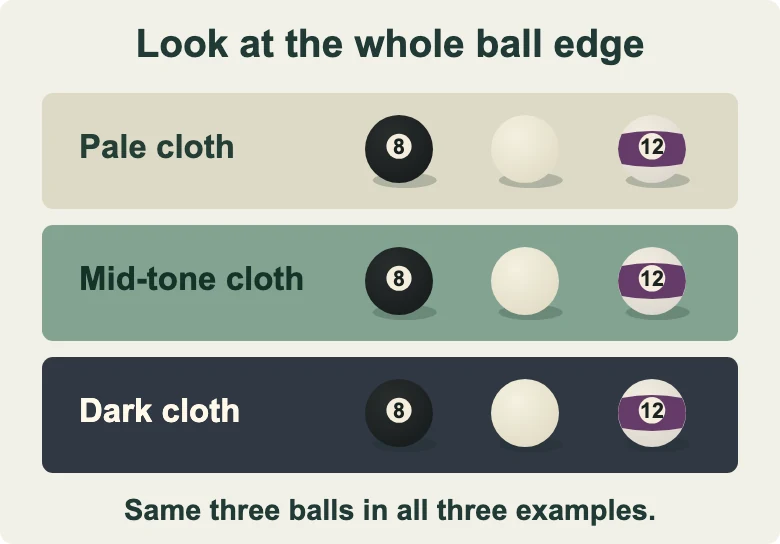
Play with the ball set you’ll use at home. Shades vary between sets. Look from your normal aiming height, then try the same view from the far end. Ask the other people who play on the table to do that check too. The whole edge should still be easy for them to follow in the light they use.
If the sample is smaller than the area you need around the ball, ask for a larger offcut or find a table fitted with the exact cloth. Set the ball down and lift it off when you change samples. Save a speed check for a fitted table.
Check the spot that gives you the most trouble first. Try the 8-ball beside the cushion at the far end, then try a stripe in the same place. When you change samples, set the balls back at the same spot so the direction of the light stays the same. If you have to look for the number patch to find the ball, put that sample aside until you’ve checked your other choices.
Test physical samples under the table light
Use the online chart to pick a few candidates. Use real cloth to make the final choice. Simonis offers physical color samples, and Hainsworth offers shade cards so buyers can judge the color and finish in person.
- Get the right samples. Request the shades in the cloth line you mean to buy. Keep each label with the sample, including its color code if the maker supplies one.
- Lay the samples flat. Put clean loose pieces on the bed. For a table you’re still ordering, use a table-height surface in the room where it will sit.
- Use your own table light. Try the samples in daylight and again at the evening setting you use. At each check, put the samples near each other in the same light.
- Compare the balls and room finishes. Pick up the same balls and set them on the next piece. Then put the cloth beside the exposed rail wood, flooring and nearby furniture.
- Keep the sample you choose. Store the maker, cloth line and shade with the order. Take a photo if you want a reminder, and use the physical sample to approve the supplied cloth.
A bulb’s Kelvin rating describes how warm or cool the light looks. Color rendering describes what that light does to the appearance of objects such as cloth and balls. Use both ideas when comparing fixtures, then judge the final sample under your actual light. See Oklahoma State Extension’s explanation and the Department of Energy’s color research.
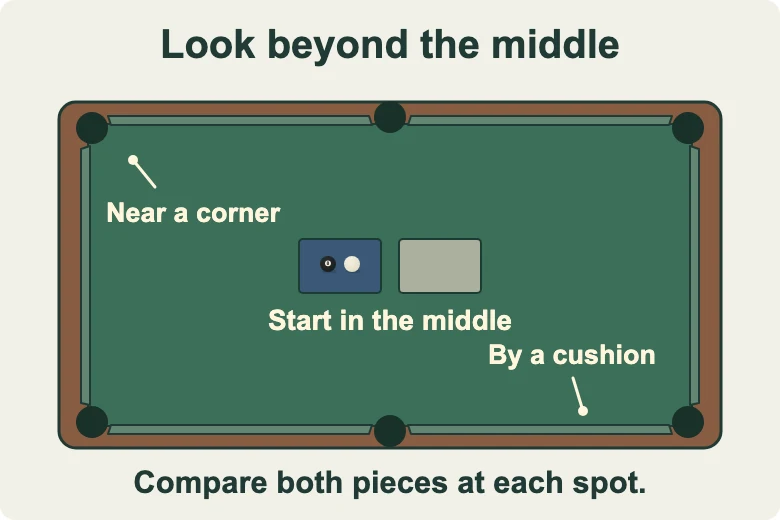
Check the cushion edges and corners as well as the middle. From your shooting stance, look for dark areas, bright reflections or a ball edge that almost disappears. Simonis’ fixture guidance recommends lighting the entire table and checking the spread from the actual fixture. If you stream games, make a short test recording after you’ve looked in person.
If your new fixture is still on order, treat your first comparison as a shortlist. Try the cloth beside the planned wood finish and on a surface near the height of the table. Check again once the fixture is in place, especially with a dark cloth and your darkest balls. For a video check, record the whole bed from the camera angle you’ll use. The ball edges need to be visible along the rails as well as in the center of the recording.
Match the bed, rail cloth and wood separately
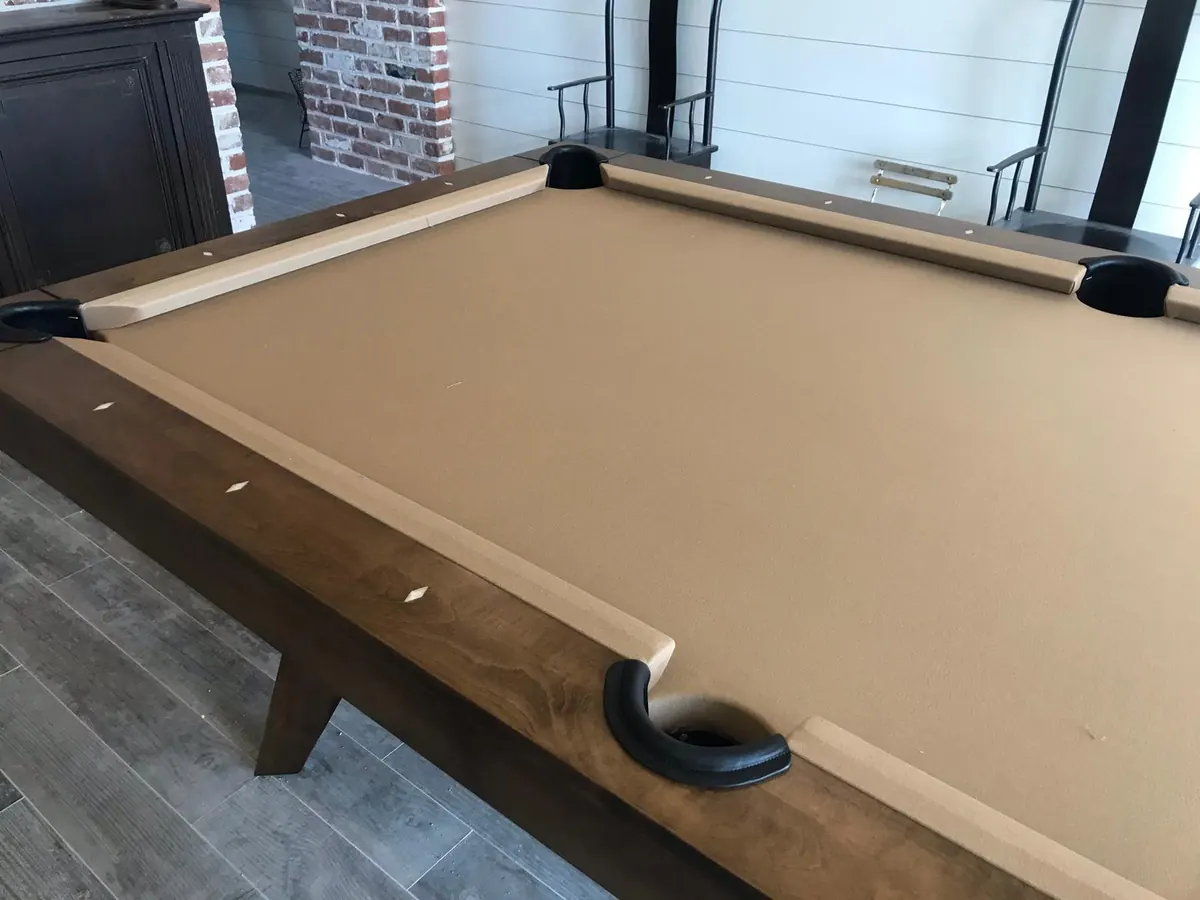
Compare three surfaces before you change a color. The bed cloth is the large flat surface the balls roll on. Rail cloth wraps the raised cushions that the balls bounce off. The exposed wood cap sits outside those cushions and stays the same in a standard recovering job.
Use Felt Color Match to try a bed shade beside a separate rail shade and a wood finish. Compare the top and perspective views. The tool estimates cost by table size, cloth brand and the work you select. Confirm the real color from a physical sample and ask the fitter for the complete price.
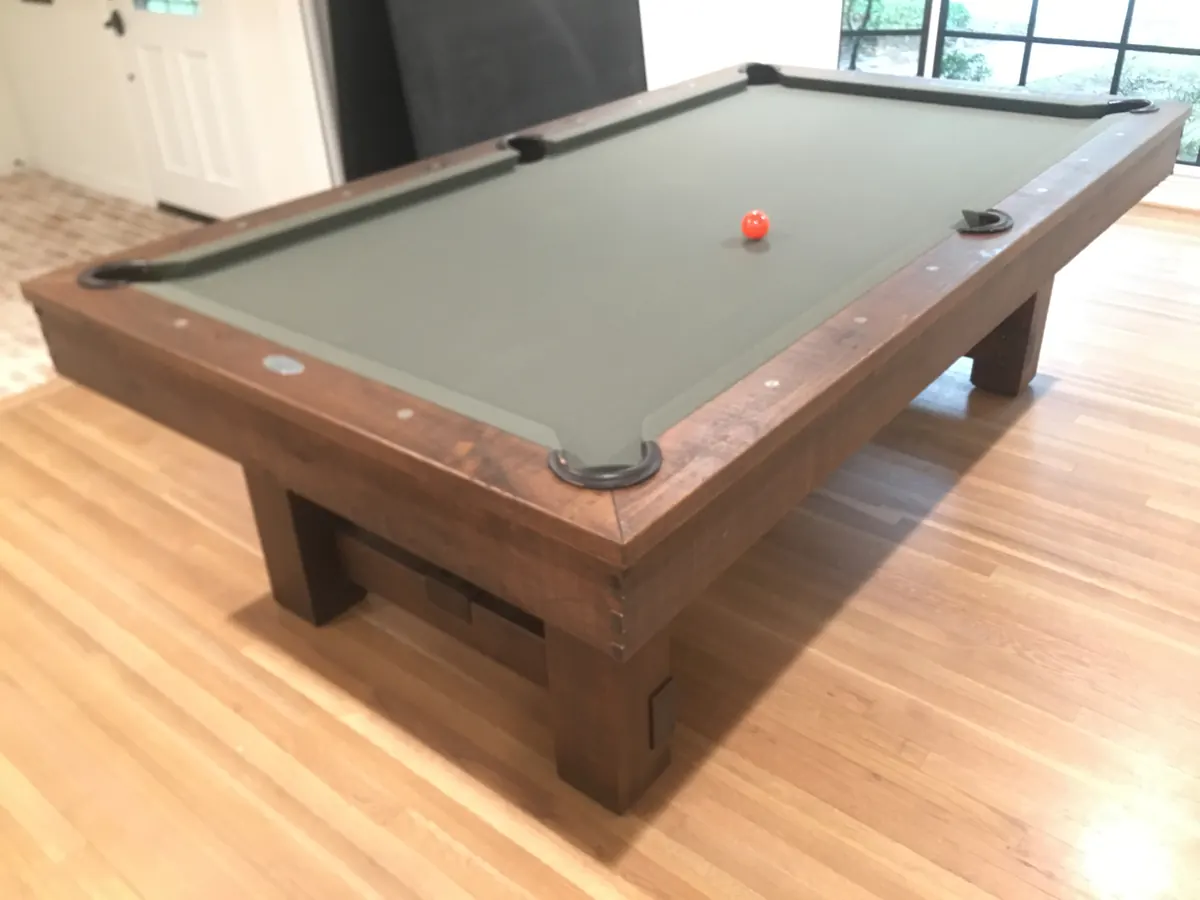
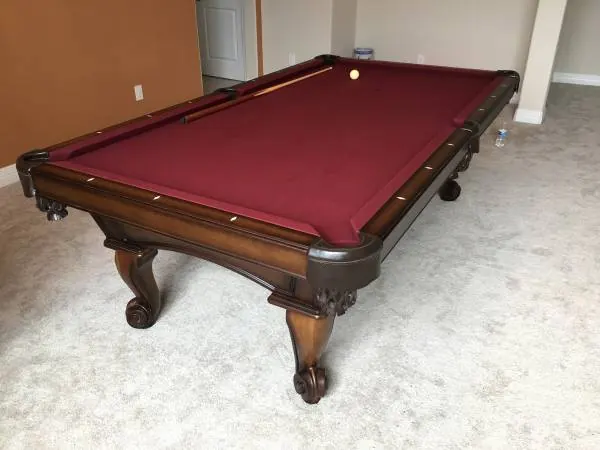
Put the sample beside the actual rail wood. Try green or burgundy with dark timber, or gray or camel with lighter finishes, if those combinations appeal to you. Check your floor and nearby cabinets too. Large surfaces on an installed table may stand out more than a small sample.
If you’re keeping the old rail cloth, hold your new sample beside it under the table light before you book. Even the same line and color name can differ after sun and use or between dye lots. Decide with the fitter whether you can live with the difference. For one continuous color, ask for bed cloth and all rail pieces from the same lot when available. The refelting guide explains the work that goes into recovering both areas.
For deliberately different bed and rail colors, inspect both on the table. The cushion cloth turns down toward the bed and can look different from the flat swatch beside it. Put the two samples near a pocket, where the ball, cushion and wood meet in your line of sight. If you’re unsure at that spot, ask the fitter to show you a table with a similar cloth and wood combination.
Chalk, pale marks and sunlight are different issues
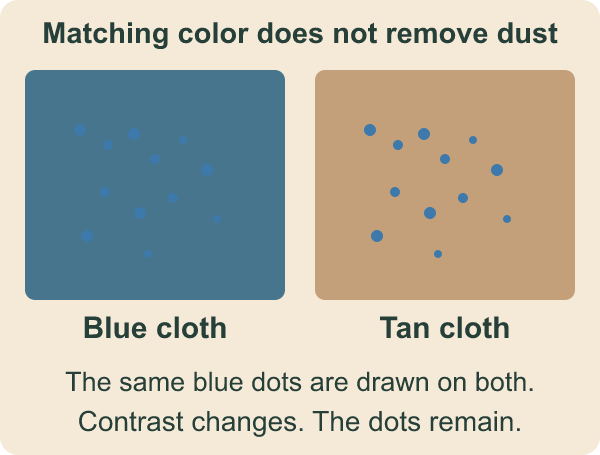
A similar chalk color can make dust less obvious. Clean the table and balls as the cloth maker directs, even when the residue is hard to see.
Check the color options if you’re changing chalk. Championship’s chalk range includes blue, green, pewter and several other shades. Use chalk permitted by the table owner or venue. Ask first before applying any chalk to a sample you need to return.
A spill, loose dust and a pale mark left by a ball need different checks. Simonis’ care notes describe light ball marks and the value of keeping the cloth and balls clean. If you see tears or bunching, or a ball repeatedly drifts, have the cloth and table checked before you spend money on a new color.
Hainsworth’s care instructions explain that UV exposure can fade cloth. Keep strong daylight off the bed where you can and use a cover sized for the table when it’s idle. Different cloths have their own care instructions. Consult the maker before applying a dye, bleach or protectant. The cloth-cleaning guide explains what to check before you clean.
If sun comes through a window on one side of the table, look at where it falls over the course of the day. A cover protects the cloth while the table is idle. When you’re using it, draw the shade if direct light makes the balls hard to see. Use that normal playing setup when you compare samples.
Is blue required for professional pool?
Professional events can specify different cloth colors. The 2026 World Nineball Tour rules require gray cloth in a specified line and a particular ball set for Matchroom Nineball events. The WPA equipment specification allows yellow-green, blue-green or electric blue for the events it covers, subject to its exceptions.
If you want your practice setup to match a particular event, ask about its cloth line, shade, ball set and lighting. A home table used for different games can use any available shade that meets your own playing and room checks.
Before ordering, settle the color and the whole job
Send the fitter the exact cloth and shade you chose. Ask for a quote that says which parts will be recovered and who will check the finished table. Save the label and sample so you can approve the cloth before it’s cut.
- Material. Write the maker, cloth line, shade name and color code if supplied. Include the sample reference, any approved print or a separate rail shade.
- Pieces. Give the model, bed construction and playing length and width measured between opposing cushion noses. Ask what bed and rail pieces are supplied and have the fitter confirm the measurements and cutting allowance.
- Work. List removal, bed and rail recovering as agreed, cloth finish around the pockets, reassembly and a final check of how it plays. Ask for any cushion repairs or leveling to be itemized.
- Availability. Ask what is in stock, when it can be fitted and what happens if the selected shade runs out. Approve any replacement yourself.
- Acceptance. Compare the supplied cloth with your sample before the fitter cuts it. Keep the order details and agree who will handle a difference in color or a fitting problem.
For printed cloth, confirm which base cloth is supported and ask to see a proof. Hainsworth’s printed-cloth guide gives its available fabrics and bases. Keep the approved proof with the order and check it when the cloth arrives.
For a custom design, tell the supplier which end of the table the art should face and check whether it will carry over onto the cushions. Send artwork you have permission to use. Check the proof with the fitter to make sure the main design faces the right way and stays clear of the pocket openings.
Say your table has walnut rails and the two samples you like are charcoal and camel. Check the same balls on both after dark. If the 8-ball edge gets lost on charcoal or the cue ball is too pale on camel, try medium gray in the same cloth line. Once a sample passes the ball and room checks, put its label beside the quote so you can approve the color and fitting work together.