How do you identify an antique pool table?
Look for a maker's mark, then match the construction and decoration to a dated record. Collectors often use a century as a guide to the word antique. A table advertised as antique style may be much newer. Carved legs and a worn finish can help describe the table. Use the maker’s records to narrow down the date.
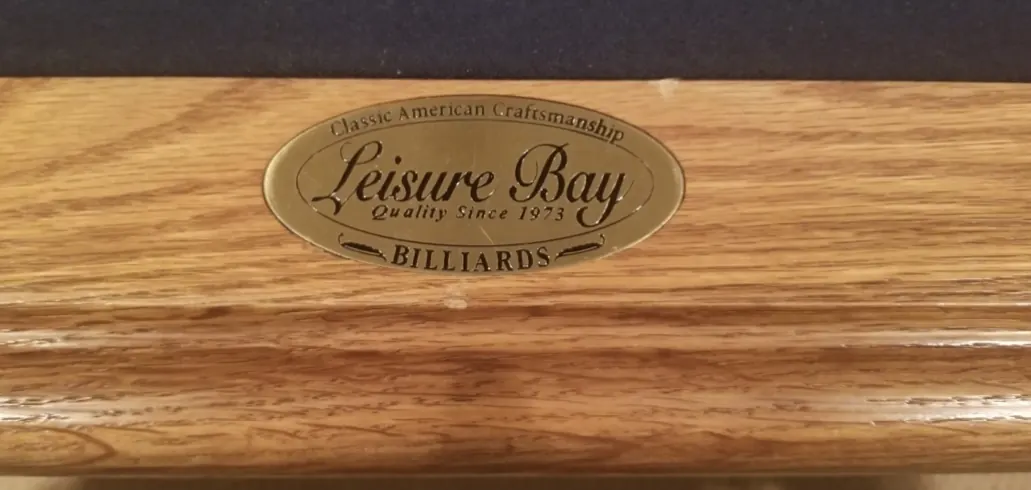
Start where you can look without loosening anything. Take a full picture from one corner and a straight-on shot of each end. Photograph any plate, stamped letters or numbers you can reach along the rails, apron or exposed frame. Take one close view of the mark and one that shows where it sits. Copy the letters and numbers exactly. A photo of the location helps a specialist judge whether the mark belongs to the frame, a rail or a part that could have been replaced.
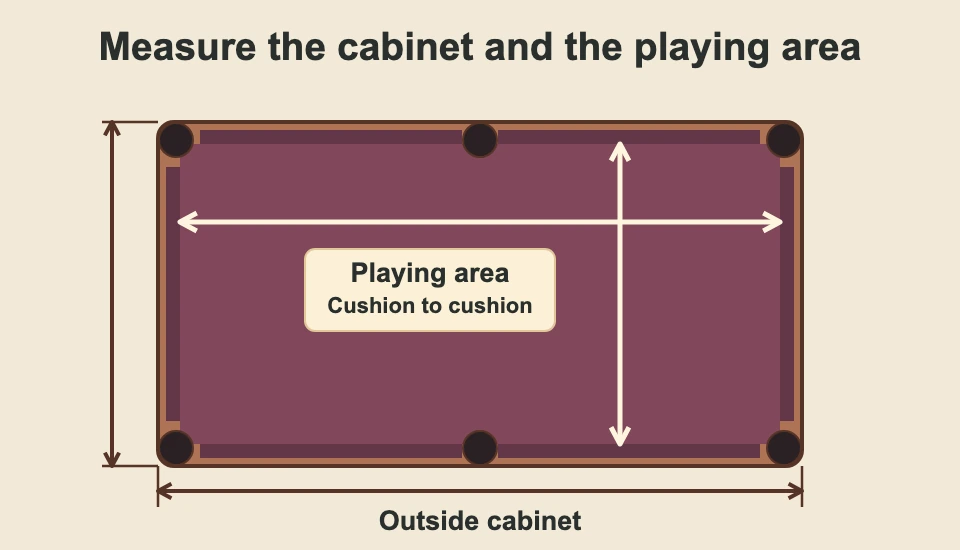
Measure the table two ways. For the outside size, measure across the widest part of the cabinet in both directions. Measure the playing area between opposite cushion noses, the inside edges the balls rebound from. Take both length and width on straight cushion sections away from the pockets.
Note whether the table has pockets or a pocketless bed and whether the rail markings and leg pattern repeat around the table. Save any bill of sale, installation notes or older photos with the measurements. If you suspect an unsound leg or frame, stay out from under it and get the remaining pictures during the technician’s inspection.
A dated catalog can show the leg shape, rail outline and decoration together. For example, a 1926 Brunswick Playmate advertisement held by Michigan State University shows that the manufacturer marketed the model by then. If your table matches the advertisement, that helps you narrow the search. Use the table's own marks and records to support an individual build date. Photograph unusual details and leave the date as approximate if you can only match the model.
What should you inspect before restoring?
Check the parts that carry the table before spending money on its finish. Good-looking cloth can hide slate problems. A level, sound bed can still sit on a weak leg joint. Keep those findings separate. A loose leather pocket might only need a sound fastener tightened during setup. If you see a split where a leg meets the frame, stop using the table and have the joint inspected.
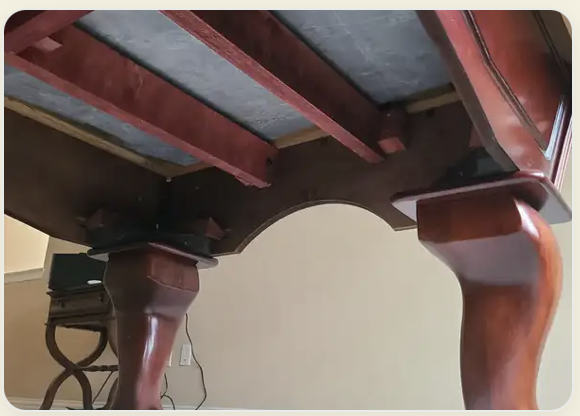
Look at the frame and legs. Check where each leg meets the cabinet and where the interior supports reach the frame. Take photos of visible splits, open joints or missing hardware. If the table is unstable, stop using it and call a technician. Leave the slate and frame in place for their inspection. Start with the used pool table inspection guide if you are deciding whether to take on someone else's project.
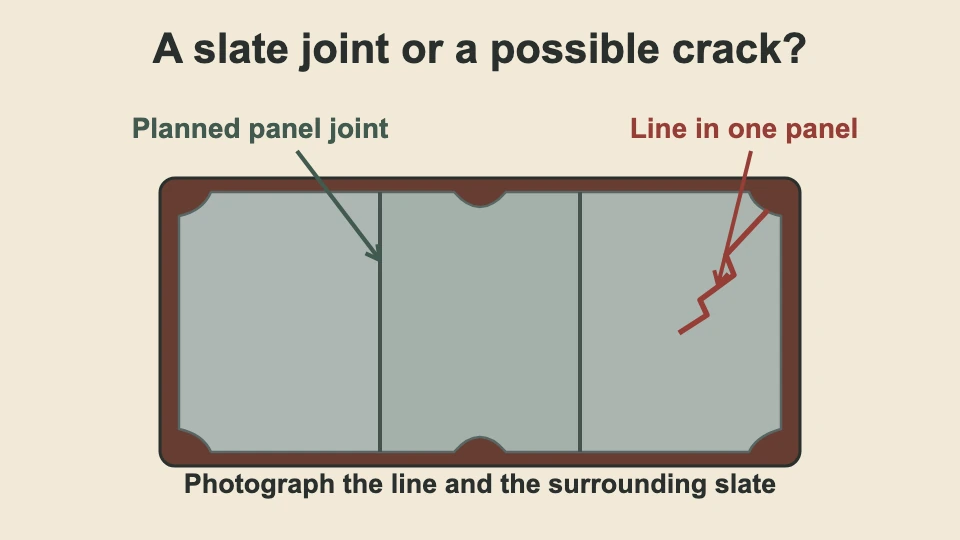
Separate a slate joint from possible damage. A multi-piece bed has planned joints where panels meet. Look more closely at a line that wanders across one piece, or starts at a bolt hole or pocket edge. Take a photo so you can show the fitter where you saw it. The technician still needs to check its depth, whether the piece is supported and whether it can be retained. Avoid lifting slate to look underneath on your own. A restorer needs to see any suspect panel and what it rests on before recommending a repair or replacement.
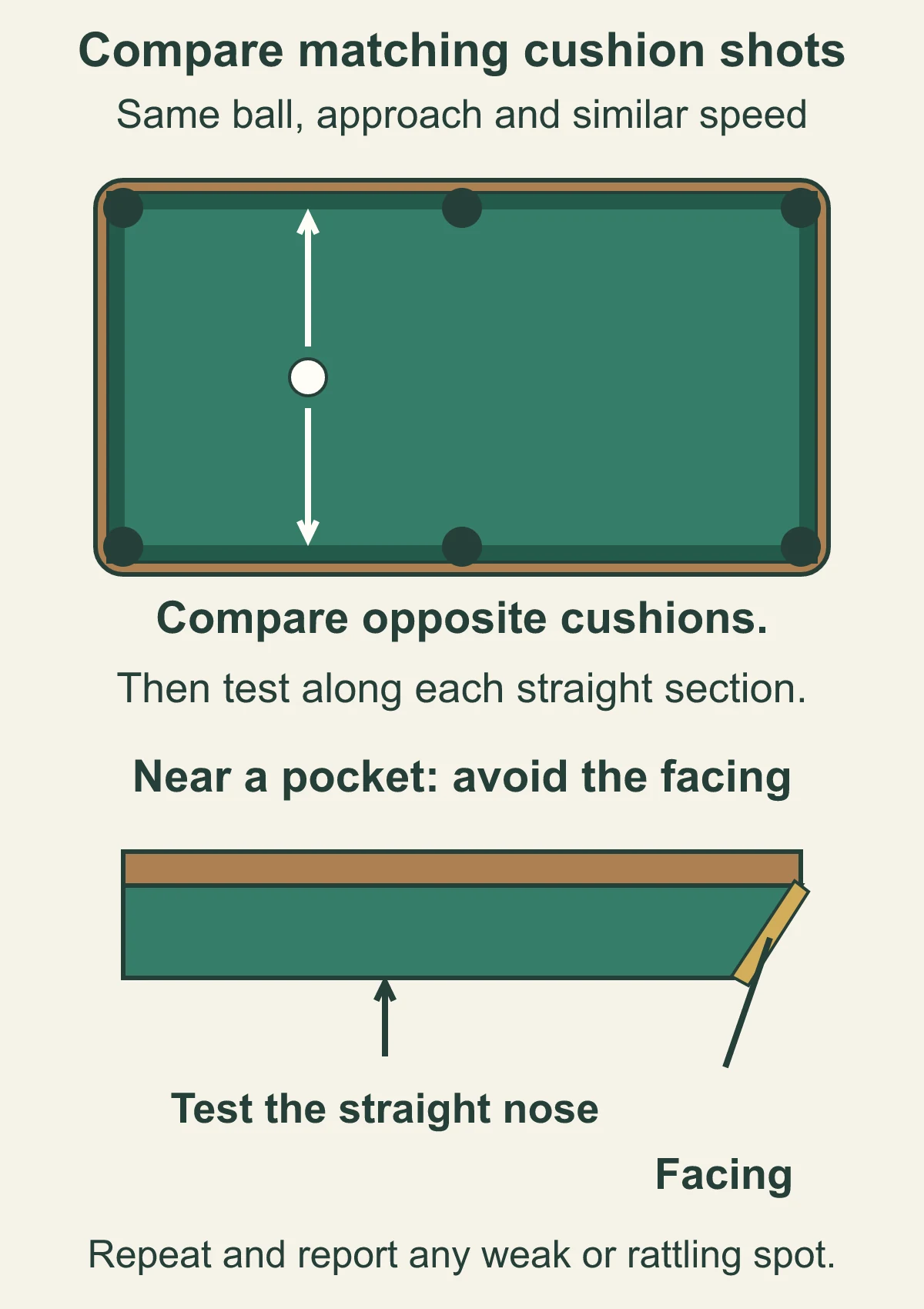
Check how the rails and pockets play. On a stable, assembled table, roll the same clean ball straight into matching solid cushion sections on opposite sides. Use the same starting distance and about the same speed. Test both halves of the long sides and both end cushions, away from the pockets. Ask the fitter to check the rail fastening, cushion and shape of the nose if one section keeps rebounding weakly. If a pocket hangs loose, ask whether the leather, iron or rail joint needs work. Photograph any loose part or missing bolt location. Save anything that's already come off.
Record wood condition separately. The surface can look dull where hands have touched it for years. Lifted veneer feels like a raised edge, and a loose finish can flake. Photograph either without rubbing a raised spot. Ask whether it can be stabilized or cleaned before deciding to refinish.
In what order should you restore it?
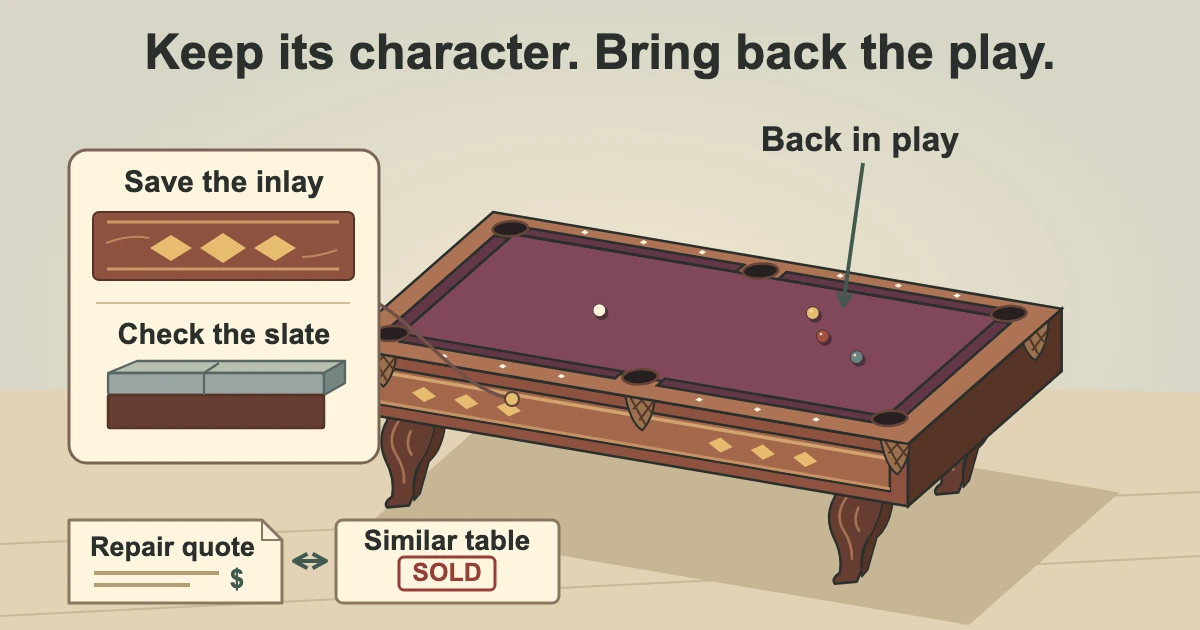
Antique pool table restoration starts with identifying and photographing the parts. Stabilize the frame before you fit the slate, rails and pockets. Get the scope in writing before work begins. On an older table, the cabinet, slate, rails and pockets can each need a different set of skills.
1. Record the parts before moving
Have a crew familiar with old slate tables plan the move. Send the pictures, size and entry route before the appointment. Tell them if the rail fasteners look unusual, the frame shifts, parts are missing or the table must come out of a basement. Share the pickup and delivery measurements using the pool table moving guide. Ask the crew how it will support the slate and where each piece will be placed between visits.
Set out a plan to keep the pieces together. Ask the crew to record rail and pocket positions, organize the hardware by location and preserve any loose maker labels. A photograph of the work in progress can help the fitter put each part back at the correct end. Use tags on bags or protective wrap. Keep adhesive labels off the old finish. Count the parts before they leave the room and again before the table is set up.
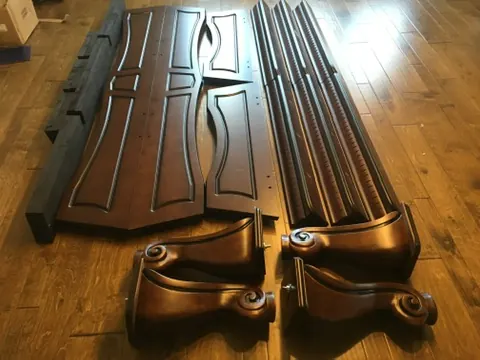
Make the move part of the work order if the table needs to change rooms or addresses. Brunswick's table care guidance recommends professional moving because of the weight and risk of damage.
2. Stabilize the frame and preserve the finish
If a leg, frame joint or cross support needs work, ask who will repair it and how they will check the assembled base before putting the slate back. Get that work into the quote before approving appearance repairs.
Keep sound older finish and decoration when a repair can leave them in place. The Canadian Conservation Institute’s wood-care guide explains why old finishes can record how a piece was made and why stripping removes that evidence. An experienced furniture conservator can evaluate a peeling finish, lifted veneer, loose inlay or a decorative layer whose material you cannot identify.
A pool table can have a solid frame and a thin layer of decorative veneer. If an undamaged edge is already exposed, look there for the thin layer. Leave any lifted edge in place and take a photo. A sander can cut through veneer or catch an edge that a conservator could have secured. Have raised inlay or a loose rail sight checked before a cleaning rag or tool catches it.
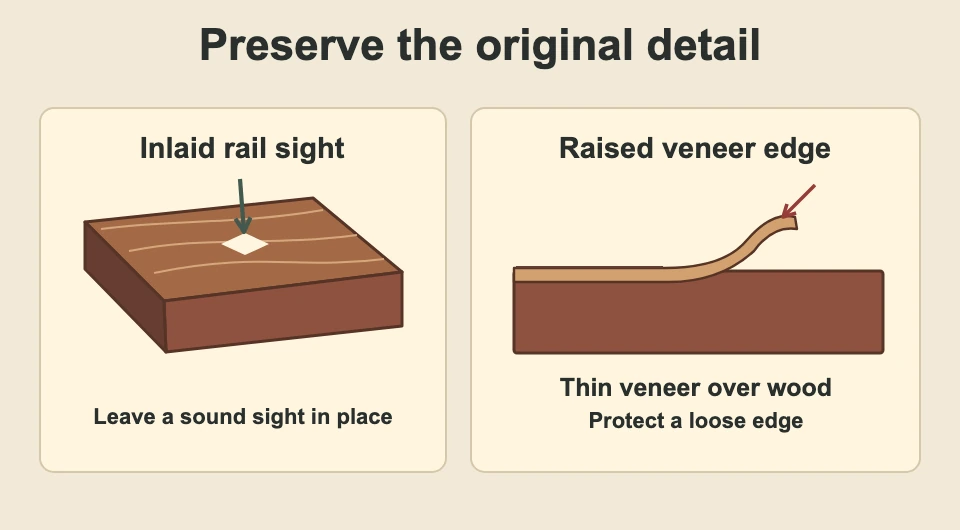
Ask for a written treatment plan if the table is a family heirloom, has unusual decoration or may be a documented collector model. Specify which areas will be cleaned, which will be repaired and where a replacement or new finish is proposed. Ask the shop to record what it retained, what it added and what it removed. A published Plum Studio restoration case shows how the furniture and slate work can go to different specialists on the same table.
3. Fit the slate, cushions and pockets
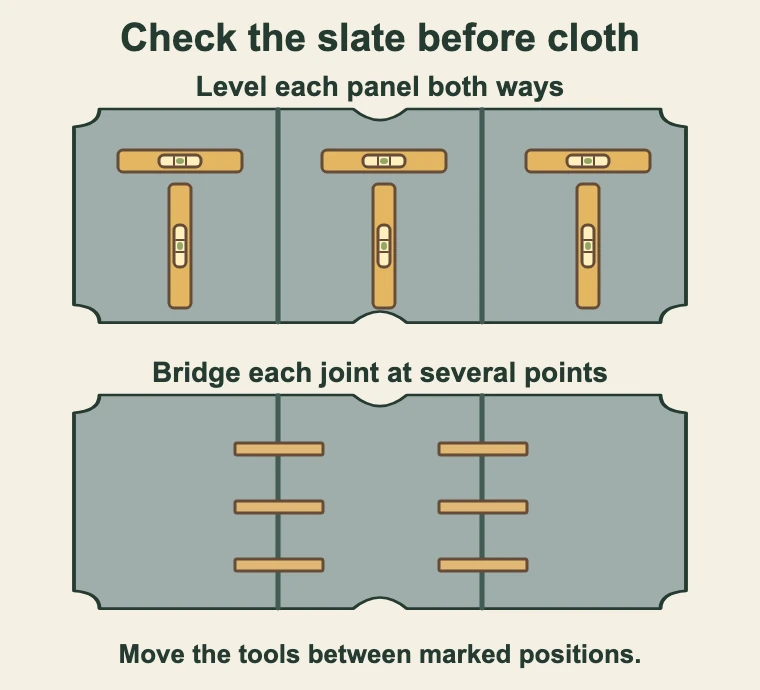
Check the original slate on the stabilized frame before ordering cloth. Ask the fitter whether the panels match, whether the old backing and fasteners still hold and whether an edge chip affects the playing area or support. Peters Billiards explains in its slate and rail restoration notes why it prefers retaining an original slate set when it can be repaired. If a panel has to be replaced, match the thickness, footprint, openings, fastener locations and support to the actual table before commissioning cut work.
Check level and joint height while the slate is exposed. A fitter can run a level in both directions and use a straightedge across adjoining panels to check that the surfaces meet. The two checks answer different questions. Ask the fitter to show you the result before the cloth covers the stone.
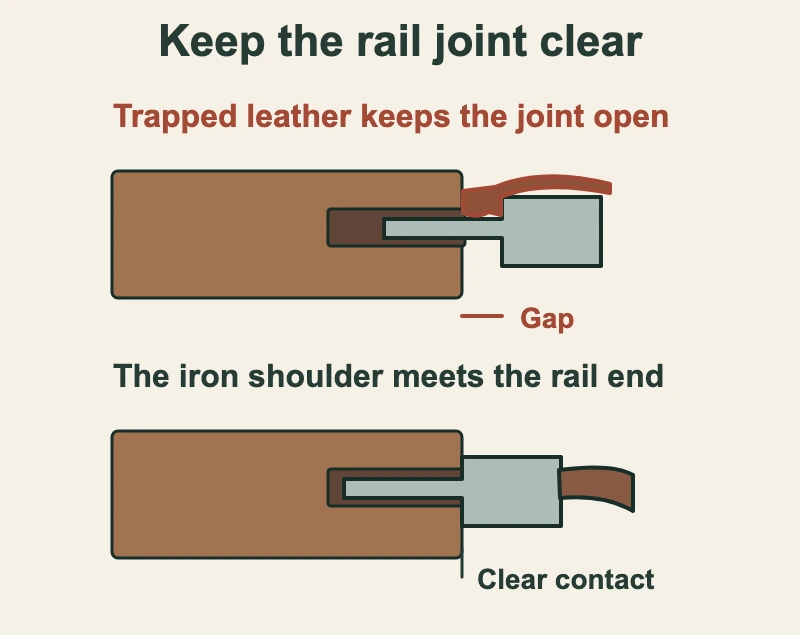
Set the rails and pocket hardware with the fitter before choosing replacements. A pocket iron is the rigid piece that fastens the leather pocket to the rails on many older drop-pocket tables. Identify where its mounting points sit, whether its shoulders seat properly and whether the leather and iron can be repaired separately. Compare the old piece with the proposed replacement by shape and mount. A similar color or numbered style on a box is too little to order by. The Classic Billiards pocket and iron examples show two different antique mounting styles. Blatt Billiards’ pocket service, for example, asks for the old irons when working on antique pockets.
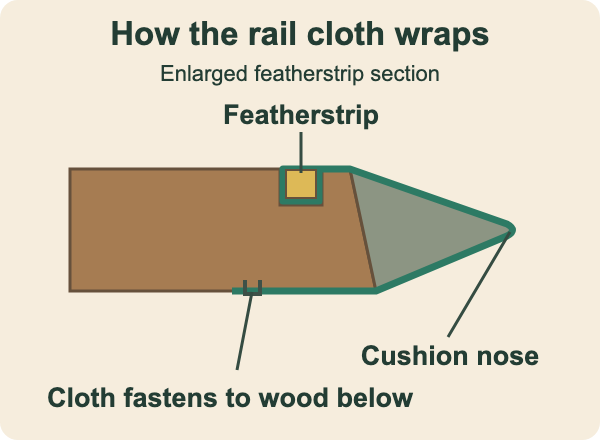
Once the old cloth is off, ask the fitter to inspect the cushion profile and its bond to the rail. If the rubber needs replacement, have the fitter match the profile to the rail and set the right nose height for the table. The wood rail may still be sound. Then ask how the cloth will fasten on this table. Choose a cloth that suits the playing feel you want and the way the bed and rails are built. The pool table refelting guide shows staple and glue methods. Ask whether the quote covers both the rails and the bed. Repeat the rebound test after the covered rails are back on and secured.
How much does antique pool table restoration cost?
The cost of restoring an antique pool table depends on the repairs yours needs. Ask for a price to make the table stand securely and play properly. Get a separate estimate for optional work on the finish or decorative wood. A specialist may need to open the table before committing to a fixed total.
Get the setup charge in writing. Ask for separate prices for getting the table into the room, setting it up and repairing it. These three published prices show how much the scope varies for standard jobs. Ask for a quote on your table that lists the work you want done.
| Provider type | Published price | Job and area | What to confirm |
|---|---|---|---|
| Manufacturer | $899 at Brunswick | Delivery and installation on a new direct pool-table order. Eligible contiguous U.S. address within 50 miles of a participating authorized dealer. | The stated service includes room delivery, installation and debris removal. Ask what else your room or order requires. |
| Retailer | $485 at C&N Sales | Standard three-piece slate setup in southern Minnesota and northern Iowa. The same provider has a separate hourly policy for antiques. | Teardown and a package with a move and setup appear separately. Confirm carry-in, seams, leveling, cloth and any mileage fee. |
| Independent technician | $375 at Dallas Pool Table Movers | Nanco Billiard Services lists setup, leveling and cloth fitting for a 7, 8 or 9 ft pool table already in the room in the Dallas and Fort Worth area. | New cloth and stair carry cost extra. Ask how they handle the seams and whether they’ll take on your antique. |
These prices cover different jobs. Brunswick includes delivering a new table. Dallas’s price is for a table already in the room, and C&N bills antique work by the hour. In your own quote, check whether the move, teardown, wood work, slate repair and reassembly are separate. If two lines mention cloth or transport, ask what each one includes before agreeing to a total.
Ask the person writing the quote to separate work they can see from work they can only confirm after the table is taken apart. A useful estimate says which joints and panels were visible, which parts will be preserved and what could add labor. Request a written change price before extra work starts. If an uncommon pocket iron or slate panel is missing, get the shop to confirm it can source or make the part before committing to finish work.
What is your antique table worth?
Start with completed sales of the closest model you can identify. Compare the size, maker, condition, included parts, alterations and pickup terms before using a sale to estimate your table’s value. Check whether the auction reports the winning bid or a price that includes the buyer's premium. For resale, use what the seller would receive after commission and agreed removal costs.
Two completed sales show what to read beside the price.
- Reported $16,000 for a converted Monarch. New Orleans Auction Galleries’ May 21, 2023 sale describes a late-19th-century billiard table converted to pool, with inlay and cast-iron lion supports. The sale terms list a buyer’s premium separately. Ask the auction house which fees the published amount includes.
- Reported $130 for a table that still needed reassembly. In Wickliff & Associates’ February 16, 2023 sale of lot 733, the auctioneer could only suggest a model for the Brunswick-Balke-Collender. It had newer pockets and still needed reassembly. The buyer had to arrange pickup in Indianapolis. That makes it a poor comparison for a documented table someone can play on.
Myth. The asking price shows what an antique table is worth.
Reality. An asking price is what the seller hopes to get. For a useful comparison, look for a completed sale of a table close to yours in model and condition.
Record any asking prices separately. Note whether a restored table was ready for play where the buyer saw it. A buyer picking up a cabinet in parts faces a different cost from taking delivery of a playable table. If few matching examples have sold, ask a specialist appraiser for the value of the table in its current condition and after the proposed work. Explain why you need the figure. Insurance replacement value and expected resale proceeds answer different questions.
Keep the photo record and the model evidence with the quote. Show the appraiser any condition limits you know about. If a part has been replaced, record which one. Record any conversion from another game that you can identify. A repair can improve play without proving that the table will sell for the cost invested.
When is restoration worth it?
An antique pool table restoration is worth paying for when the frame and slate can be made sound, the parts are available and the total fits what you want from the table. Preserve it more carefully if you are keeping family history or a documented example of an old design. These decisions start with your intended use and what you want to retain.
If you want a family table to play again, ask for the least work that makes it stable and playable. That may put rail, pocket or cloth work in the quote and leave sound decorative wood in place. Save the original iron or label even when the visible leather has to be renewed. If the table needs more repair to play safely, get the cost before choosing the appearance work.
If you plan to sell, estimate what you would keep after selling fees and any removal charges you pay, both as it sits and after the proposed repairs. Leave the repair bill out of both figures for this first comparison. For example, suppose you would keep $2,000 as it sits or $3,200 restored, after selling costs. The difference is $1,200. A complete restoration quote above $1,200 would leave you less than selling it as it sits under those assumptions. An appraisal may be worth getting before you pay for work the next buyer may not value.
If you mainly want a table to play on, add any purchase price to the necessary repair, transport and setup costs. Compare that total with what it would cost to buy and install a similar table in working condition. When shopping for a standard-size replacement, use the playing-size and cue clearance chart to compare playing areas. Confirm door turns and stairs before moving either table.
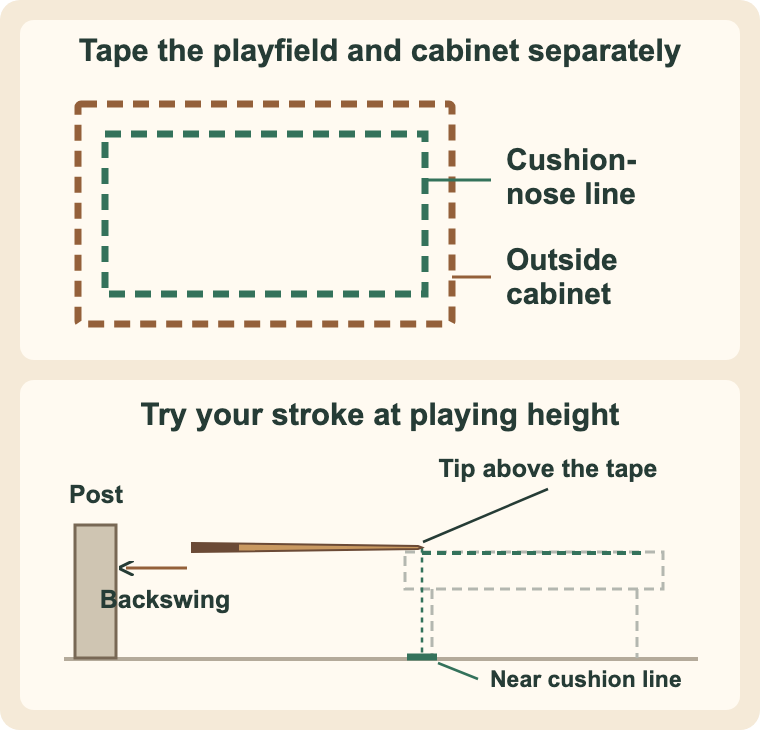
Use the pool table room size calculator if the table matches a standard size. For an unusual size in a clear rectangular room, add two cue lengths to each inside playing dimension as a first check. That gives you room for the cue itself. Tape out the cushion lines, hold the cue at the height you'd play at and try your usual backswing beside walls, posts and furniture.
What should you test before the first rack?
Have the fitter show you that the table stands securely, the bed is level and a ball can travel and drop cleanly. Do the check after the table has been fully assembled in the room. Ask how the fitter handled the seams, leveled the installed bed and secured the rails. The pool table installation guide explains what the setup includes.
- Look at the support. Confirm the feet sit securely and ask the fitter to check any frame or leg movement before play. If a leg or joint moves, stop and have it checked.
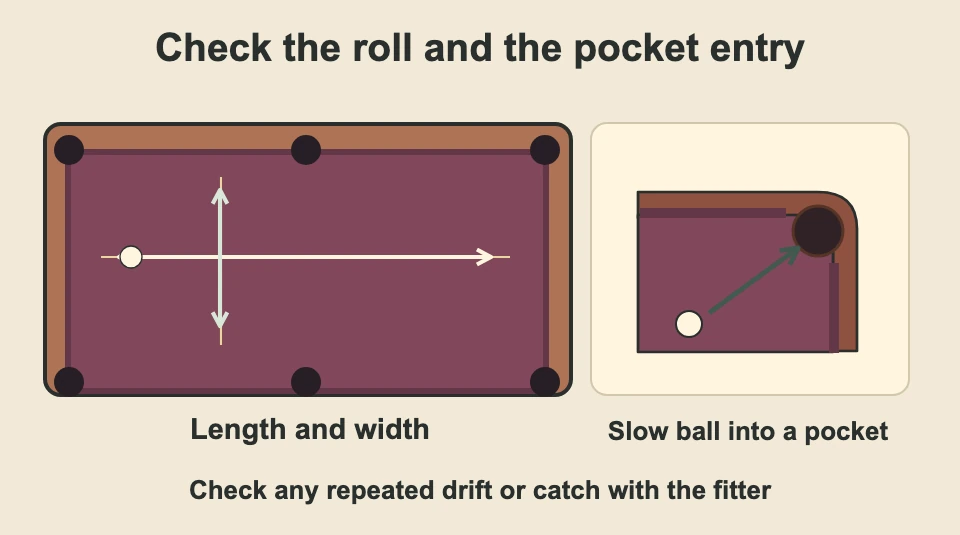
- Watch two directions of roll. Roll a clean cue ball slowly along the length and then across the width. Repeat the same line in reverse if the ball drifts or hops. Ask the fitter to check whether the bed, seam or cloth causes a repeatable problem.
- Check all pockets and rails. Send a ball gently into each pocket and watch for a catch at the opening. Repeat the matched cushion test on both long-side sections and the end cushions. Ask the fitter to check any repeatable catch or weak rebound before signing off.
Keep the shop’s photos and the list of retained parts with the invoice. Store unused originals carefully and leave any instructions with the table if it changes hands. A good handover tells you what was stabilized, what was replaced and how the finished table plays.