Who Starts With the Puck?
In a USAA match, the opening face-off decides who gets the puck first. To get set, stand at opposite ends of the air hockey table. Each player needs one mallet, also called a striker. Use one puck. Find the line halfway between the goals. That centerline tells you when you can hit the puck and how far you can reach.
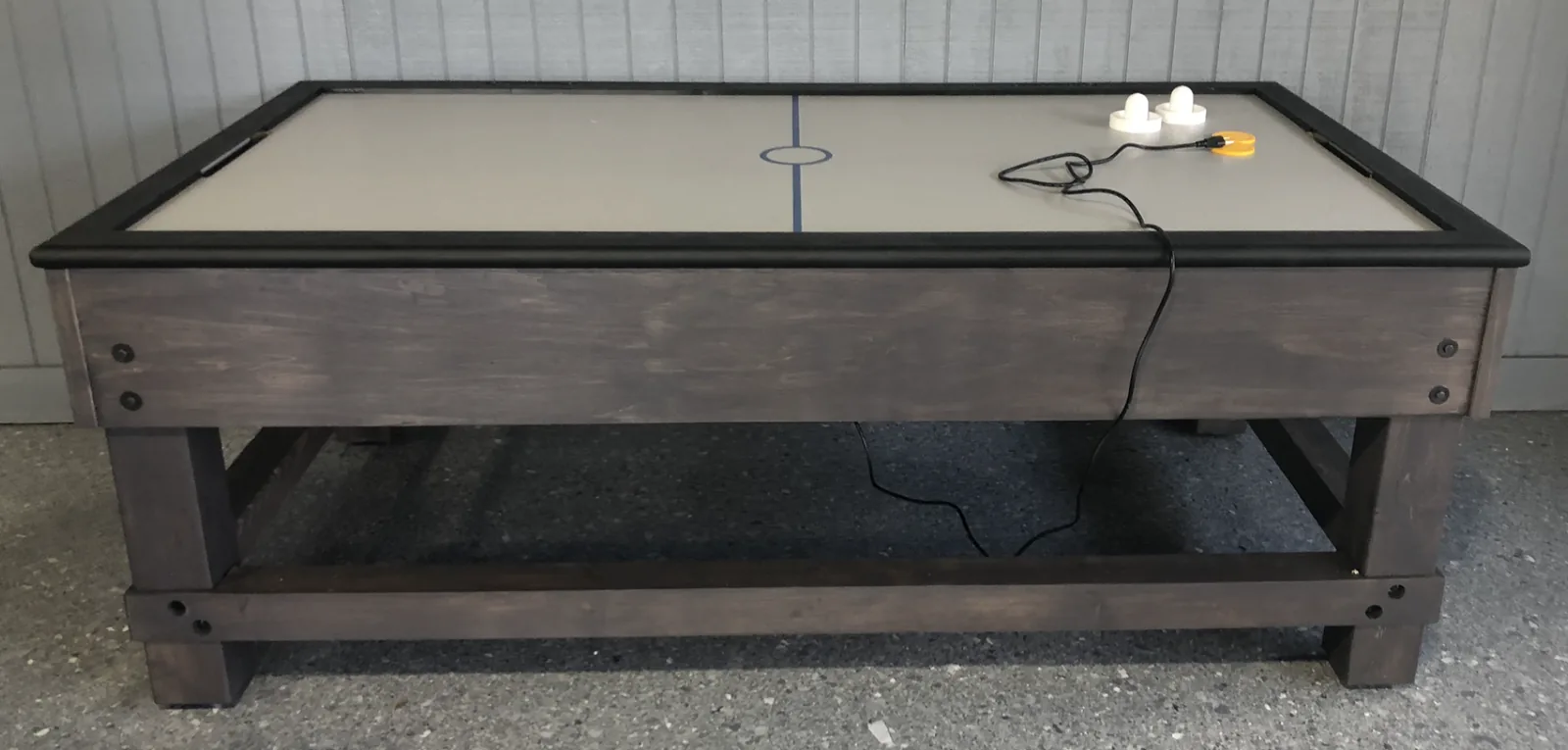
Under the United States Air Hockey Association rules, the coin-toss winner chooses a starting end. Then set up the first game's face-off.
- Set the puck. The referee holds it flat at the middle of the centerline.
- Wait for release. Keep your striker off the line and at least an inch from the puck until the referee lets go.
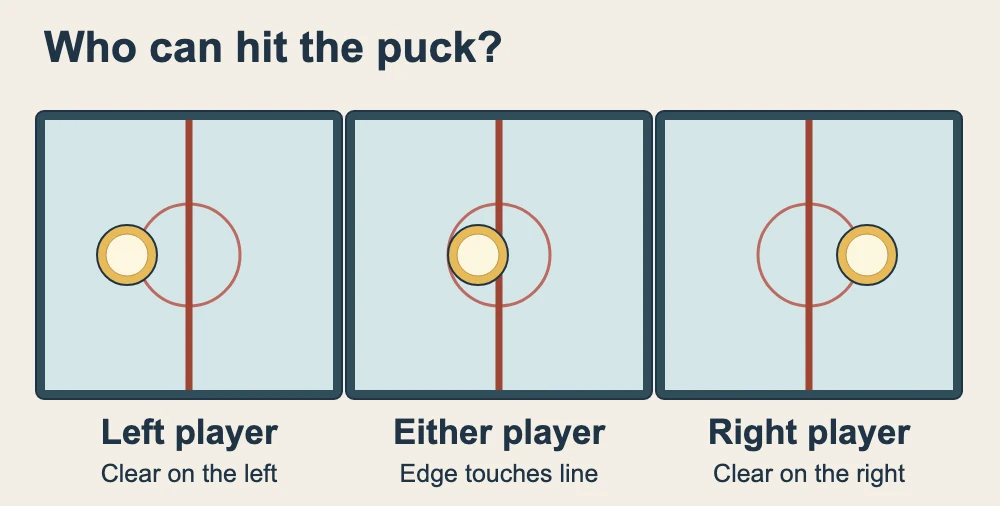
- Play for possession. The first player to gain clear possession or score legally wins the face-off. A puck that's still touching the line is open to either player.
Contacting the puck before release is a false start. Each player gets one without a penalty. On your second false start the other player gets the puck. If the puck goes off the table during the face-off, the referee repeats it.
Switch ends after each game. The player who lost the opening face-off starts game two with the puck once the referee calls it in play. The face-off winner starts game three, and the opening possession keeps alternating for the remaining games. After a goal during a game, the player who conceded retrieves the puck and serves it. The Gold Standard basic rules sheet shows the same order.
When Does a Goal Count?
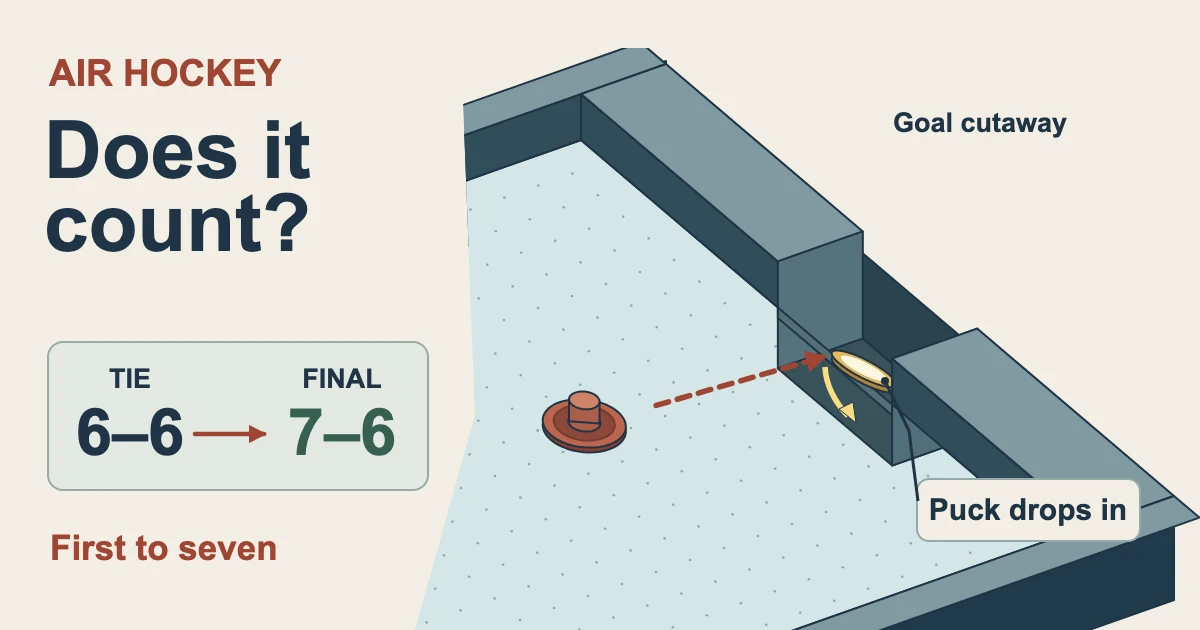
Give one point when a legal shot enters and drops into the other player's goal. If you send the puck into your own goal in ordinary play, the other player gets the point. A referee's stoppage or a foul by the player taking the shot can cancel a would-be goal.
With six points apiece, the next valid goal wins the game seven to six.
Myth. A puck that reaches the goal mouth scores.
Reality. If it rattles out onto the table, play on with the score still tied.
A puck wedged in the goal counts if it has tipped below the level of the playing surface and stays there. If it stops flat at the opening, the player defending that goal can try to work it out legally or hand possession to the opponent. In that flat-puck case, running out of the seven seconds gives up the puck even if it's the first violation of the match.
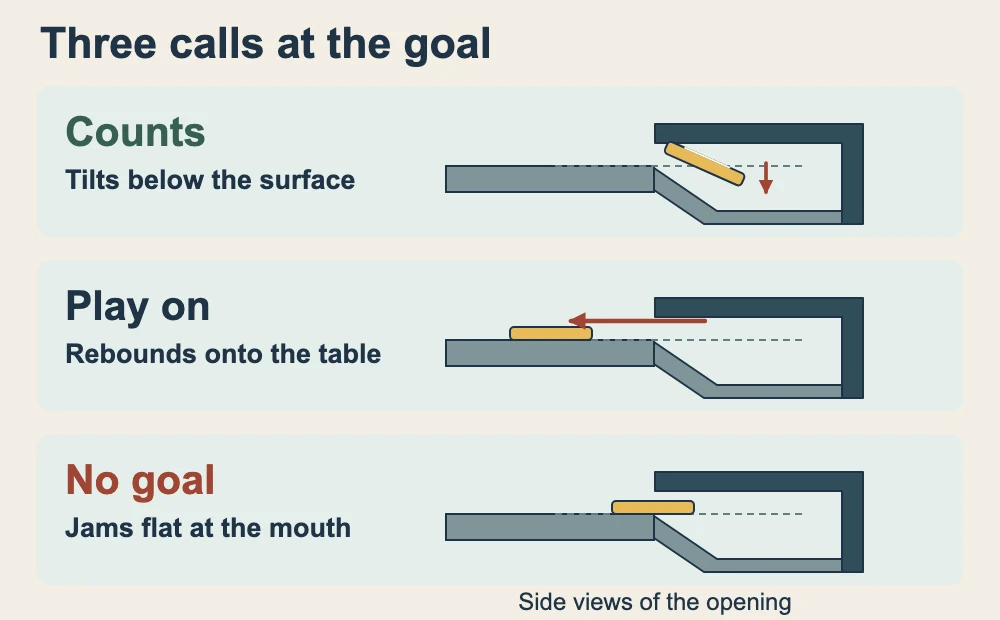
In a refereed match, listen for the referee to call the score. The rulebook has a narrow exception to a simple rebound call. If the puck comes out, hits the defending player's hand and goes back into the goal, it counts. If a shot brushes a hand and still goes in, the referee counts it if it was already on a scoring path. A legal shot can still score if the table loses power after the puck was struck.
When Do the Seven Seconds Start?
The count starts as soon as the puck is on your half and stays there. It can still be moving. Hit a shot that crosses the centerline within seven seconds. A pass parallel to the line on your own half leaves the same seven seconds running.
Either player can hit a puck that's touching the line. Once the whole puck is on your half, the hit is yours. A legal stroke can carry your mallet partway over the line. Keep part of the mallet on your half through the shot, and keep your feet on your side. The USAA rulebook's seven-second rule gives each player a warning for their first violation in a match. Later violations cost possession. If the puck is flipping on edge, the referee suspends the count until it lies flat.
The ten-second restart after a goal
Once the puck falls all the way through and is available in the return, the player who conceded has ten seconds to put it back in play. The referee can give the puck to the opponent for delaying the restart. After conceding, you may use your hand to set the puck on your half, then strike it with your mallet. A hand toss straight into the far goal earns no point. Your opponent then gets to set the puck down by hand for the next serve. The ten-second restart count pauses for a timeout.
In USAA play, each player may take one timeout of up to ten seconds per game while controlling the puck or while the puck is out of play. Indicate it clearly and wait for the referee's call. The referee won't grant a timeout on a puck that's already entering your goal.
Which Fouls Give Up the Puck?
An ordinary foul gives the other player possession. Block with the edge of your mallet resting on the table. Lifting the mallet and setting it on a puck on the table is called topping and costs possession. You can use the mallet to bring an airborne puck down. A referee can still stop a technique judged dangerous or damaging.
| What happened | Call and result |
|---|---|
| Mallet comes down on a puck on the surface | Topping. Opponent gets the puck. |
| Mallet goes entirely beyond the centerline | Centerline foul. Opponent gets the puck. |
| Player’s hand or clothing touches the puck during play | Palming normally costs possession. A referee may allow an airborne puck brushing a defender's hand or arm. |
| A puck headed straight into the goal touches the defender's hand, arm, body or clothing | Goal-tending. The other player gets a free shot at the open goal. |
| Player loses control of a loose mallet during play | Possession foul. Play continues if a permitted string still connects the mallet to the player's hand. |
| Puck is late crossing after the player's first warning | Seven-second foul. Opponent gets the puck. |
Keep playing until the referee stops the action. If you immediately get the puck after your opponent tops it or violates the centerline rule, play continues. If the player who fouled concedes a goal on the same play, that goal stands and the penalty goes away.
What happens on a free shot?
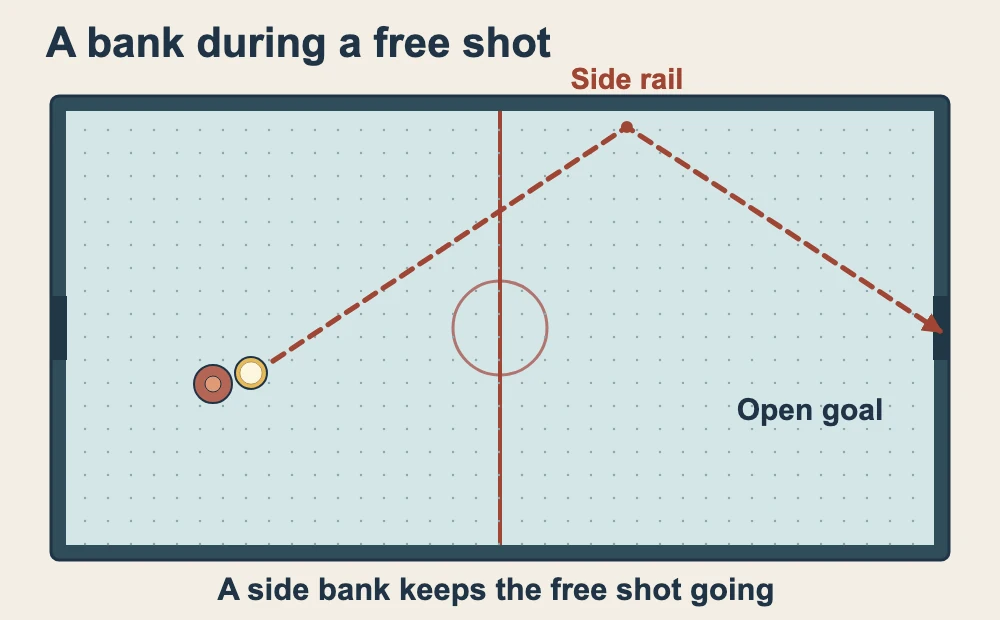
For a technical foul, the player who was fouled gets one legal shot at the unprotected goal. The defender waits until the puck scores, rebounds from the goal, hits the short end at their goal or comes to rest on the playing surface. Touching a long side rail alone leaves the free shot underway. If the shot scores and the game continues, the player who conceded serves. If it comes back out, the puck is live.
What If the Puck Flies Off?
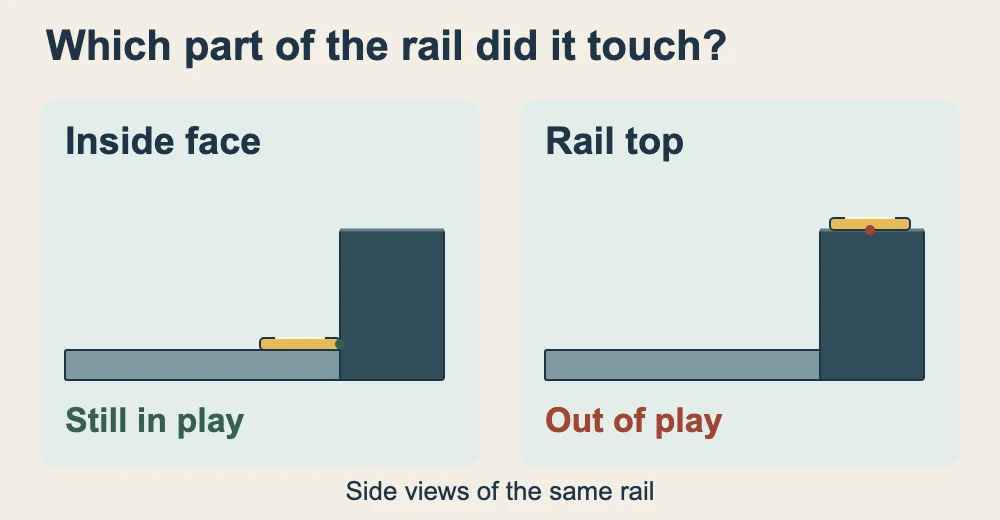
Pause when the puck hits the top of a rail, a shield or the floor. It is out of play even if it immediately lands back on the surface. A rebound off the inside wall of a rail is an ordinary bank. In a refereed game, wait for the referee to put the puck back in play or acknowledge your release.
Look at the last action to separate a shot from a block. If your attacking shot sends the puck off the table, you give up possession. If the defender swings forward through your shot and sends it off, the rules call that charging and you keep the puck. If the defender deflects the puck off by holding steady or blocking sideways or backward, the defender gets it. The referee judges the contact and can call a foul if the defender used excessive force. If the referee calls interference, any goal from that shot is canceled and the puck goes back to the player who had it before.
Which Gear Do USAA Events Use?
For a sanctioned match, check the USAA list of approved eight-foot tables and bring an approved mallet and puck. The mallet must weigh six ounces or less and measure under 4 1/16 inches across. It must be made of one material, with a uniform, symmetrical shape and a rim that contrasts with the surface.
The USAA approves yellow and red Lexan tournament pucks and Dynamo green. Start with yellow unless both players agree to an approved alternative. Play starts taped side up with at least one layer of white plastic tape. Extra layers need the agreement of both players. Check the event's equipment rules before you play.
For a game at home, use the gear specified for your table. The air hockey glossary explains the striker and playfield if those labels are new to you. The Gold Standard installation instructions show a useful check for its tables. Put the puck at center with the air running. If it keeps drifting to the same end or side, follow the maker's instructions for adjusting the levelers before you start keeping score.
If you're laying out a room, keep space at both short ends for players to stand and move. Use the game room layout planner to place an air hockey table and furniture, then check the exact cabinet size and clear space for your model. The air hockey topic page covers room placement and power access.
House Rules for Your First Game
Before you turn on the table, pick a winning score and decide who starts. Seven is a useful target. If people are waiting for a turn, agree to play to five. When skill levels differ, you can also give the newer player a point at the start. For a quick opener at home, flip a coin and start the winner with the puck on their half. Treat that as your home alternative to a tournament face-off. Keep the next serve with the player who just conceded.
Settle the close calls before the first shot. A simple house approach is to count clean drops, play on after a clean rebound and give the puck to the other player after an obvious topping or hand touch. If the puck goes off and neither player can tell who touched it last, give it back to whoever had it before the disputed shot. When someone wins, say the final score, swap ends and alternate which player starts the next game. If you play an event, use its posted format and referee's calls.